

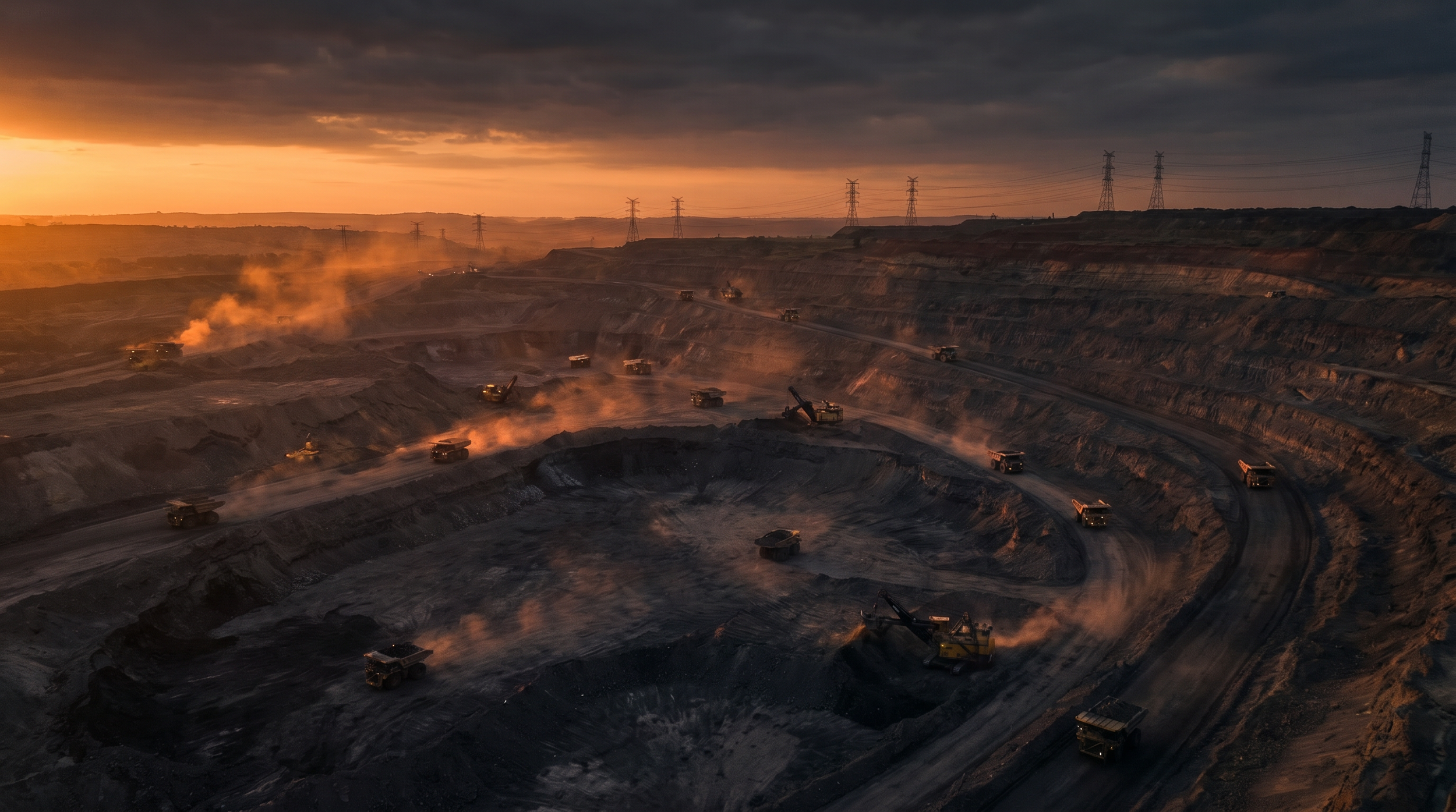
Mining & Resources Asset Intelligence.
For mine operators, processing plant managers, and resource companies managing high-value assets across remote and hazardous environments. We deliver the condition visibility your maintenance teams need without stopping production, entering confined spaces, or deploying personnel at height.
UNPLANNED CONVEYOR FAILURES COST $500K-$2M PER DAY. IDENTIFY DEVELOPING FAULTS BEFORE CATASTROPHIC BREAKDOWN.
Production-Critical Condition Data Without The Operational Disruption.

The Hidden Cost of Reactive Maintenance
Mining runs on uptime. The assets most critical to production are the hardest to inspect.
❋ Failures
A single unplanned conveyor failure costs $500,000to $2,000,000 per day in lost production
❋ Compliance
Tailings dam failures represent catastrophic environmental and safety risks, with monitoring mandated under ANCOLD guidelines
❋ Confined Space Risks
Confined space entry for crusher and vessel inspection requires 6-12 hours of isolation, lockout/tagout, and atmospheric testing
❋ Environment
Corrosion and wear rates in mining environments accelerate 3-5x compared to standard industrial settings due to abrasive materials, chemical exposure, and extreme temperatures
❋ Remoteness
Remote site locations increase mobilisation costs for traditional inspection crews by 200-400%
Complete Mine-Site Condition Intelligence
Independent inspection across every mine-site environment
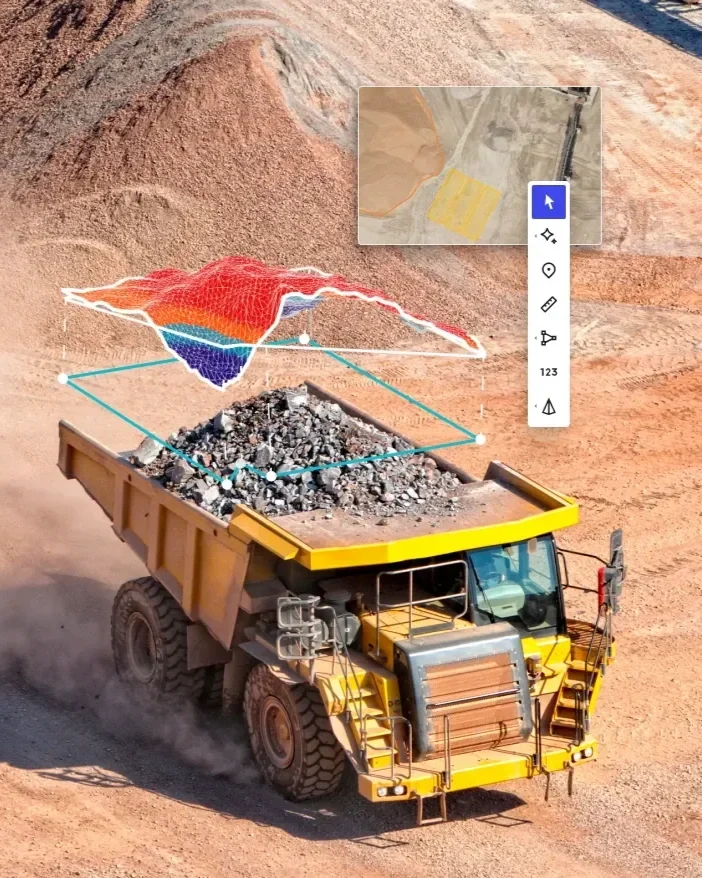
Stockpile Volumetrics & Survey
RTK-enabled LiDAR and photogrammetry delivers +/-2cm accuracy stockpile volumes, haul road surveys, and pit progression mapping. Replace manual survey with faster, safer aerial capture across your entire site in hours, not days.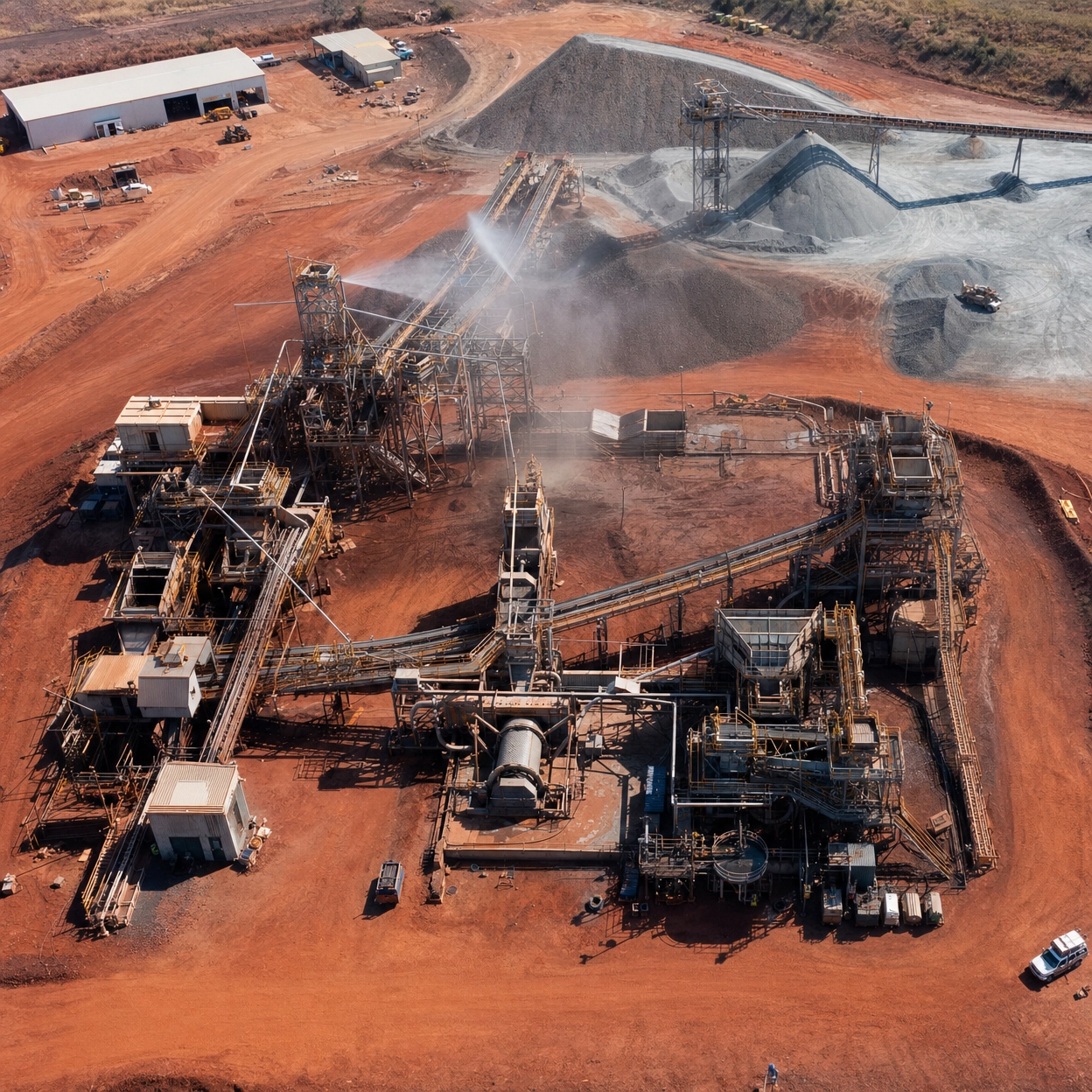
Processing Plant Inspection
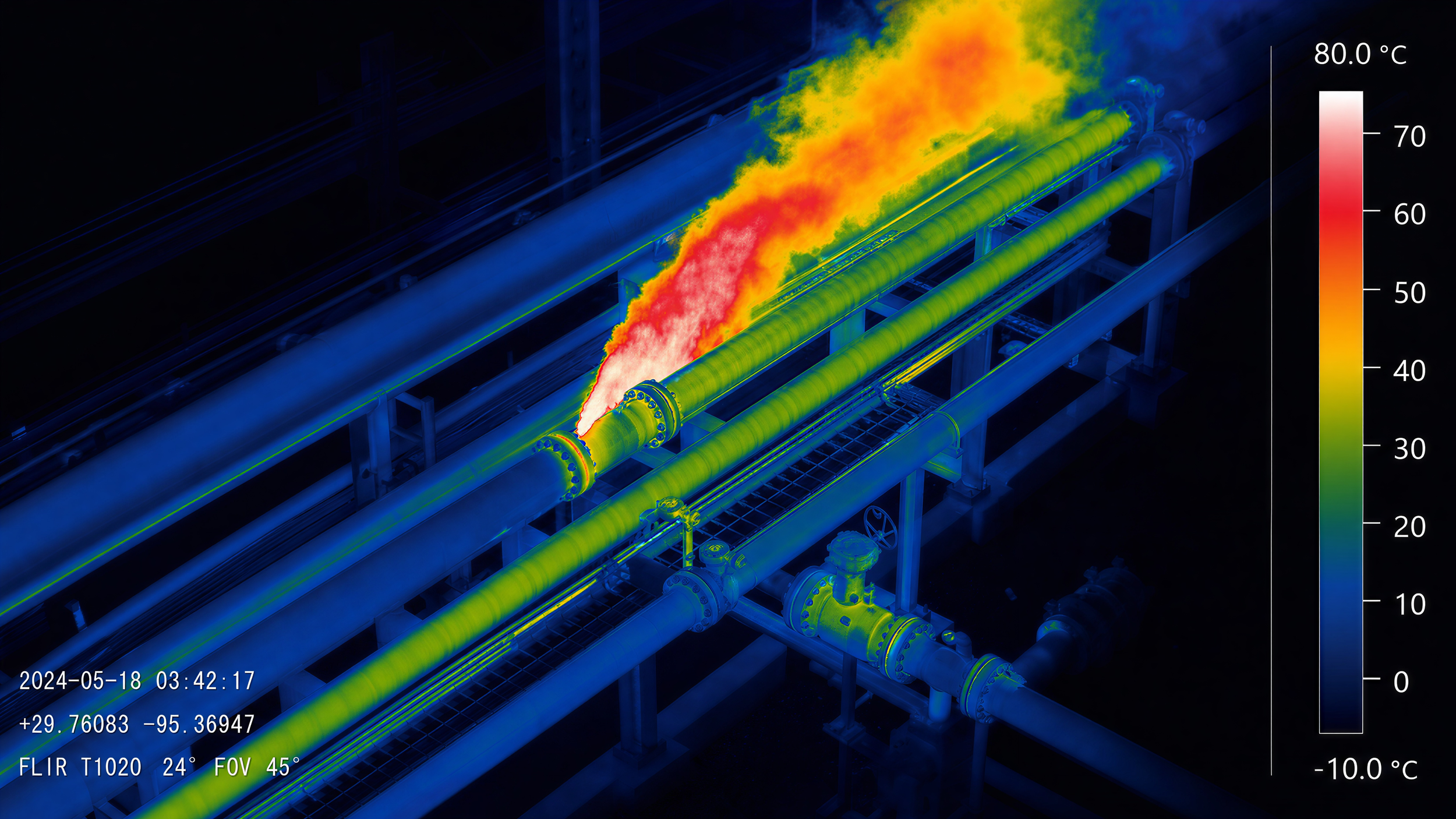
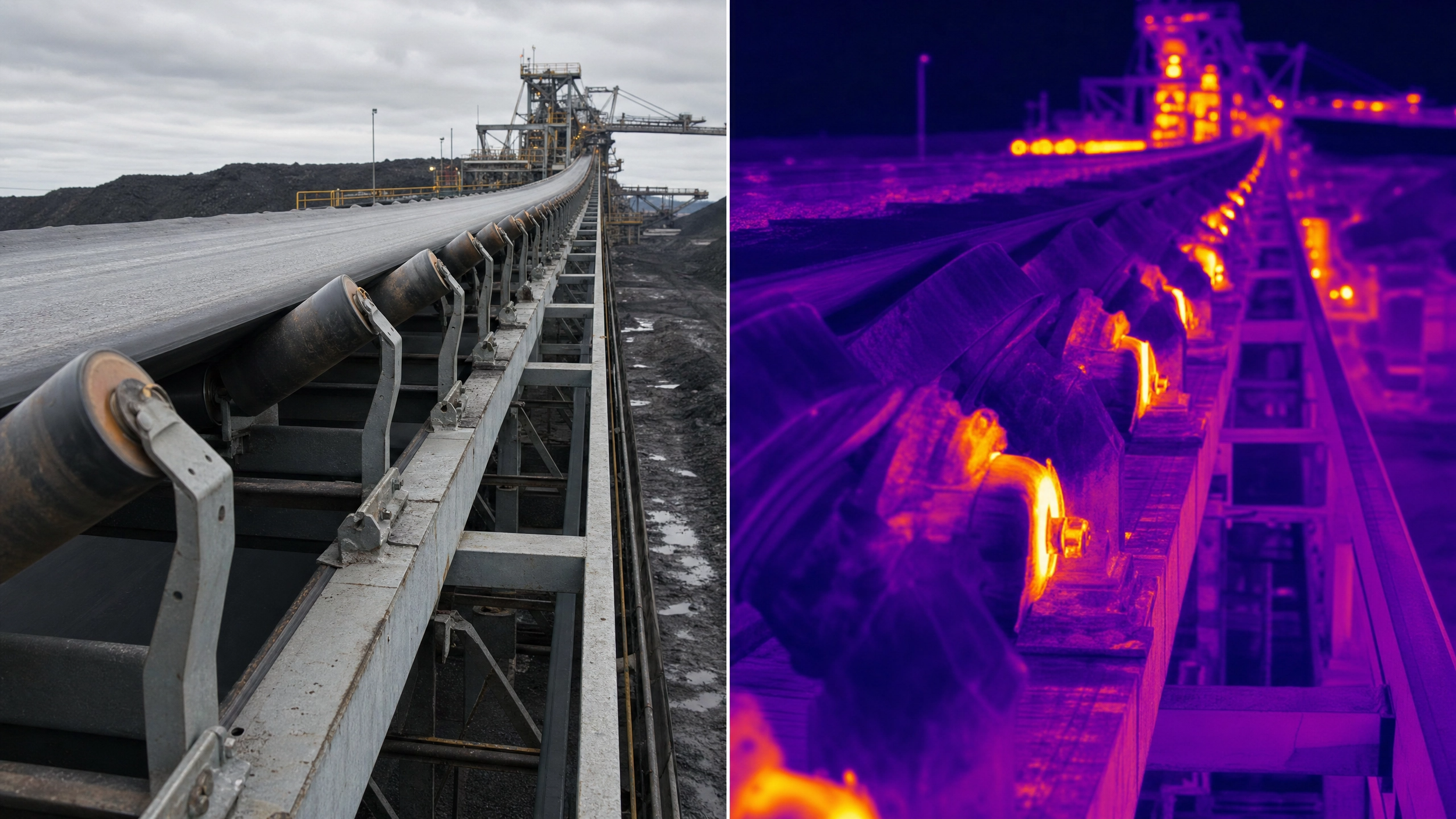
Conveyors, crushers, stackers, reclaimers, screens, and cyclones inspected aerially and internally without scaffolding or confined space entry. Thermal imaging identifies bearing failures, belt tracking issues, and electrical faults before breakdown.Tailings & Water Infrastructure
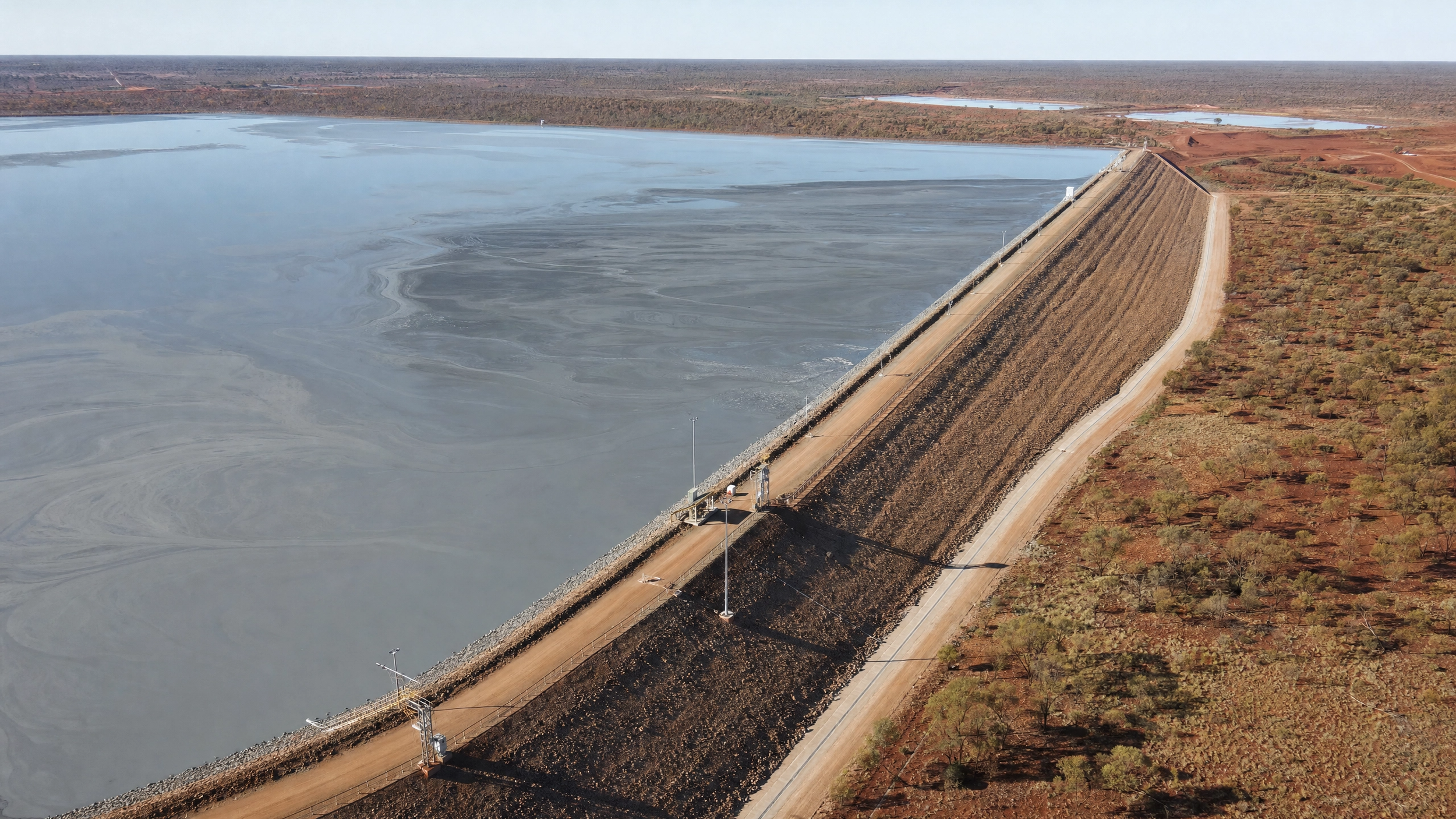
Dam wall monitoring with LiDAR change detection (millimetre-level movement), beach survey, freeboard measurement, decant structure inspection (ROV), and seepage mapping. Aligned to ANCOLD guidelines and site-specific TSF management plans.Gas Detection & Atmospheric Monitoring
Real-time flammable gas detection (14+ combustible gases at 0.1% LEL) during confined space drone operations inside crushers, vessels, and underground voids. Aerial radiometric thermal (min 640x512) detects gas leaks at pipe connections and process equipment through temperature differential. Continuous atmospheric awareness without a human gas tester underground or inside the space.Aerial Industrial Washing & Dust Management
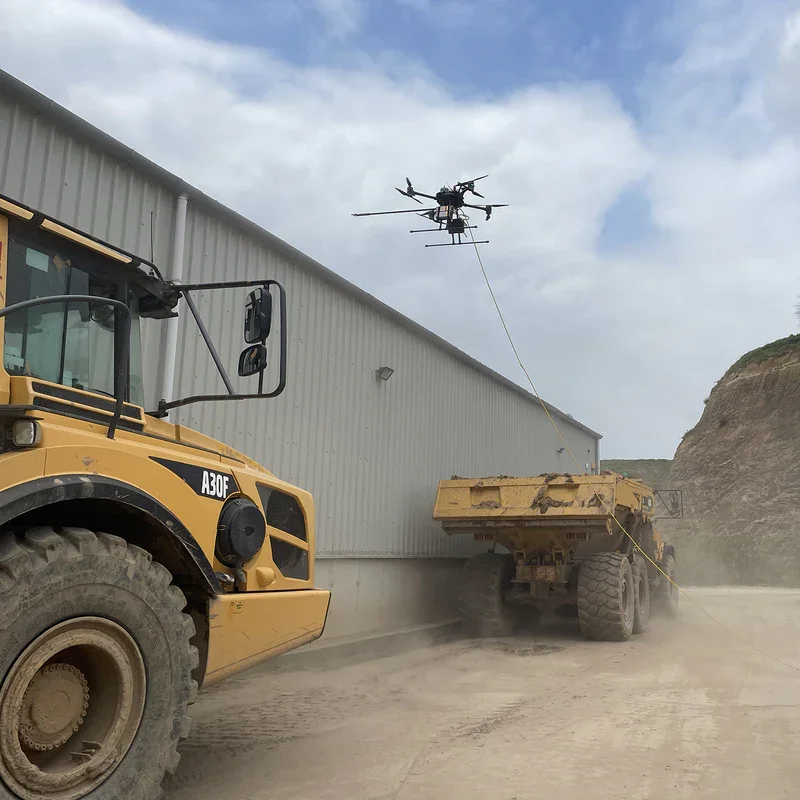
Purpose-built aerial wash platforms deliver low & high-pressure cleaning at working heights up to 100m. Clean dust-covered solar panels, processing plant surfaces, and infrastructure without scaffolding. Pre-inspection surface cleaning improves data quality for subsequent sensor deployment.Rehabilitation & Environmental Monitoring
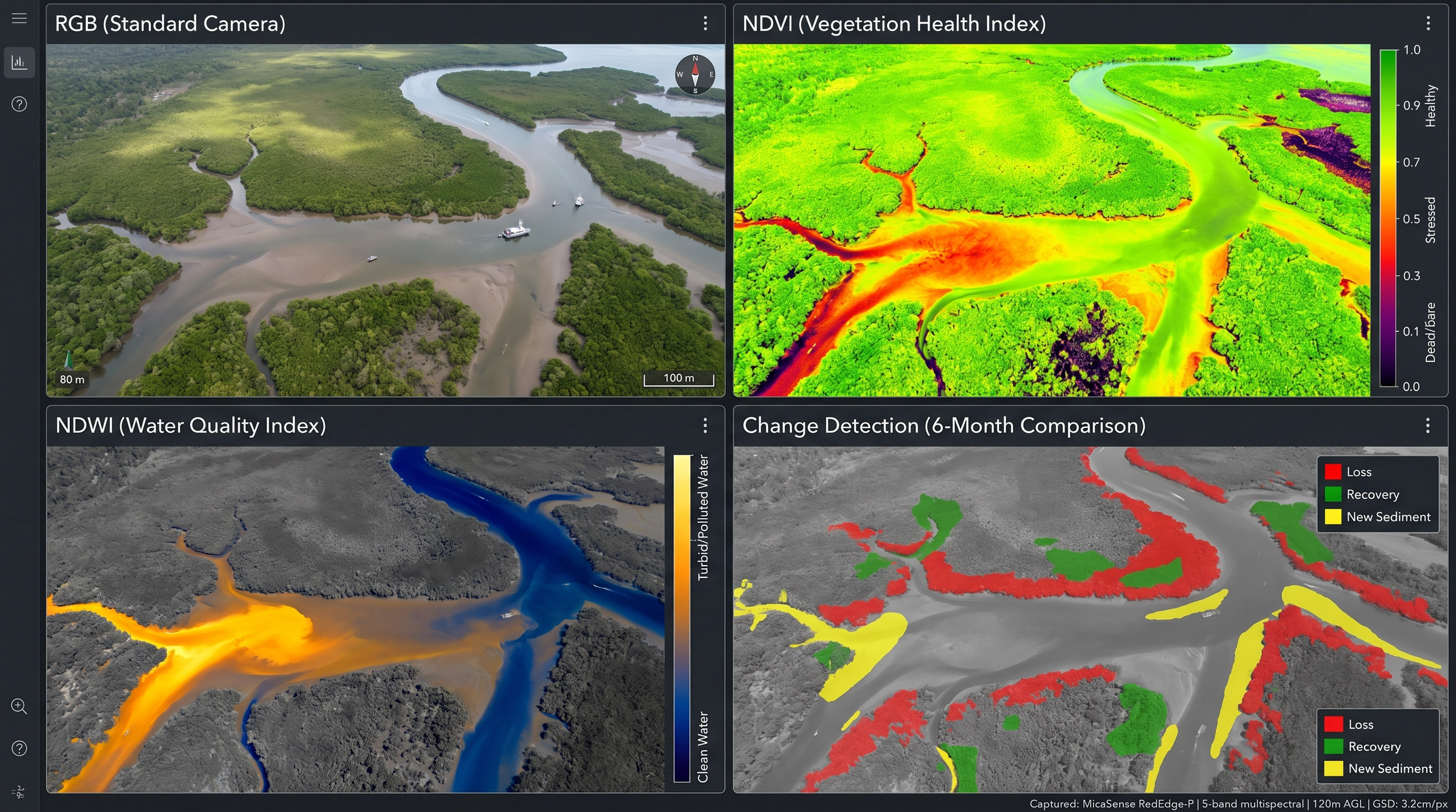
Multispectral imaging (NDVI, NDRE vegetation health indices) for mine rehabilitation areas, tailings revegetation compliance, and biodiversity offset monitoring. Quantitative vegetation health data for mine closure reporting aligned to regulatory requirements.Intelligent Mining Assets
Draglines
Aerial visual + thermal + LiDARBoom structural condition, fatigue crack detection, roller circle wear, mast integrity, rigging assessmentProcessing Plants
Multi-sensor aerial + confined space +/- UTMComprehensive condition assessment, pipe corrosion, structural integrity, thermal anomalies.Dust-Covered Assets
Aerial wash platformPre-inspection cleaning, solar panel washing, asset and processing plant surface cleaningConveyors & Transfer Points
Aerial thermal + visualBelt condition, idler wear, structural corrosion, and transfer chute blockage indicatorsHaul Roads & Pit Walls
Aerial & vehicle LiDAR + photogrammetryRoad condition survey, pit wall stability monitoring, bench geometry complianceWater Infrastructure
Aerial + ROVDam condition, pipeline easement, pump station inspection, bore monitoringCrushers & Screens
Confined space drone (internal) + thermalLiner wear mapping, mantle condition, screen mesh integrity, bearing temperatureElectrical Infrastructure
Aerial thermal + visualSubstation hot joints, transformer condition, switchgear anomalies, cable tray corrosionRail Loadout & Port Facilities
Aerial, ROV, Confined Space + Ground 360Structural condition, rail alignment, ship loader inspection, dust suppression systemsStockpiles
Aerial LiDAR + photogrammetryVolumetric survey (+/-2cm), reconciliation data, stockpile management reportingTailings Storage Facilities
Aerial LiDAR, visual, multispectral + thermal + ROV.Wall movement detection, beach survey, freeboard, seepage, and decant structure conditionMine Rehabilitation Areas
Aerial LiDAR, visual, multispectral + thermal + ROV.Vegetation & soil health indices, revegetation success rates, species establishment, pest, plants & disease monitoring & management, and closure compliance.-
3-5x ROI
Typical return on drone inspection programs through avoided unplanned downtime
-
$500K - $2M/day
Cost of unplanned conveyor failure avoided through early defect detection
-
6 - 12 months
Earlier fault identification compared to scheduled shutdown inspection
-
90%
Reduction in confined space entries for internal vessel inspection
-
+/-2cm
volumetric accuracy replacing manual survey methods
Featured Capability
Tailings Storage Facility Monitoring & Compliance
Tailings dam management is under unprecedented regulatory scrutiny following global failures. DeepSky IQ provides independent monitoring capability aligned to ANCOLD guidelines and your site-specific TSF management plan, delivering the data your Engineer of Record needs for ongoing stability assessment.What we deliver for TSF monitoring:
Repeat LiDAR surveys detecting millimetre-level wall movement and settlementBeach survey and freeboard measurement (drone-based, no personnel on beach)Thermal imaging for seepage detection and phreatic surface indicatorsROV inspection of decant structures, pipelines, and submerged infrastructure Photogrammetric change detection overlays (quarterly, monthly, or event-triggered) Digital twin models for remote engineering review and stakeholder reportingCompliance alignment: ANCOLD Guidelines on Tailings Dams, ICMM Global Industry Standard on Tailings Management, Queensland Dam Safety Regulation.Dragline Inspection & Monitoring
Draglines represent the single highest-value mobile asset on any open-cut coal mine, with replacement costs exceeding $100 million and boom replacements alone costing upward of US$20 million, with machine outages of up to three months (BMT, 2019).
Traditional structural inspection requires scaffolding the full boom length (60-100 metres), crane hire, and rope access teams during planned shutdowns, extending your downtime by 7-14 days and incurring production losses of $150,000-$400,000 per hour.
| Factor | Traditional Inspection | DeepSky Drone Inspection |
|---|---|---|
| Inspection Duration | 7-14 days (additional to shutdown) | 1-2 days (within existing shutdown window) |
| Scaffolding Cost | $80,000-$150,000+ (boom length) | $0 |
| Rope Access Team | $15,000-$30,000 per week (4-6 technicians) | $0 |
| Crane Hire | $5,000-$15,000 per day | $0 |
| Total Inspection Cost | $200,000-$500,000 per event | $15,000-$40,000 per event |
| Lost Production (Extended Shutdown) | $3.6M-$9.6M per additional day | Nil (completed within existing window) |
| Inspection Frequency Achievable | Every 2-5 years (due to cost/disruption) | Quarterly to annually (no production impact) |
| Coverage | Limited to scaffolded areas | 100% of boom, mast, roller circle, house, tub |
| Data Output | Written report, limited photography | 4K/8K imagery, thermal, LiDAR point cloud, 3D model, defect register |
Evidence base:
Unplanned downtime costs Australian industrial businesses $349,000 per hour (median) - ABB "Value of Reliability" Survey, Sapio Research, July 2023
Mining-specific downtime: $180,000-$532,000 per hour (Arkan Mining Solutions, 2025)
BHP saves an estimated $5 million per year through drone inspection programs (DroneDJ, August 2019)
Boom replacement cost: US$20 million with up to 3 months outage (BMT, 2019)
ACARP C11052: Recommendations to significantly reduce the structural maintenance and downtime cost of draglines through improved inspection techniques
Most mining operations already have drone capability for routine surveys. There is a capability ceiling that in-house programs consistently hit.
Why Mining Companies Outsource Complex Inspections
| Your In-House Program | DeepSky IQ Specialist Layer |
|---|---|
| Stockpile volumetrics and progress photography | Structural condition assessment, defect classification, and severity grading |
| Standard aerial platforms | Confined space drones, underwater ROV, survey-grade LiDAR, multi-sensor fusion |
| Basic CASA certification (standard endorsements) | Advanced endorsements: EVLOS I & II, Enclosed BVLOS, night operations, shielded operations |
| Raw images stored on local drives | CMMS-ready defect registers (SAP PM, Pronto, MEX), 3D models, change detection reports |
| Internal assessment (same team operates and assesses) | Independent third-party condition verification (AS 3788, ANCOLD, insurer-accepted) |
| Single pilot, single platform | Multi-discipline team: remote pilots, spatial analysts, condition inspectors, GIS engineers |
| Technology fixed at purchase date | Current-generation platforms updated annually, AI-assisted defect detection |
| Program stalls when pilot leaves or is unavailable | Guaranteed availability, no single-person dependency |
Quarterly condition programs:
Scheduled repeat inspections that build trend data your maintenance planners use for predictive scheduling
How We Work Alongside Your Team
Planned shutdown windows:
We mobilise for your scheduled shutdowns to inspect assets that are only accessible when offline (crushers, vessels, draglines, conveyors)
We do not replace your in-house capability. We extend it. Your team continues the routine survey work they do well. We deploy for the complex, high-value inspections that require specialist platforms, advanced endorsements, and engineering-grade methodology:Incident response:
Rapid deployment after weather events, equipment failures, or near-misses requiring immediate condition verification
Compliance inspections:
Independent third-party assessments required by regulators, insurers, or your own governance framework
When mining companies calculate the cost of in-house drone programs, they typically account for hardware and salary. They rarely account for the full cost of ownership:
| Cost Factor | Annual In-House Cost | Annual DeepSky Program |
|---|---|---|
| Pilot salary + superannuation | $130,000-$160,000 | $0 |
| Platform purchase (amortised over 3 years) | $25,000-$50,000 | $0 |
| Training, endorsements, and currency maintenance | $15,000-$25,000 | $0 |
| Software licences (Pix4D, DJI Terra, thermal analysis) | $8,000-$15,000 | $0 |
| Insurance (hull + public liability) | $5,000-$12,000 | $0 |
| Maintenance, repairs, and battery replacement | $8,000-$15,000 | $0 |
| Backfill and productivity loss when pilot unavailable | $20,000-$40,000 | $0 |
| Total in-house (routine capability only) | $211,000-$317,000 | - |
| DeepSky program (quarterly visits, all assets, full reporting) | - | $80,000-$160,000 |
| Advanced capability (confined space, ROV, dragline, night ops) | Not available in-house | Included |
From Scope to Actionable Intelligence
Step 1: Site Assessment & Program Design
We review your asset register, maintenance history, and compliance obligations. We identify which assets benefit from drone/robotic inspection, design a program aligned to your shutdown schedule, and establish baseline condition data.Step 2: Remote Mobilisation & Capture
Our team deploys to remote sites with enterprise platforms configured for mining environments: dust, heat, magnetic interference, and large-scale operations. We operate within your site safety management system, attending pre-starts and coordinating with active operationsStep 4: Integration & Ongoing Program
Deliverables integrate into your CMMS (SAP PM, Pronto, MEX) and GIS systems. We establish repeat inspection schedules aligned to your maintenance planning cycles, building trend data that enables predictive rather than reactive maintenance.Step 3: Processing & Engineering-Grade Analysis
Raw data is processed into structured deliverables: volumetric reports, defect registers with severity classification, thermal anomaly reports, 3D to 8D digital twins, and change detection comparison overlays against previous surveys.Services for Mining & Resources
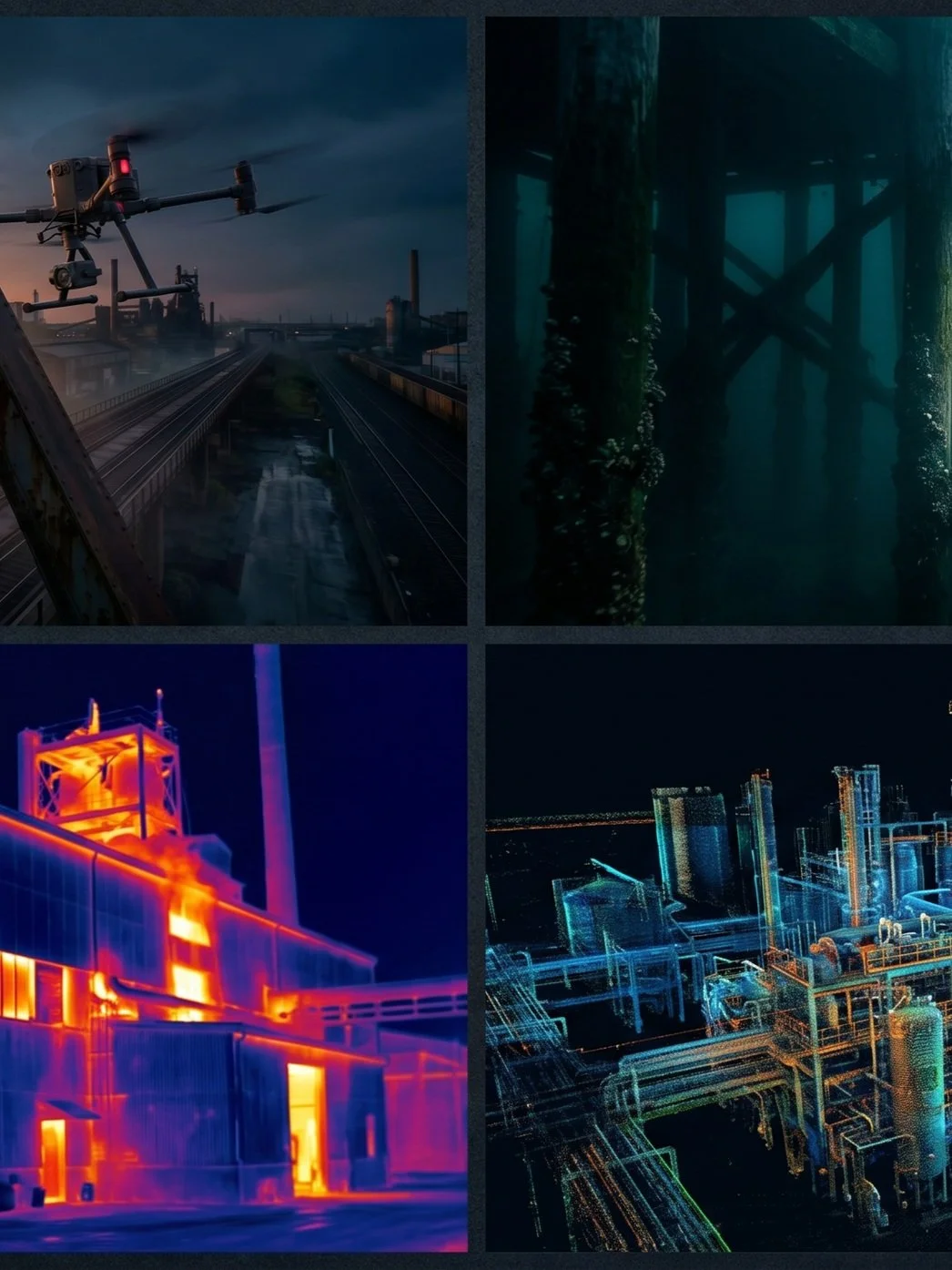
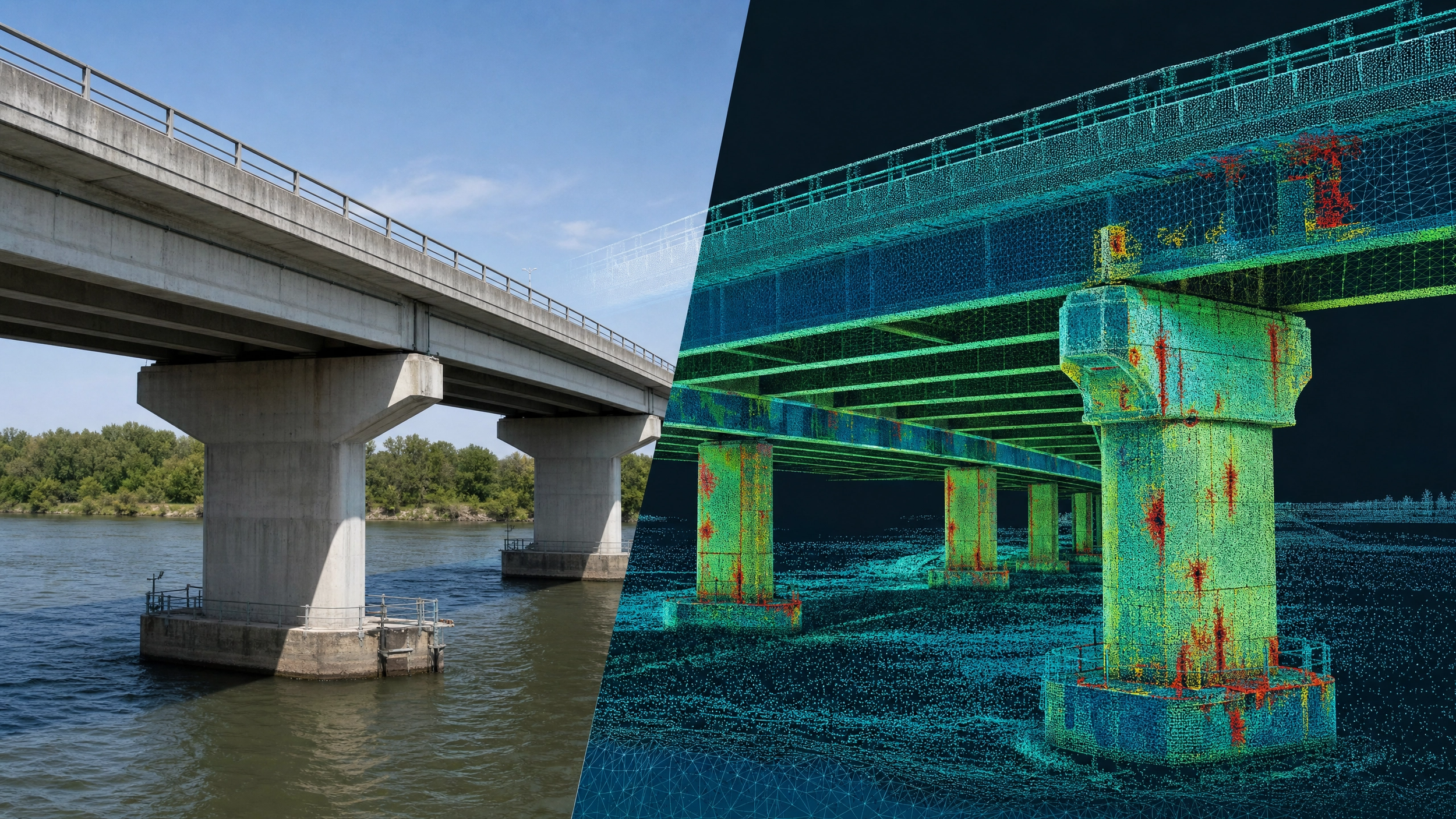
Survey-Grade Spatial & Measurement Intelligence
Stockpile volumetrics, pit surveys, haul road condition
Asset Inspection & Condition Intelligence
Multi-sensor inspection across all mine-site environmentsThermal & Condition Assessment
Conveyor bearings, electrical faults, processing equipment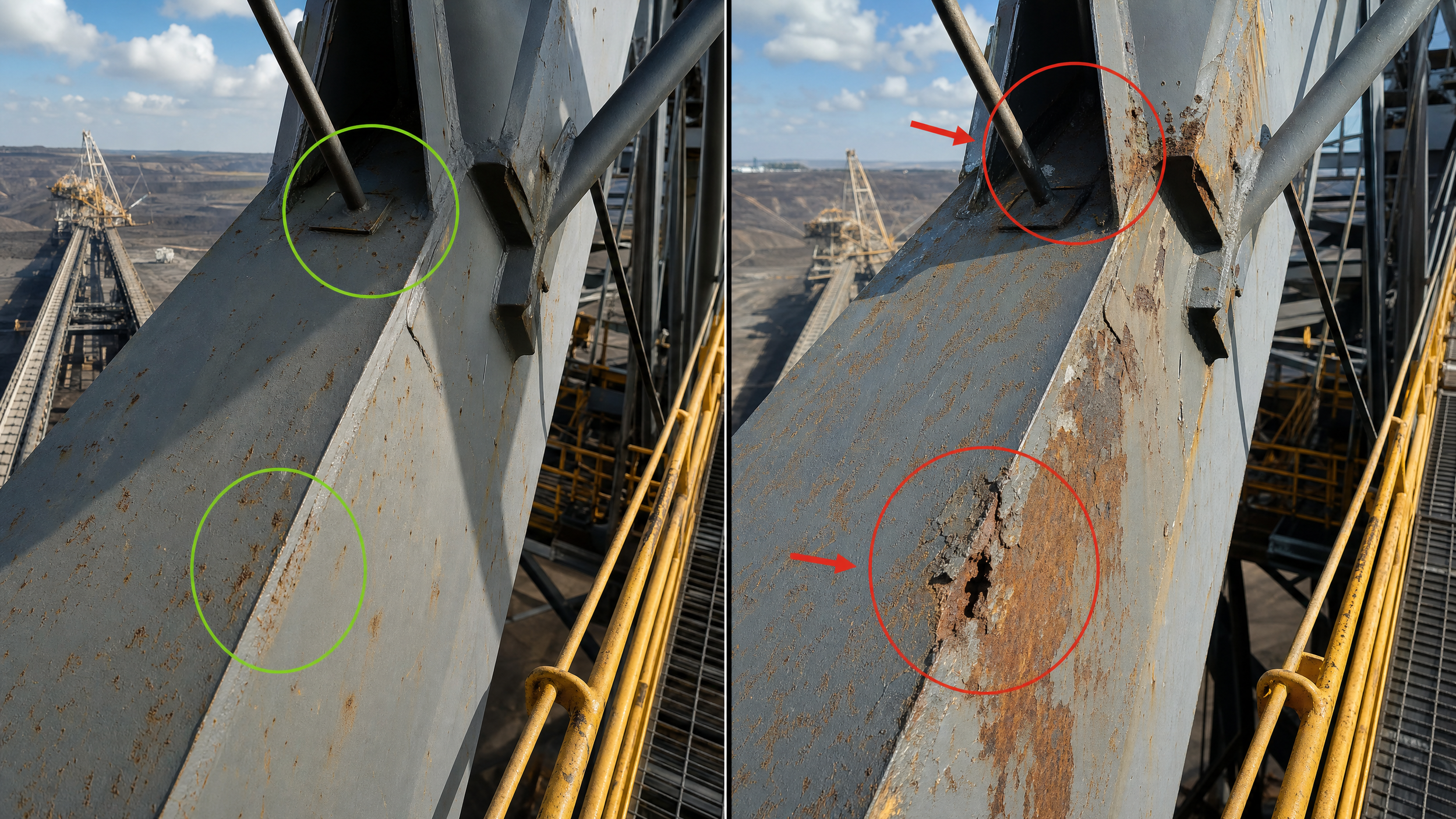
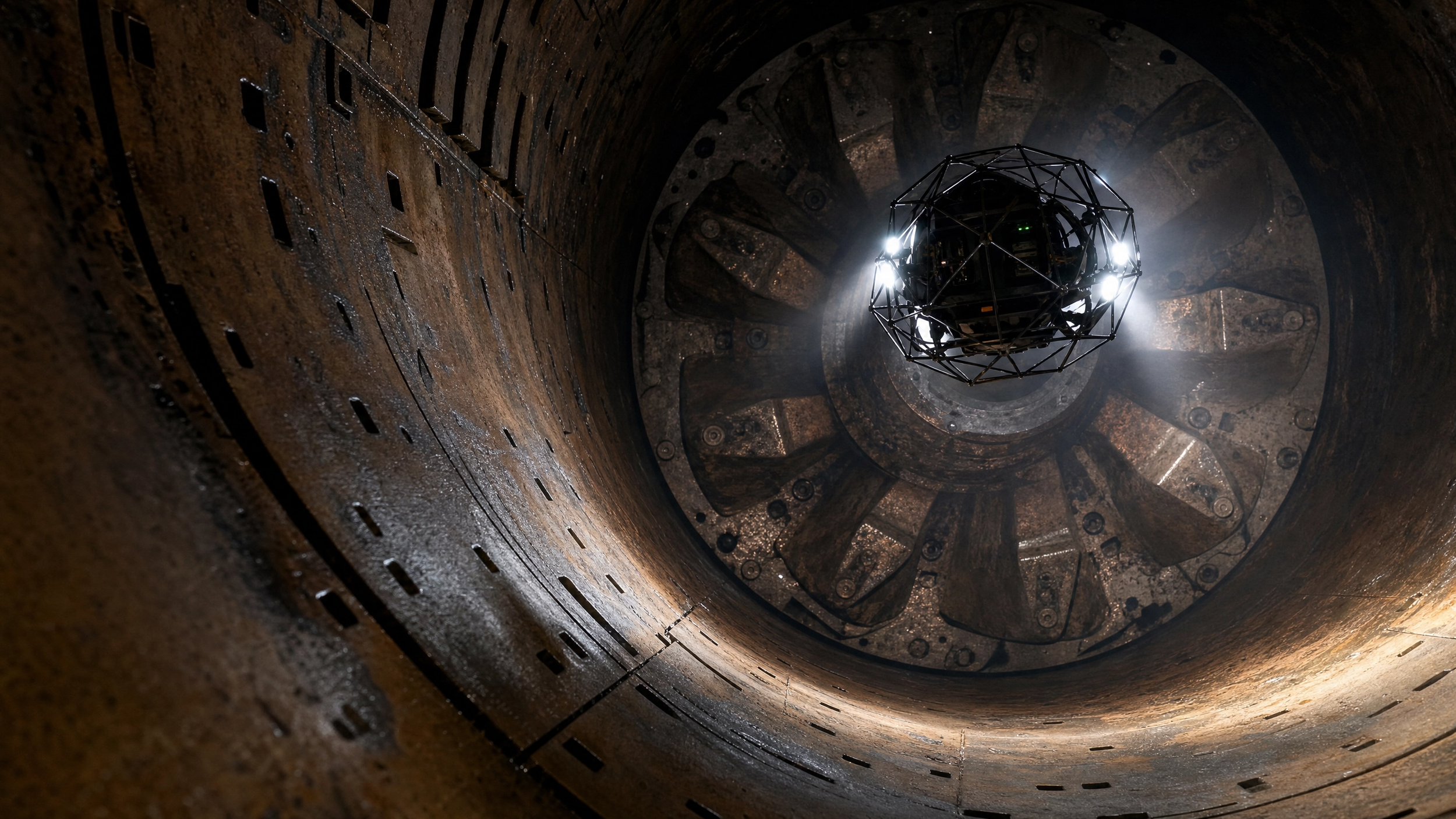
Confined Space & Interior Inspection
Crusher, vessel, and tank internals without human entryAsset Monitoring Programs
Scheduled repeat inspections with change detection and trend analysisDigital Twin & 3D Modelling
Site-wide spatial models for planning and remote review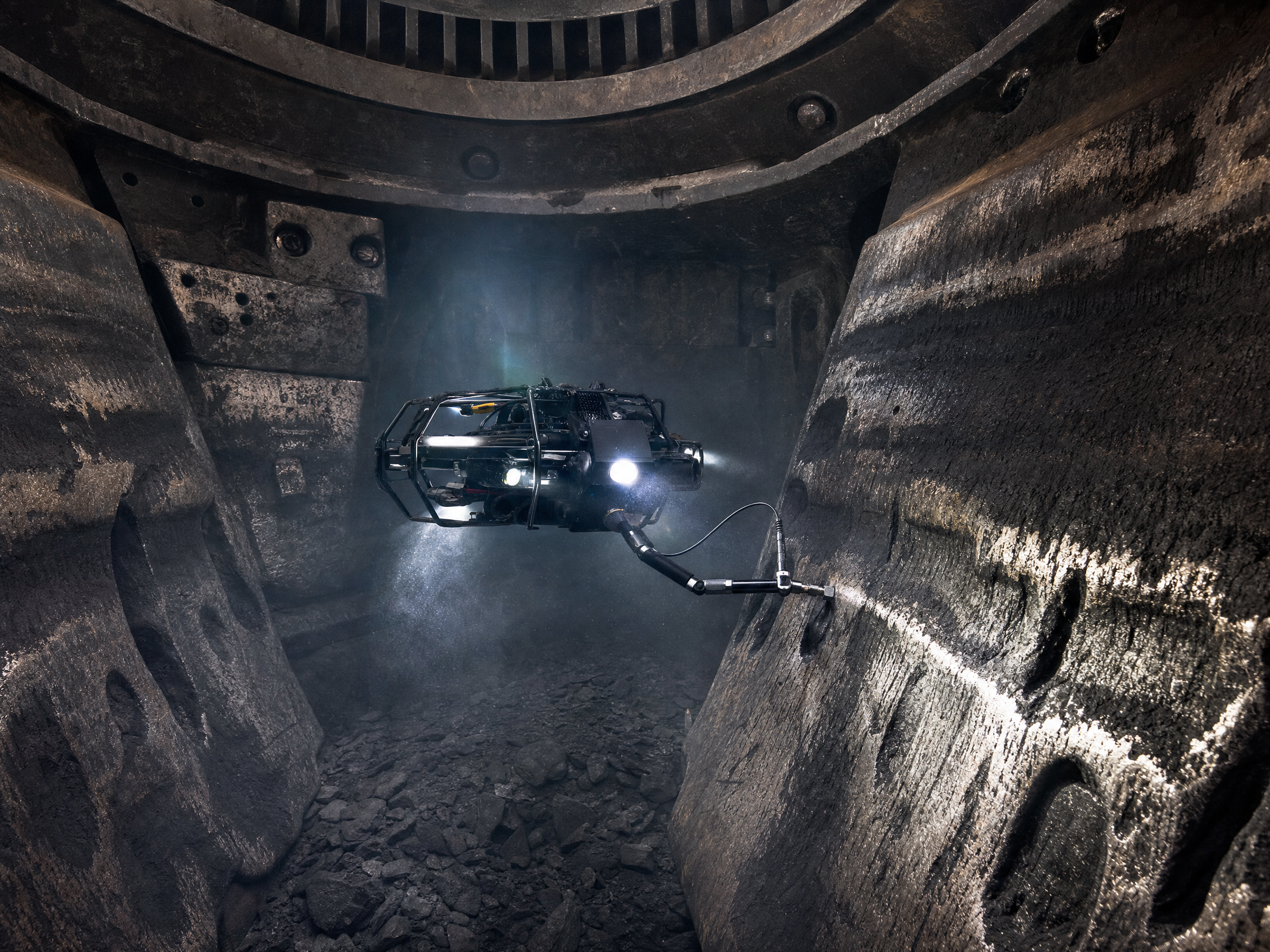
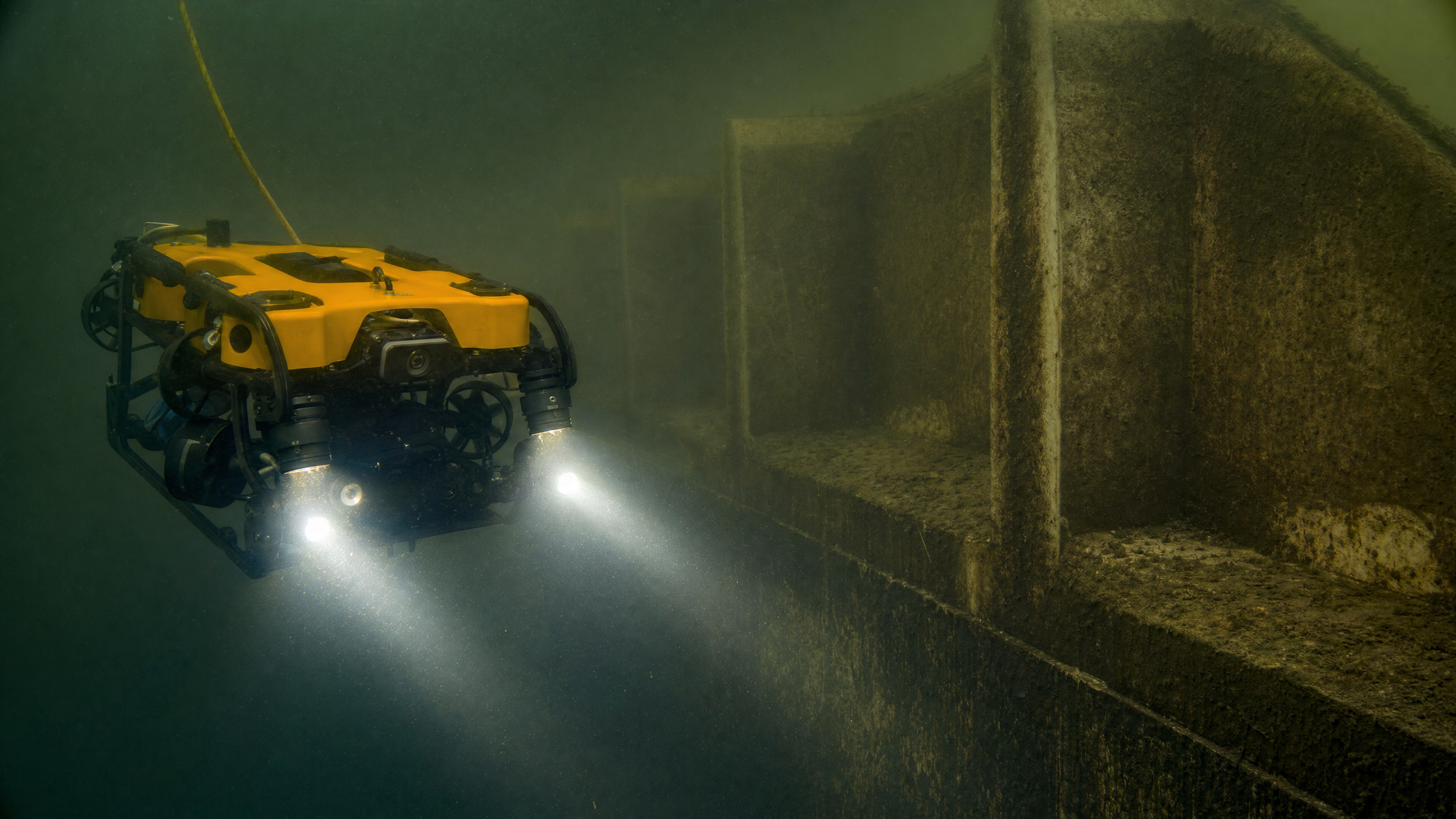
NDT & Robotic Inspection
Underwater & Submerged Asset Intelligence
Tailings decant structures, water infrastructureScope Your Mining Inspection Program
Whether you need a single stockpile survey or a site-wide condition assessment program, we deploy to remote locations across Australia with the platforms, approvals, and mining experience to deliver.NDT Drone & Robotic Inspection Value For Mines
Zero-Exposure Inspection.
Mining operations concentrate the highest-risk inspection environments: dragline booms at 60-100m height, crusher internals with falling material risk, underground stopes with unsupported ground, and tailings structures where access itself is hazardous. Our platforms inspect these assets without production shutdown and without human exposure.
| Asset | Traditional Method | Traditional Risk | DeepSky Method | Risk Eliminated | Cost Impact |
|---|---|---|---|---|---|
| Draglines (boom, mast, house) | Scaffold boom (60-100m), 7-14 days additional to shutdown | Falls from extreme height, $3.6M-$9.6M/day lost production | Drone full coverage in 1-2 days within existing window | Eliminates scaffold + reduces shutdown | $3.6M-$9.6M per avoided day |
| Crushers & mills (internal) | Confined space entry, falling material risk, lockout/tagout | Engulfment, falling material, atmospheric | Confined space drone internal inspection without entry | Eliminates confined space + engulfment risk | 60-80% reduction |
| Conveyors (structural) | Working at height along route, near moving parts | Falls, nip point entanglement | Drone thermal + visual while operating | Zero exposure to height or moving parts | 40-60% reduction |
| Underground stopes & drives | Personnel entry to unsupported ground | Ground fall, entrapment, atmospheric | Confined space drone enters void, no human entry | Eliminates ground fall + entrapment risk | N/A (previously uninspectable) |
| Tailings dams | Limited access, potentially unstable embankments | Embankment failure during inspection | Drone + LiDAR, no personnel on structure | Zero personnel on unstable ground | 50-70% reduction |
| Stockpiles | Survey crew on active haul roads | Vehicle-pedestrian interaction (leading cause of mine fatality) | Aerial volumetric survey, no ground presence | Eliminates VPI risk entirely | 30-50% reduction |
Cost Benefits for Mine Sites
Multispectral Rehabilitation Monitoring
Mine rehabilitation and closure compliance requires quantitative evidence of vegetation establishment and ecosystem recovery.
Our NDVI and NDRE vegetation health mapping for mine rehabilitation compliance. Quantitative evidence of vegetation establishment, species diversity, and water quality — structured for mine closure reporting and Environmental Authority conditions.
| Metric | Traditional | DeepSky Robotic | Saving |
|---|---|---|---|
| Dragline inspection (full structural) | $200K-$500K + 7-14 days additional shutdown ($3.6M-$9.6M/day) | $15K-$40K within existing shutdown window | $185K-$460K direct + millions in avoided downtime |
| Crusher internal inspection | $30K-$80K (confined space entry, scaffold, isolation) | $8K-$15K (confined space drone, 4-8 hours) | $22K-$65K per event |
| Underground void survey | Previously impossible without human entry | $5K-$12K (confined space drone flight) | Enables previously impossible inspection |
| Annual mine site inspection program | $500K-$1.5M (traditional access methods) | $150K-$400K (robotic program) | $350K-$1.1M annually |
$180K - $532K/hour
Mining-specific unplanned downtime cost (Arkan Mining Solutions, 2025)Vehicle-pedestrian interaction
Leading cause of mining fatality in Australia. Aerial survey eliminates ground presence.Zero
Human entries into unsupported ground required100%
Coverage of previously inaccessible voids (stopes, raises, ore passes) is now achievableThe question isn't whether you can afford robotic inspections. It's about whether you can justify sending people into a crusher chamber, when a drone can capture the same wall thickness data in 4 hours without anyone crossing the isolation boundary.
Your Questions, Answered
-
We achieve +/-2cm positional accuracy using RTK-enabled drones with photogrammetry and LiDAR when we place our Propeller aeropoint ground control points, checkpoints, and validate with our Emlid RS3.
This delivers volumetric accuracy within 1-2% of actual volume, meeting or exceeding the accuracy of traditional ground-based survey methods. A complete stockpile survey that would take a ground crew 2-3 days can be captured aerially in 2-4 hours, with no personnel required on or near the stockpiles, and the data delivered in real-time or within 24 hours.
-
Yes. We deploy cage-protected confined space drones to inspect crusher internals, milllinings, kiln interiors, and processing vessels without human entry. The drone captures high-resolution visual imagery, thermal data, and LiDAR point clouds of linear wear patterns, structural condition, and buildup.
This can eliminate up to 6-12 hours typically required for isolation, lockout/tagout, atmospheric testing, and scaffolding before traditional inspection can begin.
-
Mining operations typically achieve 3-5x ROI on drone inspection programs through three primary mechanisms:
(1) reduced equipment downtime by identifying developing failures 6-12 months before catastrophic breakdown, enabling planned maintenance during scheduled shutdowns;
(2) eliminated confined space entry costs ($15,000-$50,000 per entry including isolation, scaffolding, and standby rescue); and
(3) faster survey cycles that improve reconciliation accuracy and reduce material handling costs.
A single avoided unplanned conveyor failure ($500,000-$2,000,000 per day) typically pays for an entire year's inspection program.
-
We conduct repeated inspections (quarterly, monthly, or event-triggered) that detect millimetre-level movement in dam walls and embankments through point cloud comparison.
Combined with thermal imaging for seepage detection and photogrammetric change detection, this provides your Engineer of Record with the data needed for ongoing stability assessment aligned to ANCOLD guidelines.
Our ROVs inspect submerged decant structures and pipelines without requiring dewatering or diver deployment, and measure to within millimetres, capturing images for a consolidated yet consistent digital twin for comparisons over time.
-
Yes. We are equipped to deploy to remote sites anywhere in Australia. We hold comprehensive CASA approvals with advanced endorsements (EVLOS I & II, Enclosed BVLOS, night operations), allowing us to work in any location.
-
Yes. Radiometric thermal imaging identifies developing bearing failures, belt tracking issues, idler seizure, and motor overheating by detecting temperature anomalies. A seized idler that would cause belt damage within weeks shows a clear thermal signature 6-12 months before failure.
Regular thermal surveys of conveyor systems (monthly or quarterly) build trend data that enables predictive maintenance scheduling, reducing unplanned downtime by 40-60% on monitored assets.
-
Yes. We deploy multispectral sensors that capture vegetation health indices (NDVI, NDRE) across rehabilitation areas, tailings revegetation zones, and biodiversity offset sites.
This provides quantitative data on vegetation density, photosynthetic activity, and early stress detection that is more objective and repeatable than visual ground assessment. Repeat surveys build a time-series dataset showing rehabilitation progress, which is structured for mine closure reporting aligned to state regulatory requirements and Environmental Authority conditions.
-
Our industrial aerial wash platform is capable of high-pressure cleaning (up to 2,500 psi) or soft wash (300 psi) at working heights up to 100m.
On mine sites, it is used for cleaning dust-covered solar panels to restore generation efficiency, pre-inspection surface cleaning to improve data quality for subsequent sensor deployment, and general infrastructure cleaning without scaffolding or EWP. The carbon fibre airframe weighs under 9kg and provides 40 minutes of flight time.
Related Industries
-
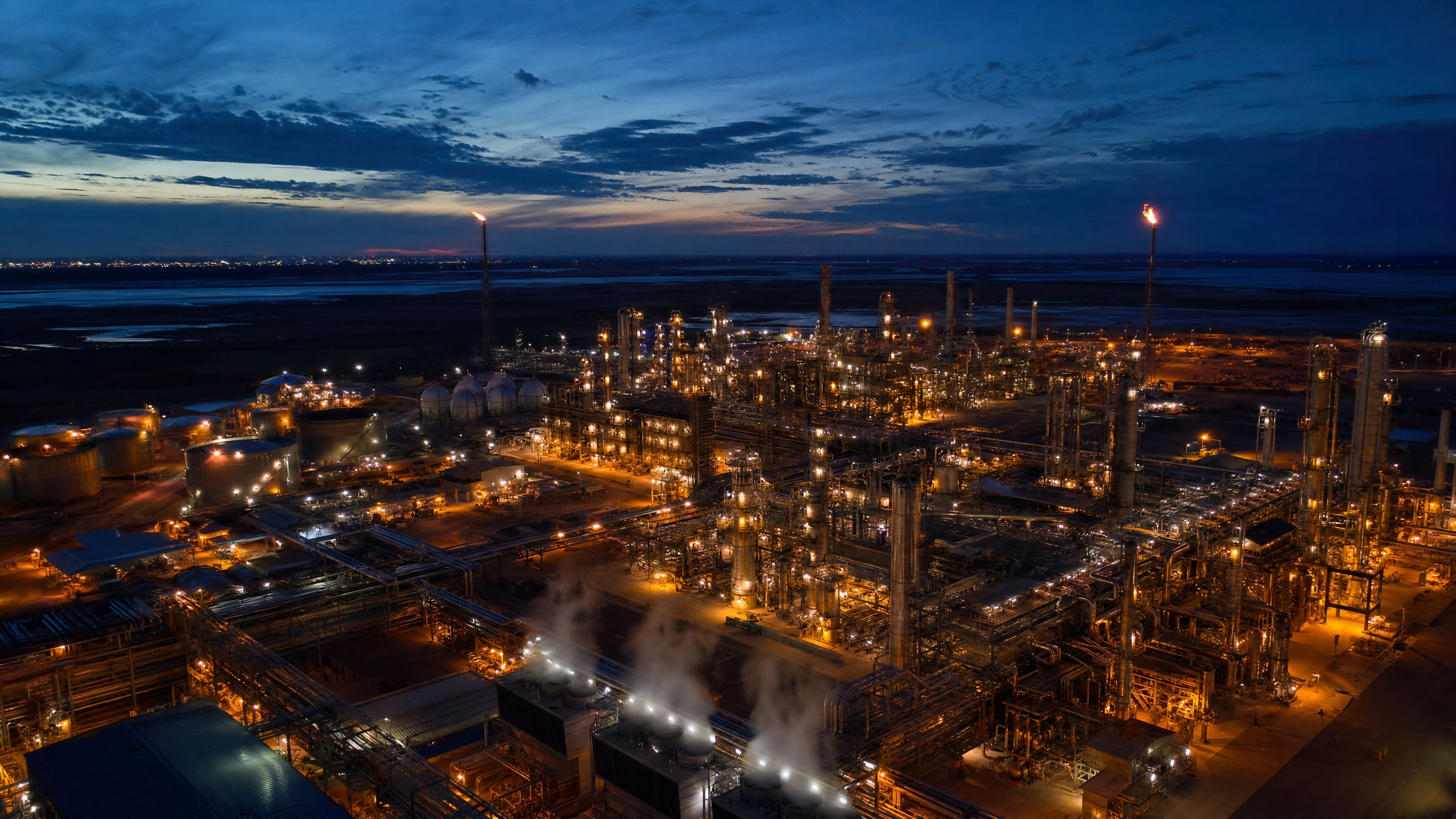
Oil & Gas
Oil & Gas - Pipeline, refinery, and processing plant inspection
-
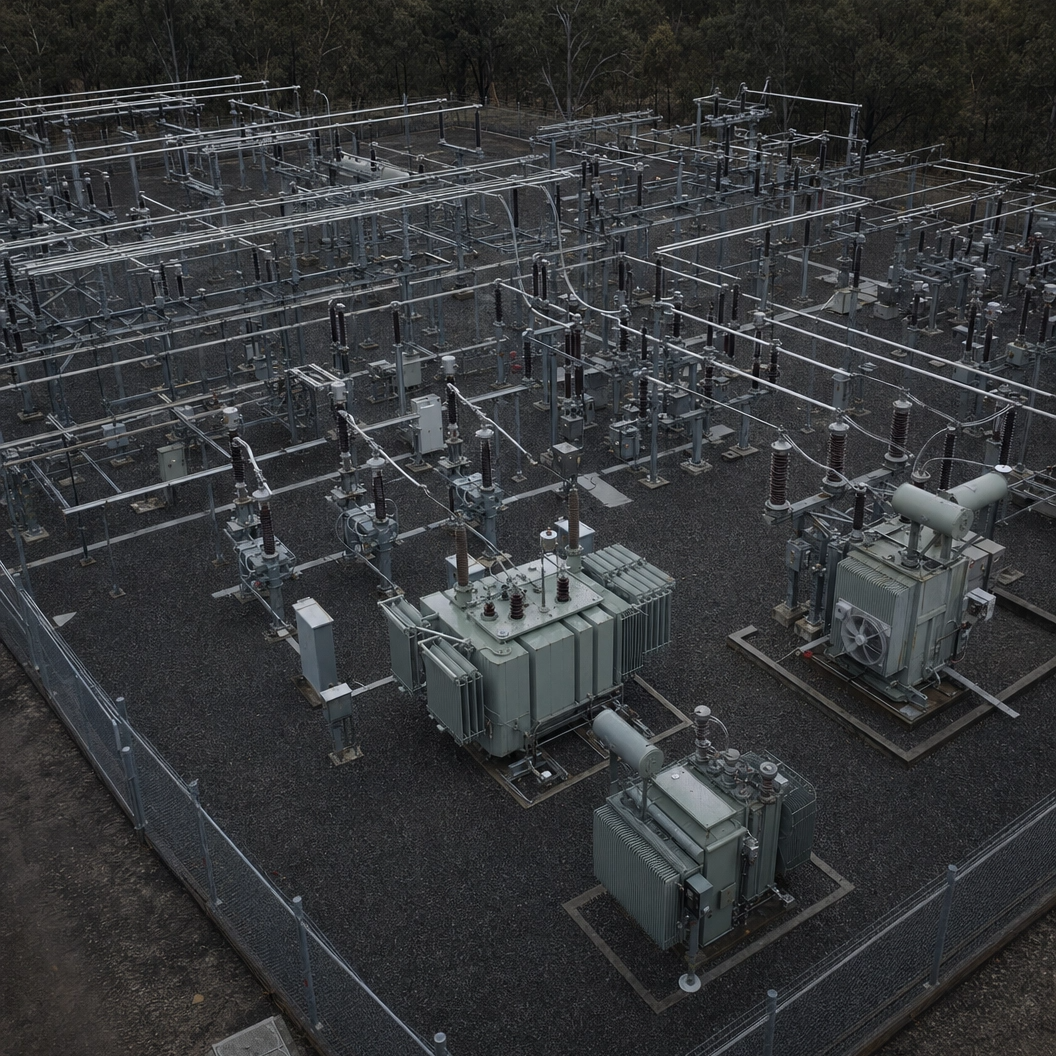
Energy & Utilities
Energy & Utilities - Power networks, substations, and water infrastructure
-
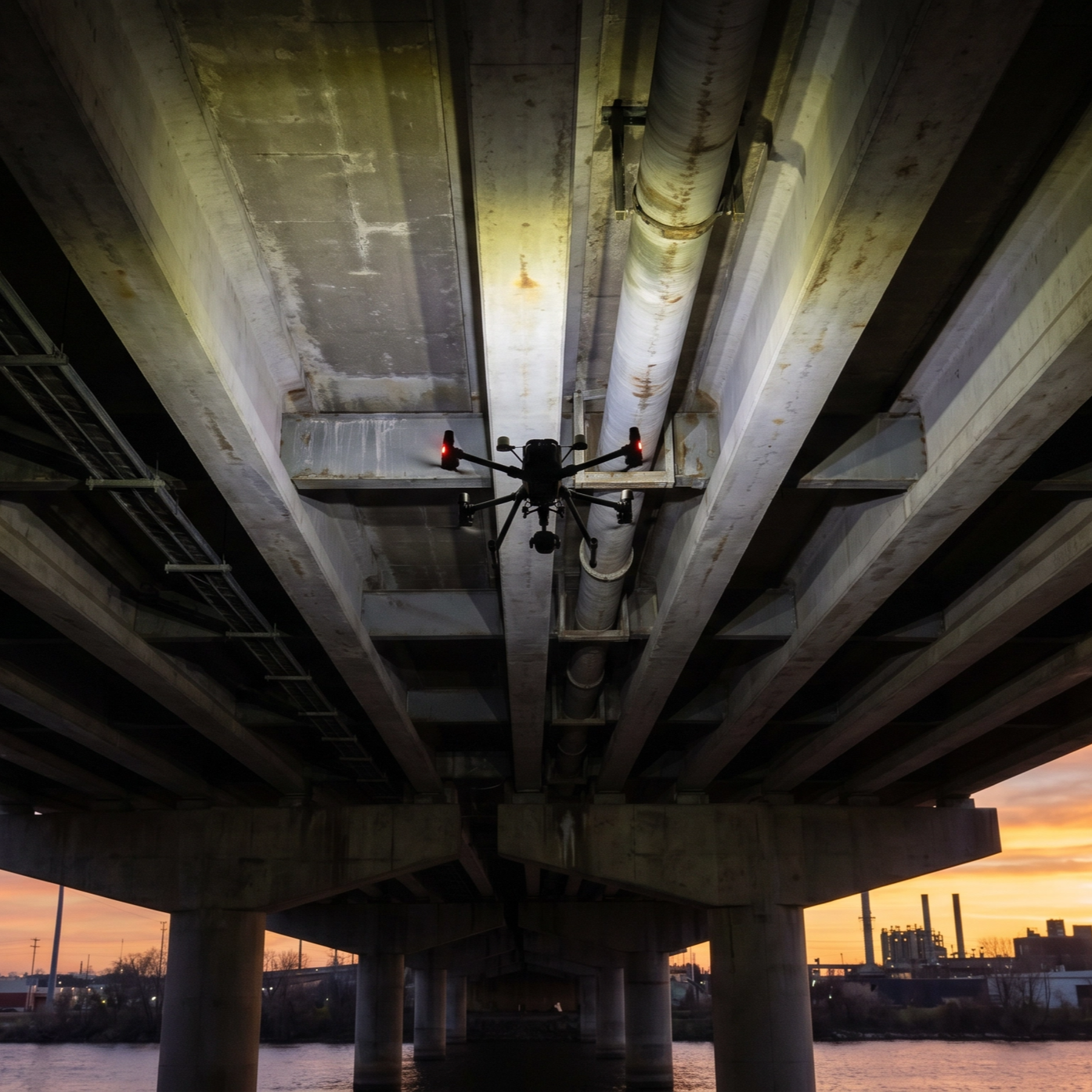
Infrastructure & Transport
Infrastructure & Transport - Rail, road, bridge, and corridor assets
-
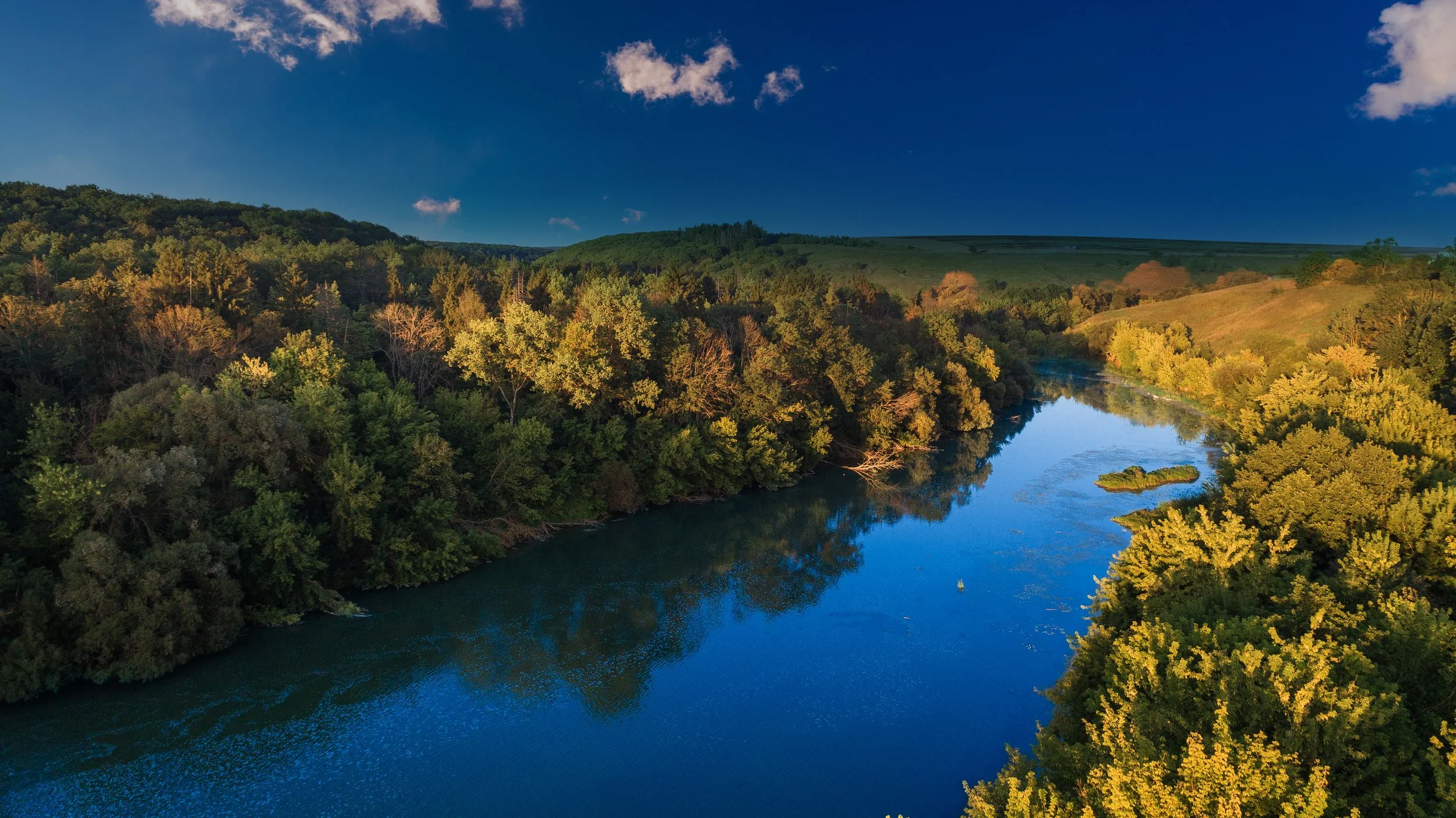
Environmental & Conservation
Environmental & Conservation - Rehabilitation monitoring, biodiversity offsets