

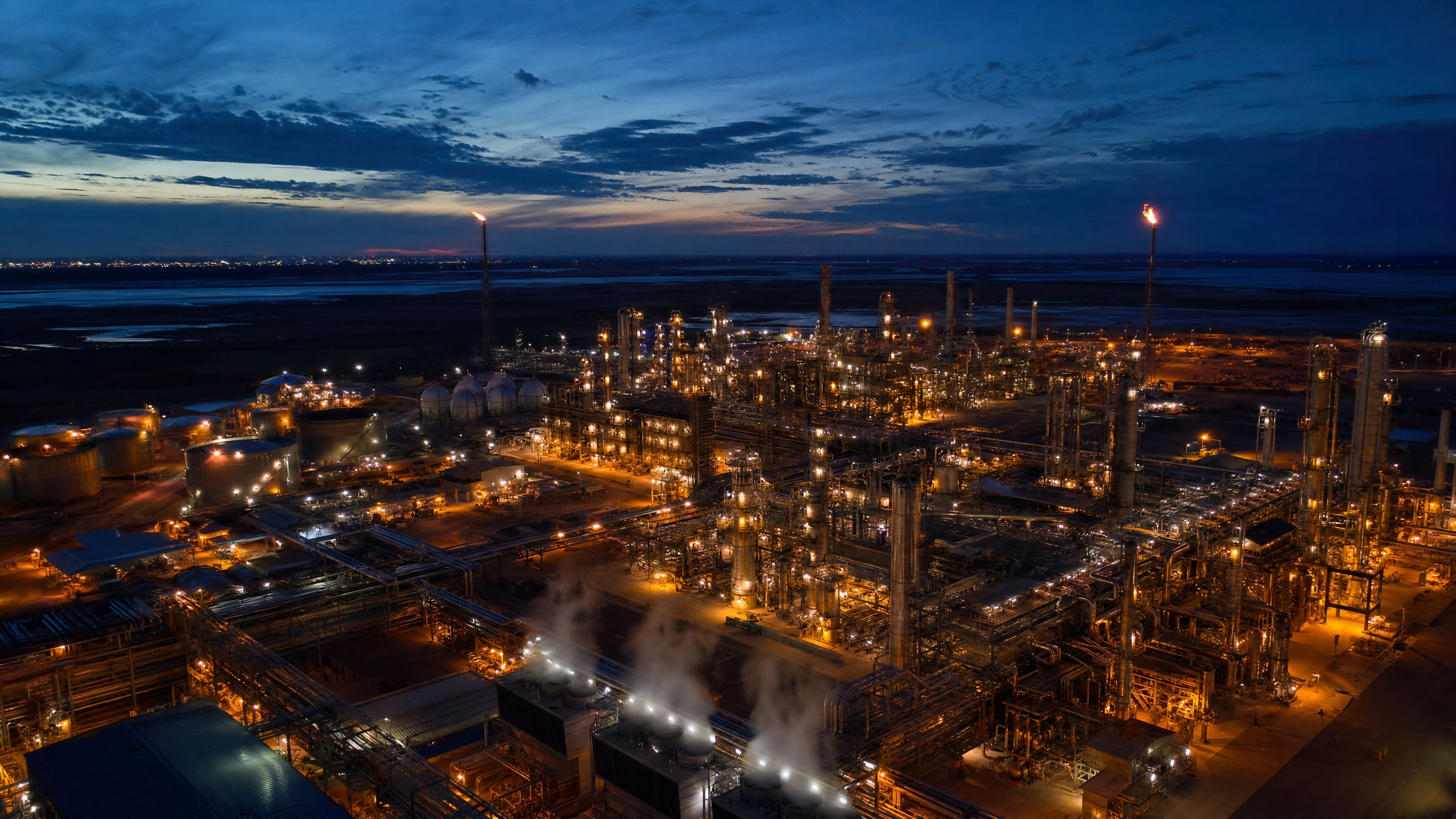
Oil & Gas Asset Intelligence
Safety-Critical Inspection Without Production Interruption.
For upstream, midstream, and downstream operators managing high-consequence assets in hazardous environments. We deliver engineering-grade condition data without confined space entry, hot work permits, or production shutdowns.
TURNAROUND WINDOWS ARE FINITE. PRE-SCOPE YOUR INSPECTION PROGRAM BEFORE YOUR NEXT PLANNED SHUTDOWN.

The True Cost of Deferred Inspection
Oil and gas operators face a unique inspection challenge:
Assets that are simultaneously safety-critical and production-critical. Every inspection that requires shutdown, confined space entry, rope access or scaffolding competes directly with production revenue. The result: Deferred maintenance, incomplete condition data, and reactive failures that cost orders of magnitude more than planned intervention.
Unplanned shutdowns in oil and gas cost $500,000 to $5,000,000+ per day in lost production
Every inspection that requires shutdown, confined space entry, or scaffolding competes directly with production revenue
Confined space entry for tank inspection requires 4-8 hours of isolation, purging, and atmospheric testing before a single photograph is taken
Corrosion under insulation (CUI) causes 40-60% of piping failures in ageing facilities, yet remains invisible to external visual inspection
Flare stack inspection traditionally requires full shutdown and scaffolding at $150,000-$500,000 per event, or even just a single drag line can cost $1M+ per day
Regulatory compliance (AS 1210, AS 3788, API 510/570/653) demands inspection cycles that outpace available shutdown windows
Zero-Entry Internal Inspection
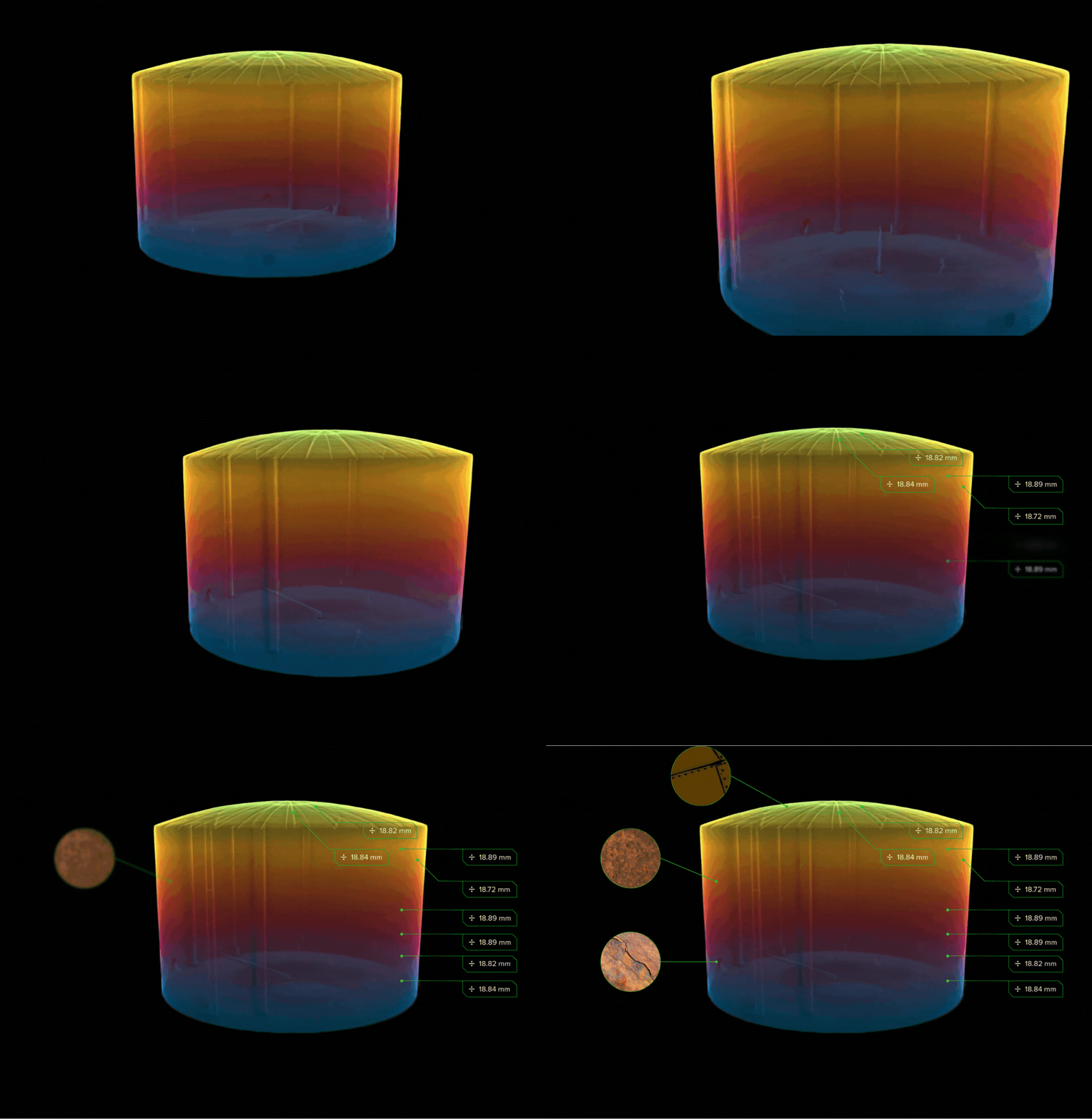
Inspect pressure vessels, storage tanks, and columns internally using confined space drones (Flyability ELIOS 3) without human entry, purging, or scaffolding. Capture visual, thermal, LiDAR, and ultrasonic thickness data in a single deployment. Real-time flammable gas monitoring (14+ combustible gases at 0.1% LEL resolution) runs simultaneously with inspection payloads, providing continuous atmospheric awareness without a human gas tester inside the space.Elevated Asset Inspection
Flare stacks, columns, pipe racks, and cooling towers inspected from the air without scaffolding or rope access delays and inherent risks. High-resolution zoom (Min 48MP+) and radiometric thermal (Min 640x512) from safe standoff distances. Radiometric thermal imaging detects gas leaks at flanges, valves, and pipe connections through temperature differential, and identifies CUI indicators across insulated piping and vessels.Complete Condition Intelligence
Across All Oil & Gas Environments
DeepSky IQ delivers independent inspection capability across every environment in your oil and gas operation: aerial for elevated assets, confined space drones for internal vessel inspections, underwater ROVs for submerged infrastructure, and ground-level thermal for pipeline and process equipment.
With the Confined Space Elios 3 drone from Flyability, equipped with a UT payload and the Tethered Power Unit, inspectors can reliably capture close-up images and up to 250 UTMs per hour at height. No scaffolding, rope-access, or man lifts needed. Its LiDAR also pins defects in the asset’s digital twin for future comparison.Subsea & Submerged Assets
Pipeline crossings, jetty piles, intake structures, and cooling water systems inspected by ROV with visual, sonar, and ultrasonic thickness measurement (UTM) capability. No divers required.Aerial & Ground Industrial Washing
Pre-inspection surface cleaning and ongoing maintenance washing using a purpose-built wash drone with a proprietary advanced surface tracking and variable distance sensors.
High-pressure or soft washing with the capability to work at heights up to 100m. Clean solar panels, substation insulators, cooling tower surfaces, and building facades without scaffolding, rope access, or EWP.
Improving inspection data quality by removing surface contamination before sensor deployment.
Oil & Gas Assets
-
Storage Tanks (API 653)
Confined space drone (internal) + aerial (external) + UTM
Shell condition report, floor mapping, roof integrity, corrosion mapping
-
Pressure Vessels (AS 3788)
Confined space drone + thermal
Internal lining condition, refractory wear, corrosion under insulation indicators -
Flare Stacks & Columns
Aerial zoom + thermal (no shutdown)
Tip condition, refractory lining, structural integrity, and guy wire tension -
Pipe Racks & Piping
Aerial thermal + visual
CUI indicators, flange leaks, insulation damage, and support corrosion -
Refineries & Processing Plants
Multi-sensor aerial + confined space
Comprehensive condition assessment, thermal anomaly mapping, digital twin
-
Pipelines & Corridors
Aerial LiDAR + thermal + visual
Easement compliance, third-party encroachment, leak detection, subsidence
-
Jetties & Marine Loading
Aerial + underwater ROV
Pile condition, cathodic protection, marine growth, structural integrity
-
FPSOs & Offshore Platforms
Aerial + ROV (hull, risers)
Topside condition, hull UTM, riser inspection, flare tip assessment
-
Solar Panels & Insulators
Ground & Aerial drone cleaning with high pressure or soft washing working at heights to 100m, no scaffolding, no ropes or EWP. Less water. Faster Coverage. Less Risks
Measurable Outcomes for Oil & Gas Operators
$150K - $500k
Saved per flare stack inspection by eliminating scaffolding and shutdown4 - 8 Hours
Eliminated per tank entry (isolation, purging, atmospheric testing)From Scope to Actionable Intelligence
40-60%
Of piping failures are caused by CUI, detectable with thermal & UTM before failure90%
Reduction in personnel exposure to hazardous environmentsStep 1: Technical Scoping
We review your asset register, inspection history, and compliance obligations. We identify which assets can be inspected without shutdown, which require coordination with planned outages, and what sensor combinations deliver the data your engineers need.Step 2: SIMOPS Planning & Mobilisation
We develop a detailed inspection plan that integrates with your PTW system, SIMOPS requirements, HAZID and site safety protocols. Our team mobilises with enterprise platforms configured for your specific asset types and hazardous area classifications.Step 3: Multi-Environment Capture
Aerial drones capture elevated assets and thermal baselines. Confined space drones enter vessels and tanks without human entry. ROVs inspect submerged and subsea components. All data is georeferenced and time-stamped for audit trail integrity.Step 4: Engineering-Grade Reporting
Deliverables are structured for direct integration into your integrity management system. Outputs include defect registers with severity classification, corrosion mapping, digital twins, and compliance-ready reports aligned to AS 3788, API 510/570/653, and your internal standards.Zero-Exposure Inspections for Hazardous Environments
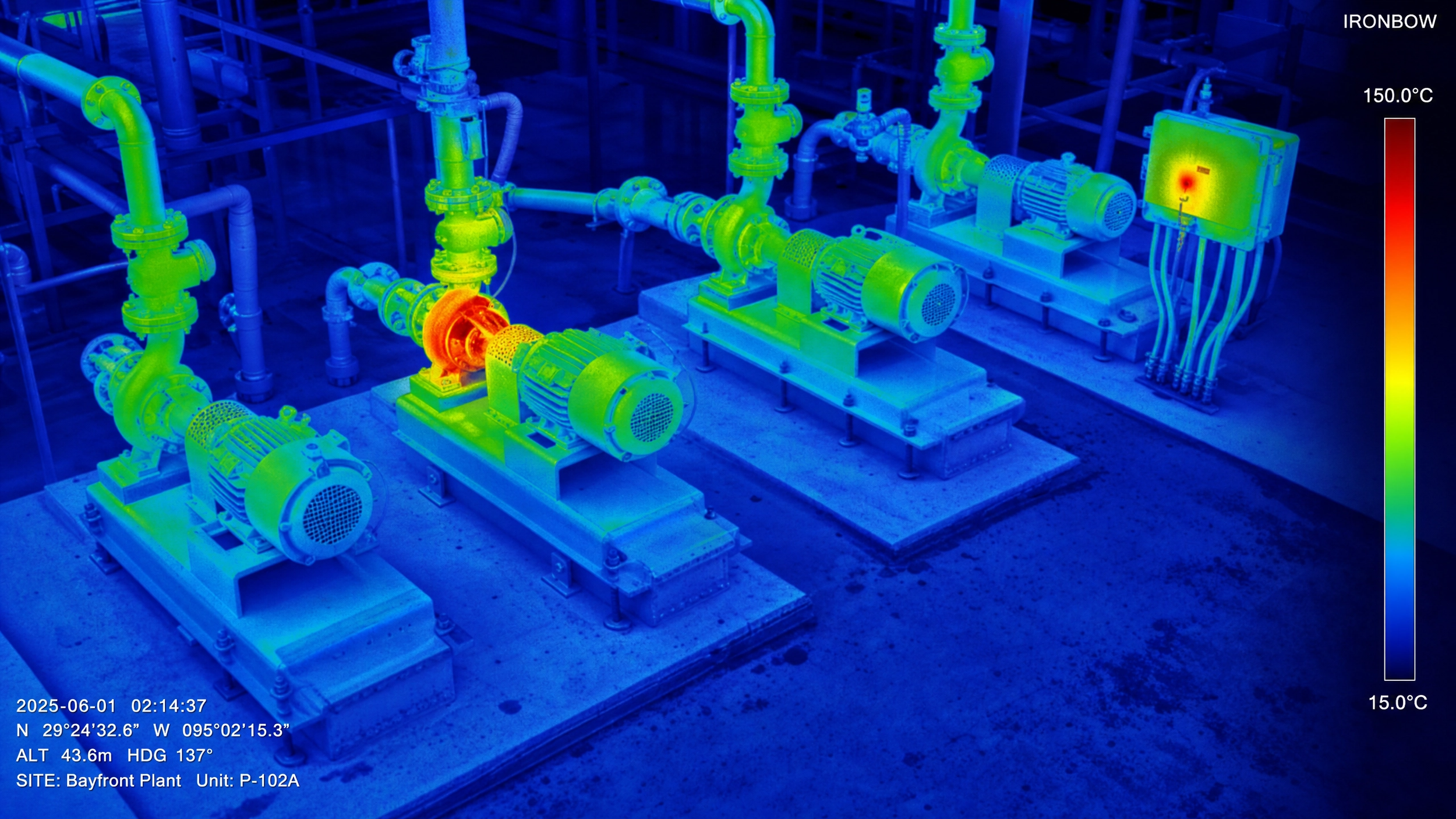
Process thermal anomaly detection:
Radiometric thermal identifies overheating bearings, pump seals, electrical connections, and heat exchanger performance issues across process equipment, enabling predictive maintenance before failure.Confined space atmospheric monitoring:
Real-time detection of 14+ combustible gases (methane, hydrogen, propane, butane, ethylene, and others) at 0.1% LEL resolution during internal vessel inspection. The gas sensor runs simultaneously with the UT payload via a pass-through connector, providing continuous atmospheric data while collecting wall thickness measurements. Adjustable LEL threshold alerts the pilot to abort if gas concentrations approach hazardous levels.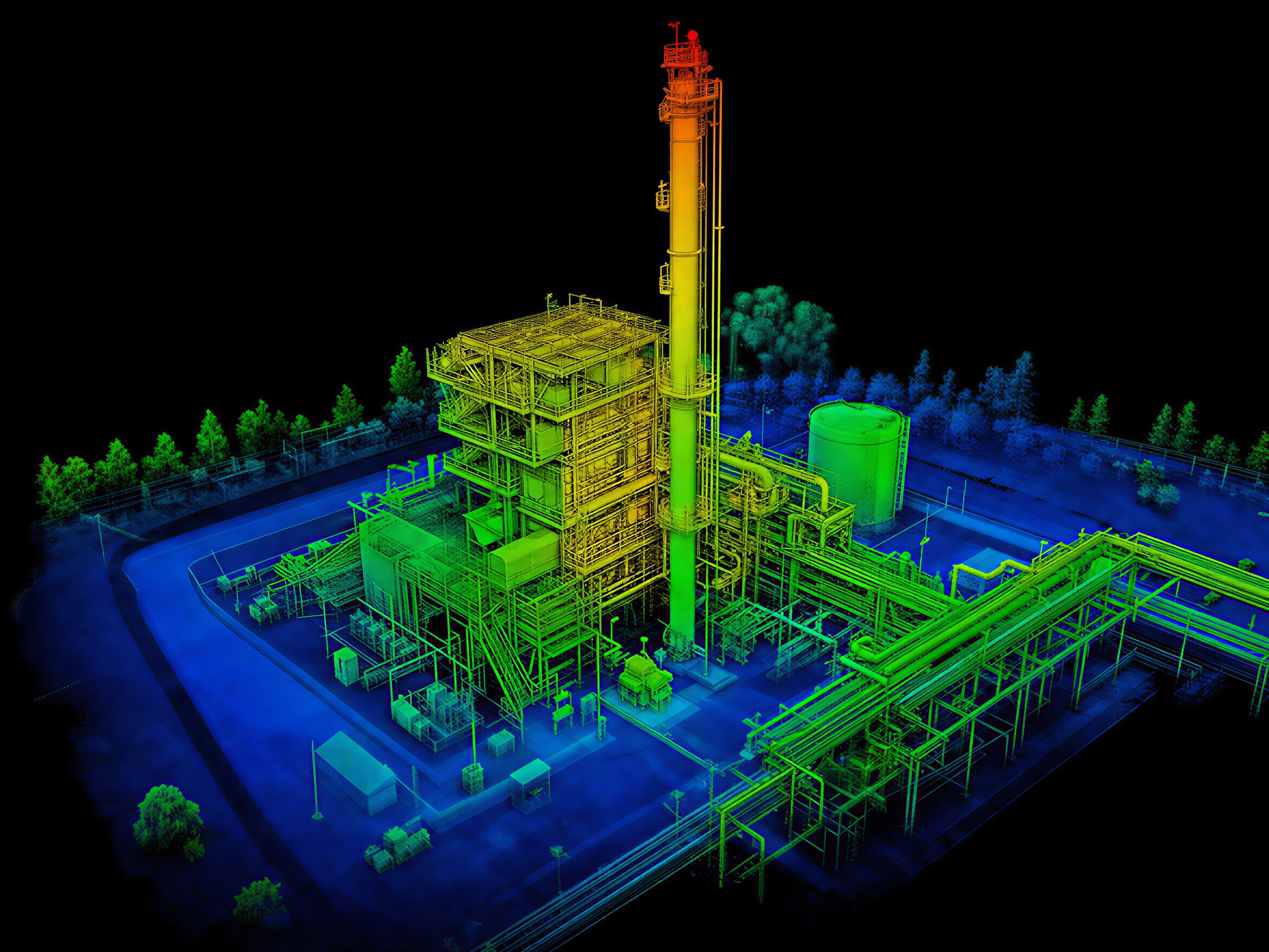
60-80%
Cost reduction achievable with robotic inspection programs| Asset | Traditional Method | Traditional Risk | DeepSky Method | Risk Eliminated | Cost Impact |
|---|---|---|---|---|---|
| Flare Stacks | Shutdown + scaffold to 80-120m | Falls from extreme height, hot work, $500K-$2M shutdown | Drone visual/thermal while operating | Avoids shutdown entirely | $500K-$2M saved per event |
| Pressure Vessels | Confined space entry, toxic atmosphere (H2S, hydrocarbons), rescue team | Fatality from atmospheric hazard | Cage-protected confined space drone with NDT payload, operates under hot work permit with real-time gas monitoring | Zero human exposure to toxic atmosphere | 60-80% reduction |
| Columns & Towers | Internal scaffold or rope access, gas-free required | Confined space + falls from height combined | Confined space drone internal flight, systematic coverage | Eliminates both hazards simultaneously | 70-85% reduction |
| Storage Tanks (API 653) | Scaffold internal, confined space entry, 3-7 days gas-free | Confined space fatality, residual hydrocarbon exposure | Confined space drone with UT payload, no gas-free required for visual | Eliminates entry requirement | 60-80% reduction |
| Subsea Pipelines & Risers | Commercial diving, saturation diving at depth | Drowning, decompression illness, hypothermia | ROV with UTM probe, unlimited bottom time | Eliminates all diving hazards | 60-75% reduction |
| FPSOs / Platforms | Rope access over water, dropped objects | Over-water falls (often fatal), struck-by | Drone topsides + ROV hull/risers | Eliminates over-water fall risk | 40-60% reduction |
| Metric | Traditional | DeepSky Robotic | Saving |
|---|---|---|---|
| Vessel inspection (internal, 10m diameter) | $120K-$200K (scaffold + entry + gas-free) | $15K-$30K (confined space drone, 1 day) | $90K-$170K per vessel |
| Flare stack inspection | $500K-$2M (shutdown + scaffold) | $8K-$15K (drone, no shutdown) | $490K-$1.98M per event |
| Subsea pipeline (1km section) | $80K-$150K (dive spread, 3-5 days) | $25K-$50K (ROV, 1-2 days) | $55K-$100K per km |
| Tank farm (10 tanks, API 653) | $800K-$1.5M (scaffold each tank) | $150K-$300K (confined space drone + aerial) | $500K-$1.2M per campaign |
| Annual inspection program (typical refinery) | $2M-$5M | $600K-$1.5M | $1.4M-$3.5M annually |
Liability Mitigation:
Under the Work Health and Safety Act 2011 (Section 17-18), a PCBU must eliminate risks so far as is reasonably practicable. The hierarchy of controls mandates elimination as the first priority. Sending a drone, rather than a person, into a confined space with a toxic or high-risk atmosphere is a Level 1 mitigation: Elimination. If robotic inspection can deliver the same data without human exposure, human entry for routine inspection is no longer "reasonably practicable" - is it a justifiable risk?Typical annual refinery inspection spend using traditional methodsZERO
Human entries into IDLH atmospheres required“Every vessel entry that doesn’t happen is a potential fatality that doesn’t happen.
The ELIOS 3 with NDT payload means we capture the same wall thickness data, position-tagged and digitally recorded, without anyone breathing tank atmosphere.”
Oil and gas assets present the highest concentration of inspection hazards in any industry. Confined spaces with toxic atmospheres, working at height on flare stacks and columns, and underwater structures requiring commercial diving. Our robotic platforms eliminate human exposure to these hazards while delivering superior data quality.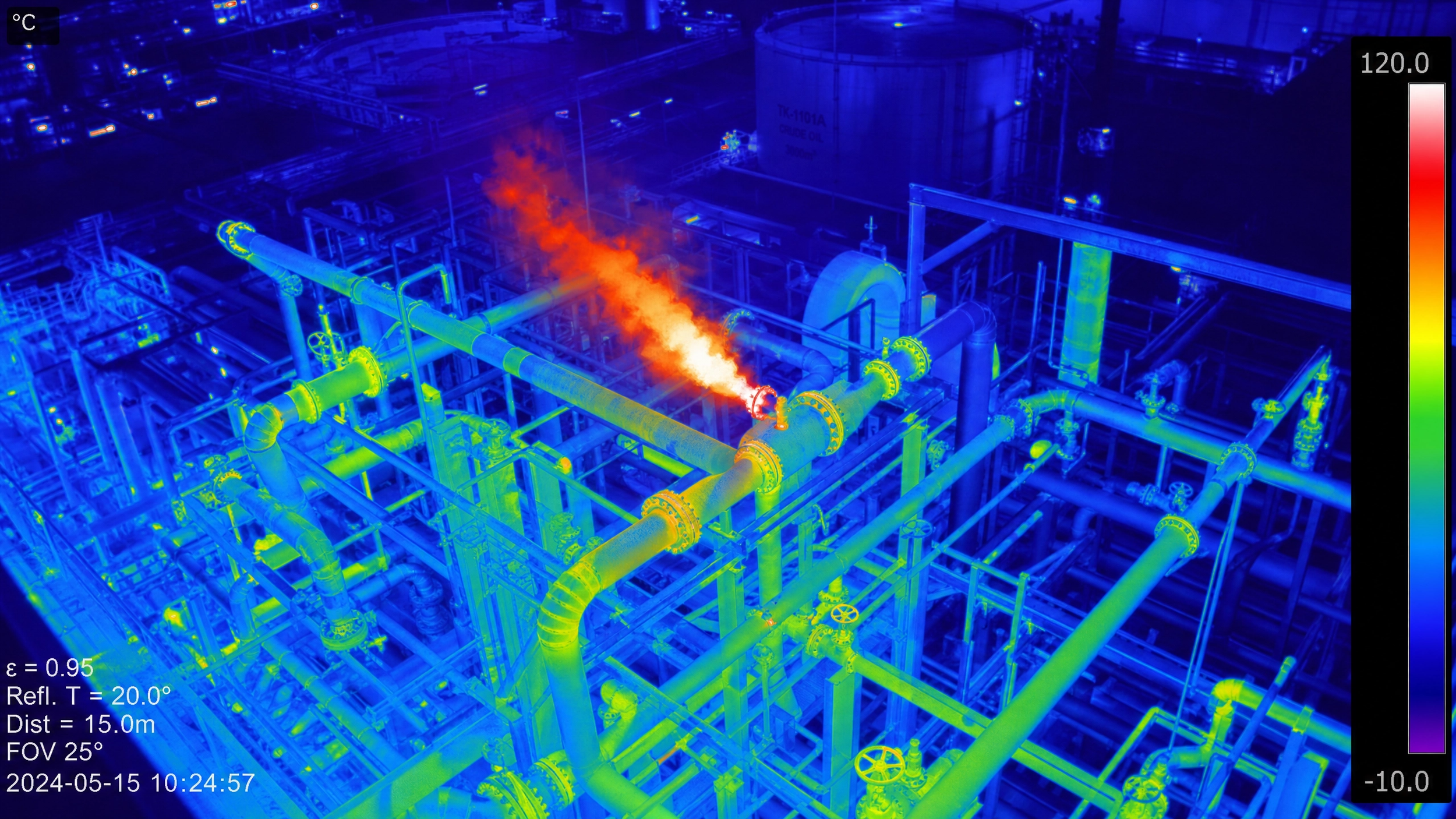
Aerial thermal gas leak detection:
Radiometric thermal imaging (640x512 resolution) detects gas leaks at flanges, valves, and pipe connections through temperature differential. Escaping gas creates a measurable cooling effect visible on thermal imagery, enabling rapid screening of large pipe rack runs, valve manifolds, and tank farm connections from the air without ground crew exposure.3 - 7 days
Saved per vessel by eliminating gas-freeing for visual inspection$2M - $5M
Applicable Services
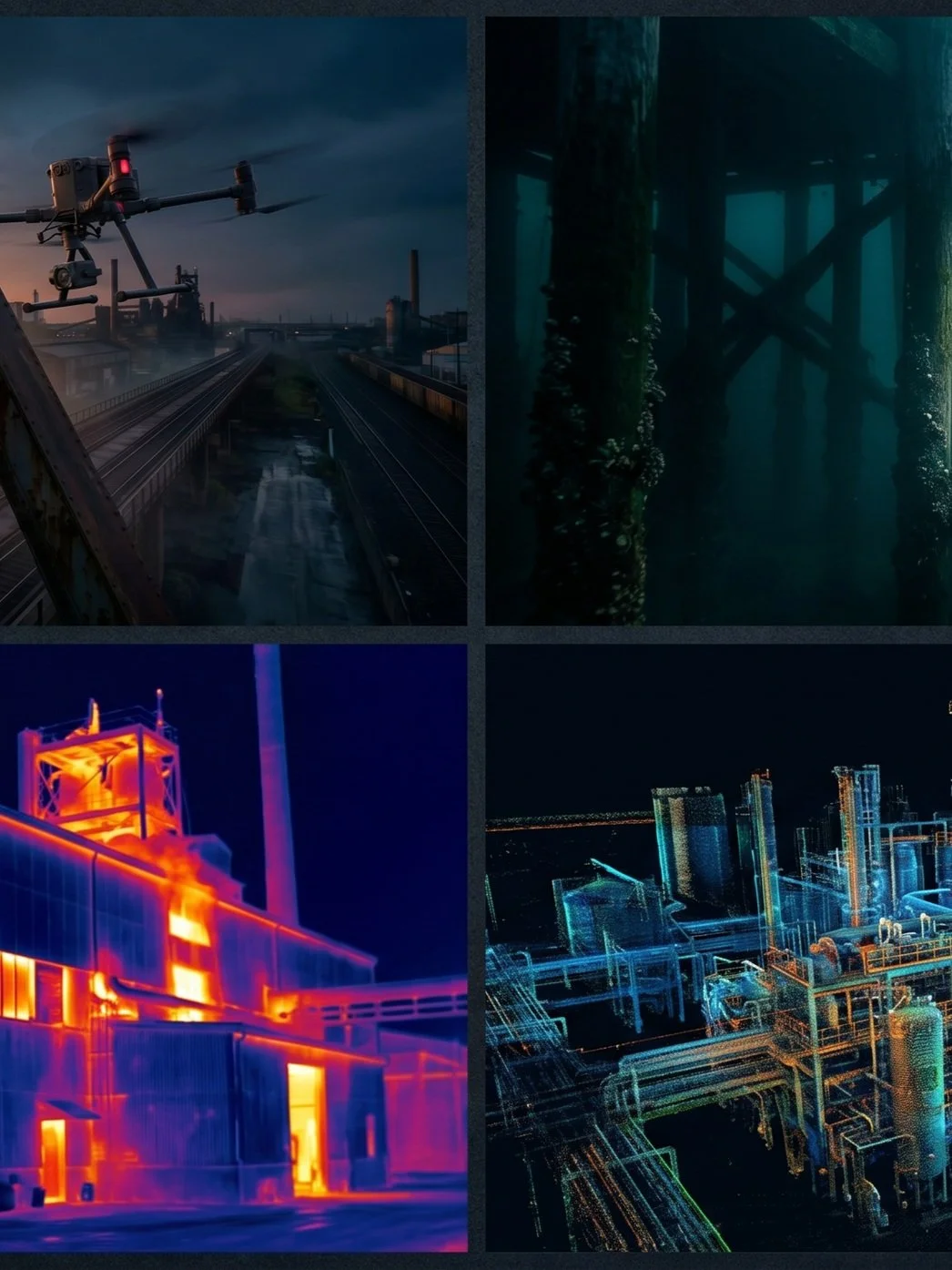
Asset Inspection & Condition Intelligence
Multi-sensor inspection across all environments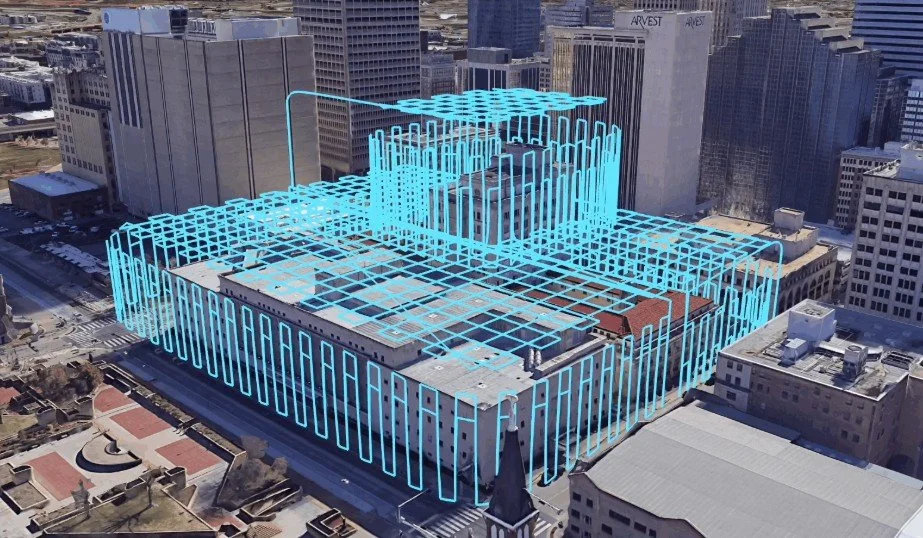
Measurable spatial models for integrity management and planning, IoT integrated for complete remote management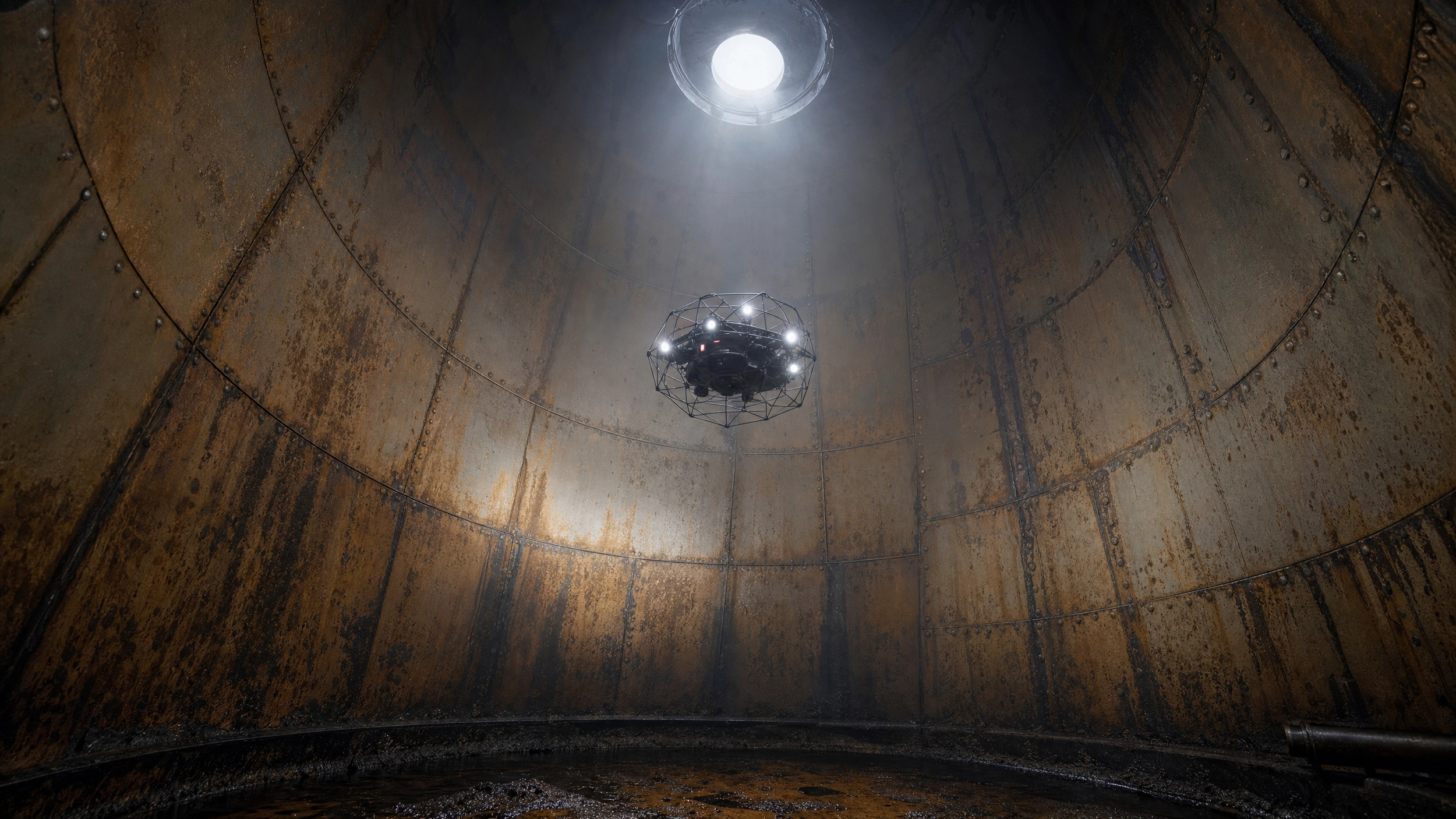
Internal vessel, tank, and column inspection without human entry
Scheduled repeat inspections aligned to compliance cyclesScope Your Oil & Gas Inspection Program
Whether you need a single tank entry inspection or a facility-wide integrity assessment program, we scope to your shutdown schedule, PTW requirements, and compliance obligations.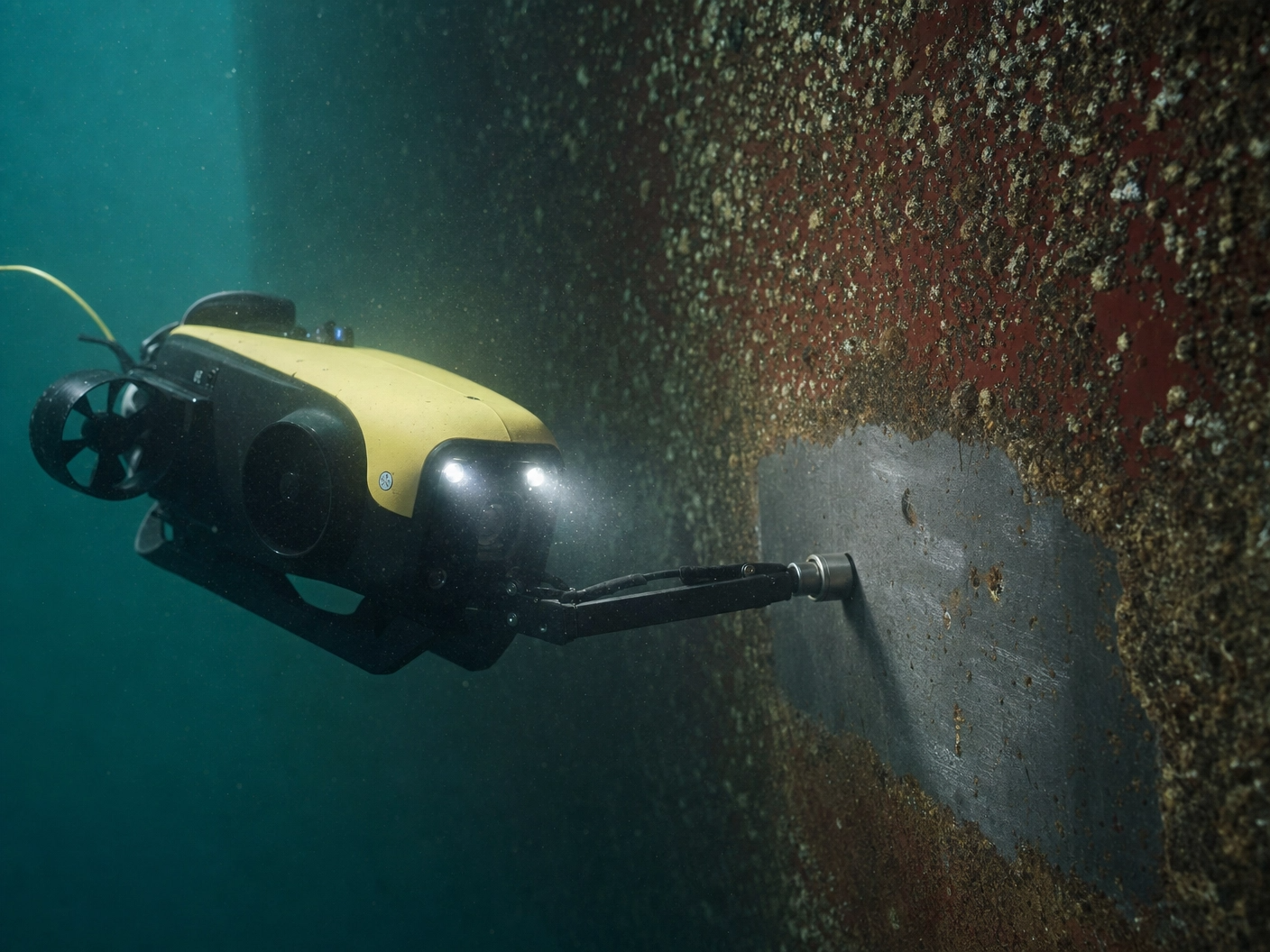
Jetty piles, pipeline crossings, cooling water systems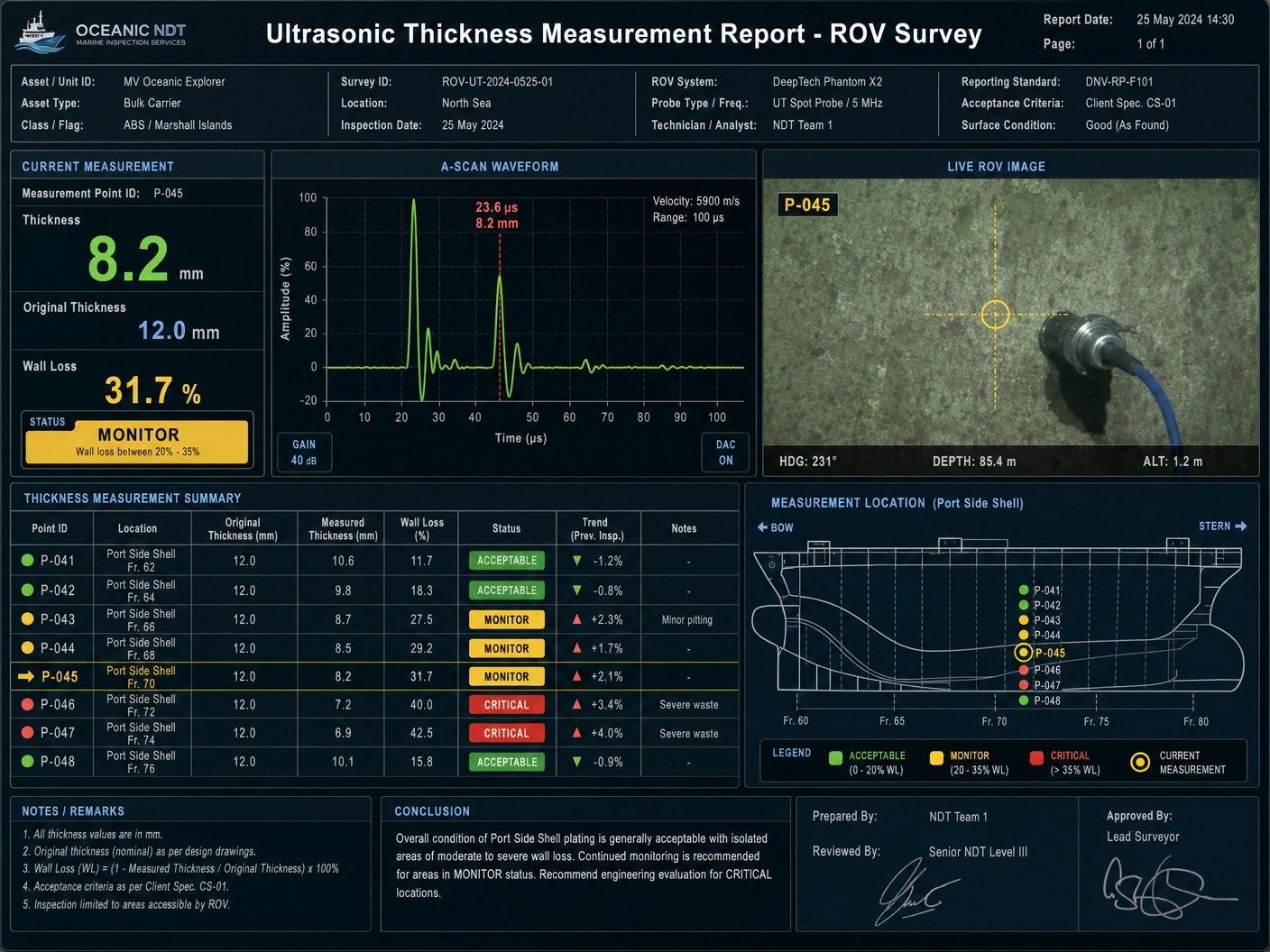
Non-Destructive Testing & Gas Detection
Overheating bearings, pump seals, and electrical connections. Aerial thermal and confined space gas sensors for atmospheric monitoring. Submerged structures inspected by ROV with visual, sonar, and ultrasonic thickness measurement (UTM) capability. 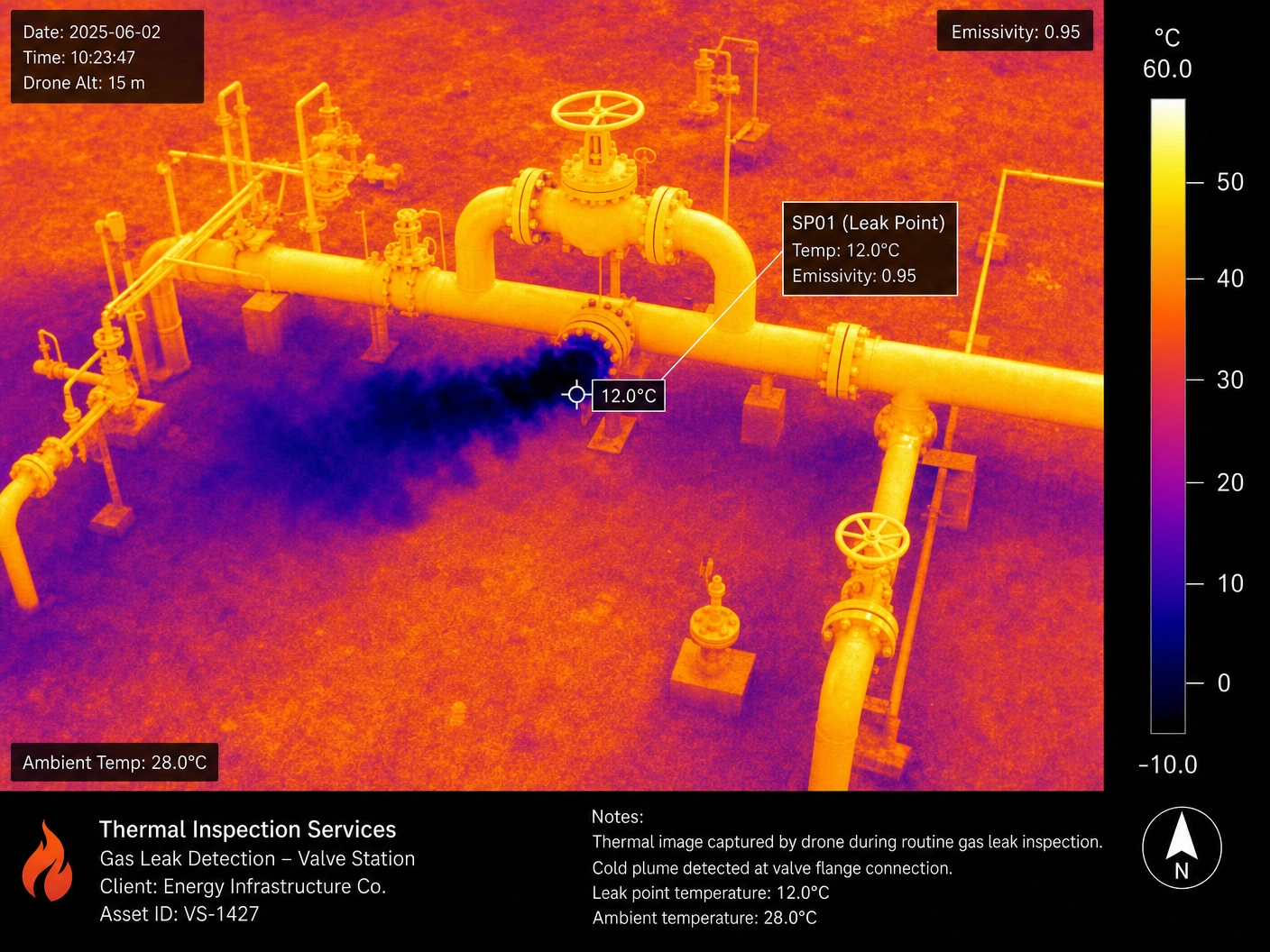
CUI detection, flange leaks, process anomalies, 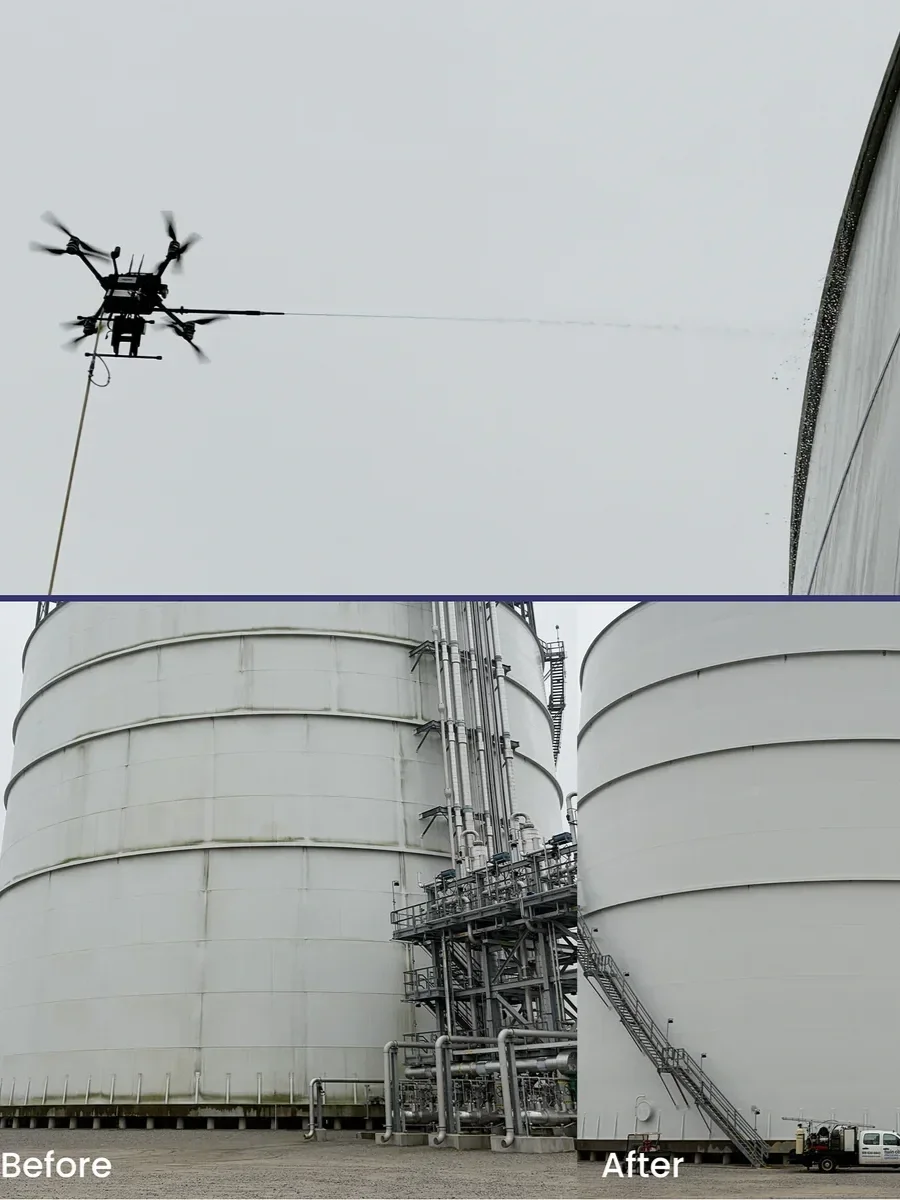
Drone and traditional ground based solar panel cleaning, asset washing to 100m, insulator washing, pre-inspection surface cleaningFrequently Asked Questions
-
Yes. We deploy a specialised confined space drone to inspect tank internals without requiring human entry, purging, or scaffolding.
The drone captures high-resolution visual imagery, thermal data, and LiDAR point clouds of shell plates, floor condition, roof structure, and internal fittings. This eliminates the 4-8 hours typically required for isolation, purging, and atmospheric testing before a single photograph can be taken using traditional methods.
Internal drone inspection is suitable for API 653 condition assessments and provides data equivalent to or exceeding manual visual inspection for corrosion mapping and defect identification.
-
Traditional flare stack inspection requires a full shutdown, scaffolding erection, and confined space entry, typically costing $150,000-$500,000 per event, including lost production.
Drone-based flare stack inspection costs $5,000-$35,000 depending on stack height and reporting requirements, and can be conducted without shutdown using high-resolution zoom cameras (48MP+) and radiometric thermal sensors from safe standoff distances. The drone captures tip condition, refractory lining status (via thermal signature), structural integrity indicators, and guy wire condition in a single 1-day deployment.
-
Radiometric thermal imaging can identify CUI indicators by detecting temperature anomalies in insulated piping and vessels. Moisture trapped under insulation creates measurable thermal signatures, particularly during temperature cycling.
While thermal imaging cannot directly measure wall thickness, it identifies areas of concern for targeted follow-up with ultrasonic testing, reducing the need for blanket insulation removal.
Studies indicate thermal CUI screening reduces the volume of insulation removal required by 60-80% while improving detection rates compared to random sampling approaches.
-
Our inspection reports are structured to support compliance with AS 1210 (Pressure Vessels), AS 3788 (Pressure Equipment In-Service Inspection), API 510 (Pressure Vessel Inspection), API 570 (Piping Inspection), API 653 (Tank Inspection), and AS 2885 (Pipelines).
Deliverables include digital twins, associated defect registers with location coordinates, severity classification, photographic evidence, and recommended actions, formatted for direct integration into your integrity management system.
-
Yes. Our ROVs can be equipped with ultrasonic thickness measurement probes that provide real-time wall thickness readings on submerged steel structures including jetty piles, pipeline crossings, and hull plating.
UTM data is georeferenced and able to be logged against your asset register, enabling direct comparison with previous readings for corrosion rate calculation and remaining life assessment, images and the measurements taken.
-
We develop a detailed inspection plan that integrates with your site-specific PTW system before mobilisation. This includes job safety analysis (JSA), SIMOPS risk assessment, communication protocols, and emergency response procedures.
-
Yes, through two methods. First, our aerial platform carries a radiometric thermal camera (min 640x512 resolution) that detects gas leaks at flanges, valves, and pipe connections through the temperature differential created by escaping gas. This enables rapid screening of large pipe rack runs and valve manifolds from the air.
Second, for confined space operations, the drone can be equipped with a flammable gas sensor that detects 14+ combustible gases in real time at 0.1% LEL resolution, providing continuous atmospheric monitoring during internal vessel inspection. The gas sensor uses NevadaNano MPS (Molecular Property Spectrometer) technology, requires no field calibration, and runs simultaneously with other inspection payloads.
-
Radiometric thermal imaging detects gas leaks through the temperature differential created by escaping gas, which is effective for identifying active leaks at flanges, valves, and connections.
Optical Gas Imaging (OGI) uses a specialised cooled mid-wave infrared detector to visualise gas plumes directly, making even small fugitive emissions visible.
Our standard thermal capability covers the majority of leak detection requirements for condition-based inspection. For facilities requiring formal LDAR (Leak Detection and Repair) program compliance with dedicated OGI, we can deploy specialised OGI camera payloads on request.