

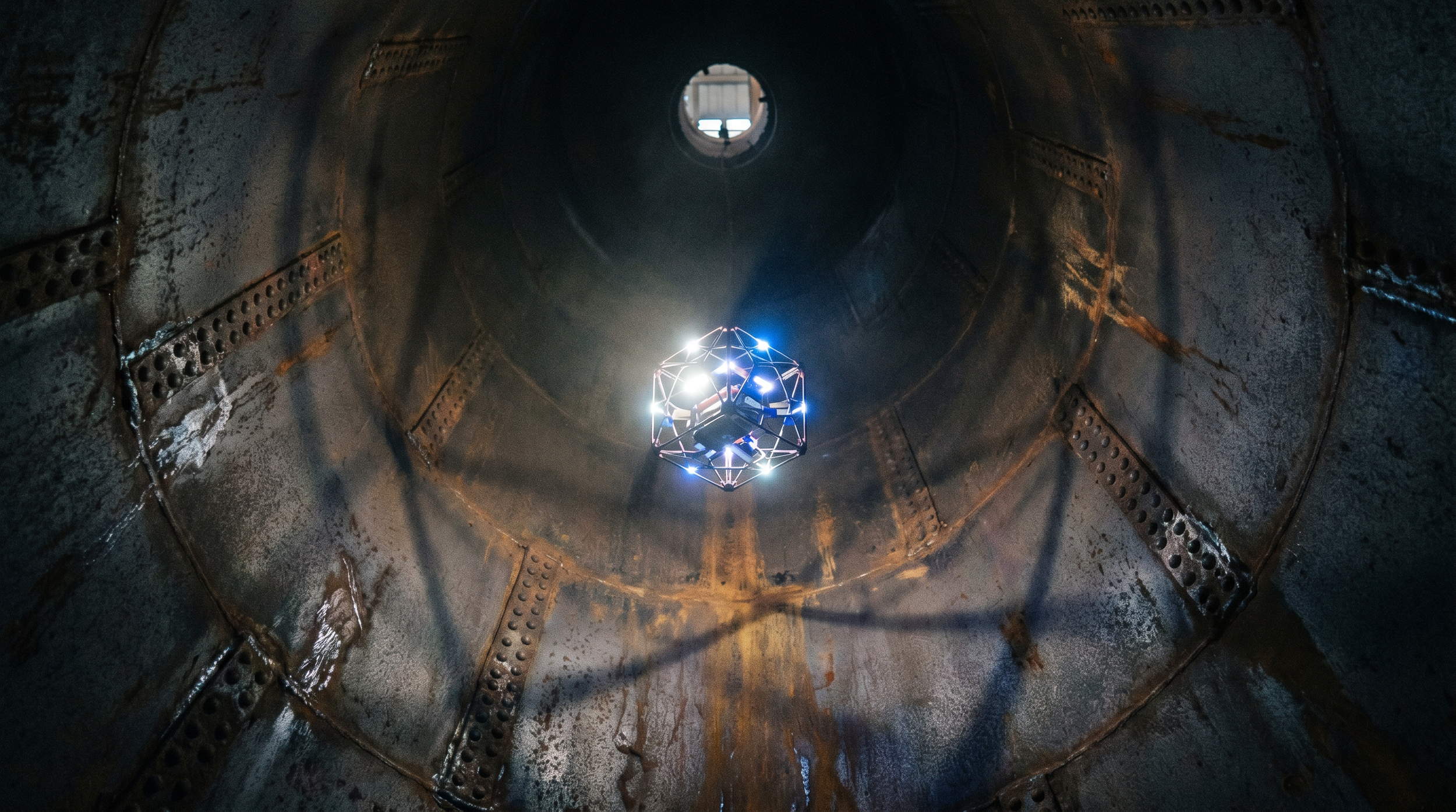
Confined Space Robotic & Drone Inspection Services
Zero Human Entry. Complete Asset Intelligence.
60-80% lower cost than traditional confined-space entry.
-
ISO 14001
ISO 45001
ISO 9001
Aligned
-
CASA Certified ReOC
-
$20m Insurance
- ISO 14001 ISO 45001 ISO 9001 Aligned - CASA Certified ReOC - $20m Insurance
60-80%
Cost reduction vs traditional entry methods
2-5 hrs
Typical inspection time (vs 3-5 days traditional)
±2mm
Wall thickness measurement accuracy (UTM payload)
The Traditional High Cost of Confined Space Entry
Dangerous Environments
82% of Confined Space Deaths Are Atmospheric. Sending workers into confined spaces is dangerous, even if standard safety procedures are applied, and it is still ranked as a leading cause of workplace injury and death.
Between 2000 and 2012, 59 confined space incidents resulted in fatalities in Australia.
$50,000 -$500,000/Day Shutdown Cost
Traditional entry requires draining, ventilating, scaffolding, gas monitoring, rescue standby, and entry permits, costing production revenue you never recover.
Traditional confined space inspection requires 3-5 days, whereas our drone deployment completes in 2-4 hours with 24hr data delivery.
Incomplete Data
Every unmeasured surface is a liability you cannot quantify until it fails.
Manual spot checks often yield poor or limited data. Traditional methods don’t create full visual records or interactive, millimetre-precision scans.
“WHS prosecutions for confined space incidents average $500K+. A single fatality can cost $2.5M+ in fines, legal fees, and reputational damage.”
Purpose-Built Platforms for Every Confined Environment
Traditional Entry vs Confined Space Drone Inspections
We deploy specialised robotics to capture high-definition visual and thermal data in environments where humans cannot or should not go. Faster, Safer & Complete Datasets
Specialised Confined Space Drone Systems:
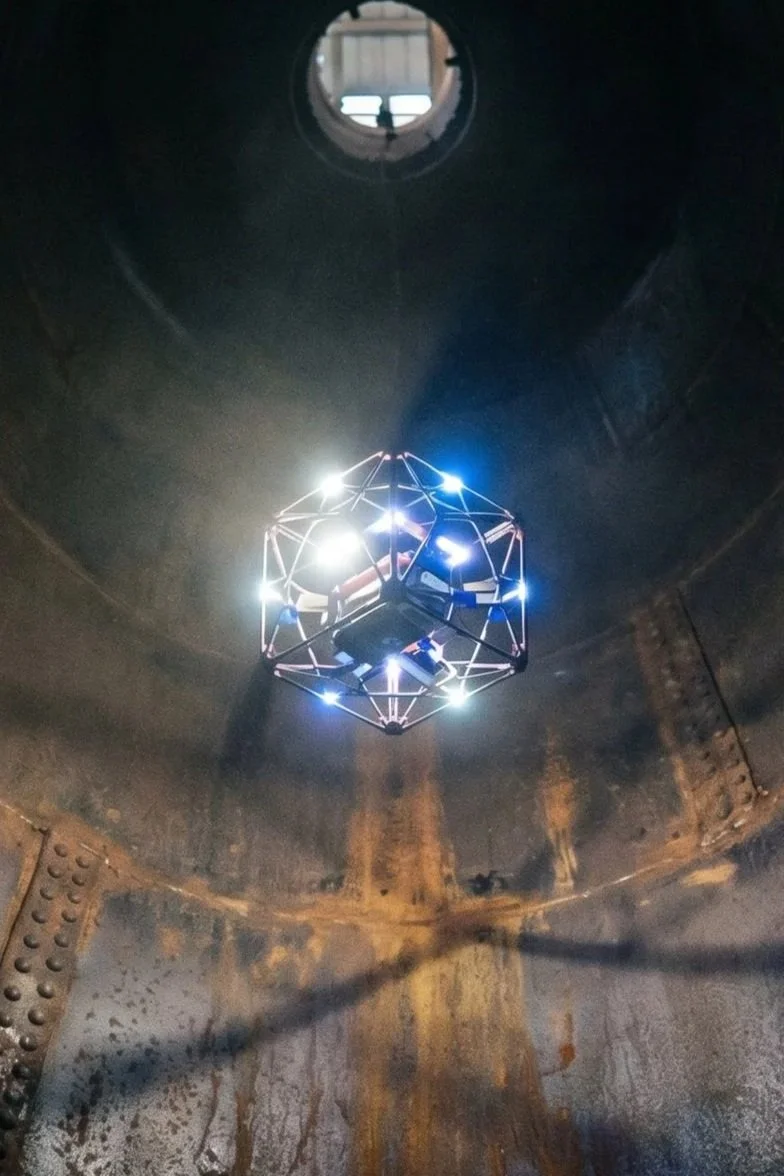
We utilise collision-tolerant drones with a carbon fibre collision-tolerant cage, allowing contact with walls and obstacles without damage.
Able to navigate complex internal structures, tanks, ship hulls, pipes and silos safely.
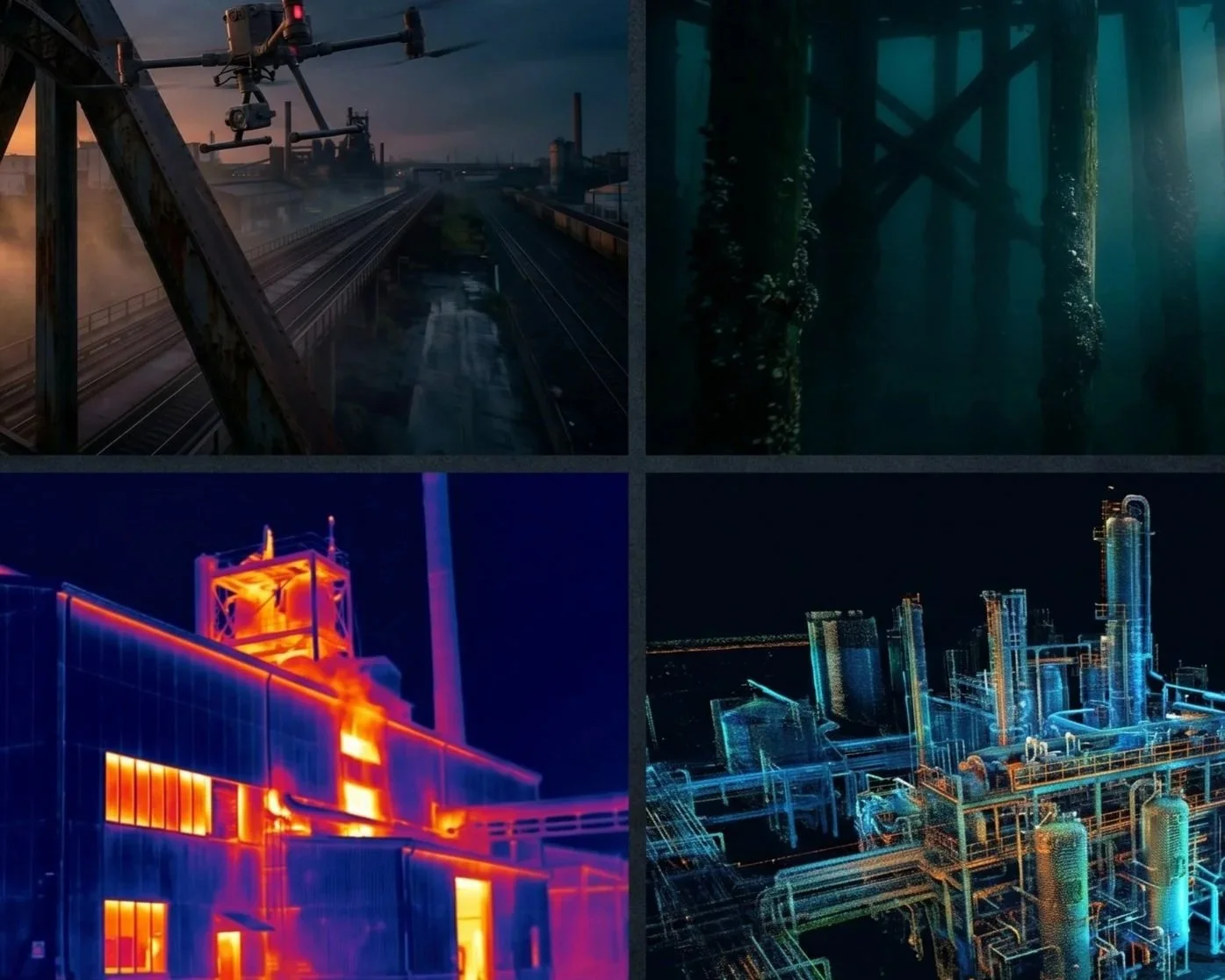
With the ability to use Visual, Thermal, LiDAR, UTM (Ultrasonic Thickness) NDT payloads to give you a complete picture of your asset, use cases are: Tanks, silos, pressure vessels, boilers, ship hulls, cargo holds, tunnels, culverts, lift shafts, roof spaces, process equipment and more.
Submerged Asset Inspection (Liquid-Filled Spaces)
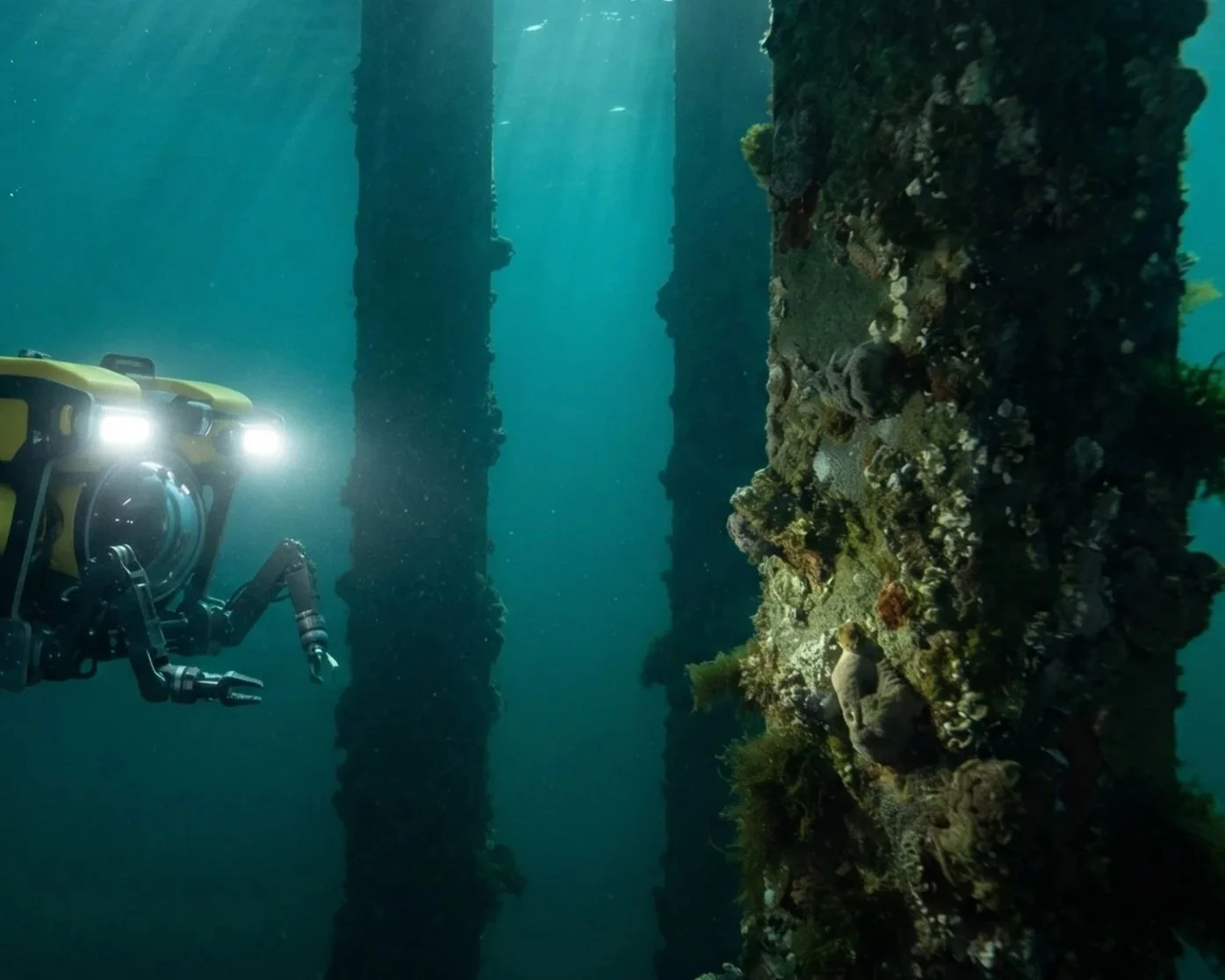
Our industrial ROVs provide clear visual assessments of flooded pipes and submerged tanks without requiring drainage.
For flooded, submerged, or liquid-filled confined spaces where aerial drones cannot operate. Operating to depths of up to 500m, taking measurements with 99.7% accuracy. In cases such as flooded pipes, submerged tanks, ballast tanks, cooling towers (water-filled), dam outlets, submerged valves and infrastructure.
Improved Safety & Regulatory Compliance
We operate under strict federal regulations, ensuring all indoor flights meet rigorous safety standards. This mitigates your safety risks on site and provides a more holistic dataset, faster, reducing your operational costs.
Gain complete visibility of your internal assets’ condition.
From Raw Capture to Actionable Intelligence
All captured data is unified into a single measurable digital twin accessible from any browser, with automated defect classification, severity mapping, and position-tagged observations. Engineers review confined space conditions remotely without re-entry, measure wall thickness, map corrosion progression, and export findings directly to your asset management system.
| Deliverable | What It Shows | Format |
|---|---|---|
| 4K Visual Record | Complete internal condition documentation | Video + Stills |
| LiDAR Point Cloud | Millimetre-accurate 3D geometry of internal structure | LAS/LAZ |
| 3D Reality Mesh | Photorealistic internal model, measurable | OBJ 3D Tiles |
| Thermal Overlay | Hot spots, cold spots, insulation failures, moisture | Radiometric 3D |
| Wall Thickness Map | UTM readings mapped to 3D model (corrosion/erosion) | 3D Overlay |
| Gas Concentration Map | Atmospheric readings mapped spatially | 3D Heatmap |
| Defect Register | AI-classified defects with severity, location, measurement | CSV GIS-linked |
| Interactive Digital Twin | Complete internal model accessible via web browser | 3D Tiles |
| Change Detection Report | Comparison against previous inspections | Time-series |
| Factor | Traditional Confined Space Entry | DeepSky IQ No-Entry |
|---|---|---|
| Human entry required | ✕Yes (WHS permits, rescue team, gas monitoring) | ✓No |
| Cost per asset | ✕$15,000-$50,000+ | ✓$2,500-$8,000 |
| Facility shutdown | ✕Usually (drain, ventilate, make safe) | ✓Rarely (minimal disruption) |
| Time to complete | ✕3-5 days (permits + setup + entry + demob) | ✓2-4 hours |
| WHS liability | ✕Full duty-of-care obligations (Reg 66) | ✓Near-zero (no human entry) |
| Rescue team | ✕Yes (minimum 2 standby personnel) | ✓No |
| Scaffolding/rope access | ✕Often required ($15K-$100K setup) | ✓Never |
| Data quality | ✕Visual spot-checks, limited photos | ✓4K + LiDAR + thermal + UTM (complete record) |
| Repeat inspection cost | ✕Full cost again (re-scaffold, re-permit) | ✓Reduced (no access setup) |
| Wall thickness | ✕Manual UTM (limited coverage) | ✓Drone-mounted UTM (full coverage, mapped to 3D) |
| Gas detection | ✕Handheld monitors (operator at risk) | ✓14+ onboard sensors (no human exposure) |
| Digital twin output | ✕Not possible | ✓Full internal 3D model with defect register |
| NDT capability | ✕Requires separate contractor | ✓Integrated UTM payload on same platform |
Calculate Your Savings
Confined Space Inspection Savings Calculator
Estimate the total value of eliminating human entry from your confined space inspection program.
Request Your Full Scoping Report
We'll prepare a detailed assessment based on your inputs above, including a tailored program recommendation and timeline.
Confined Space Intelligence Across Industries
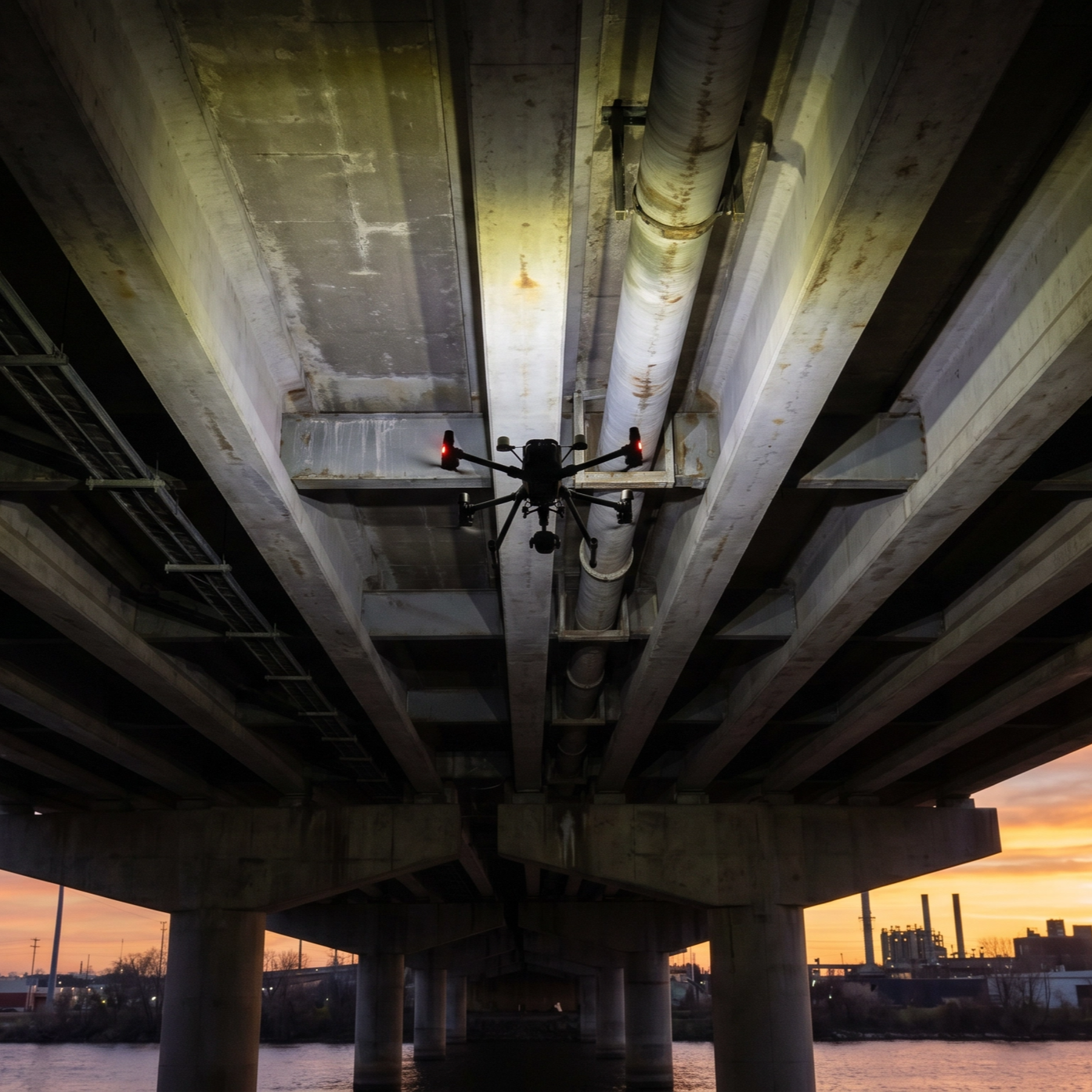
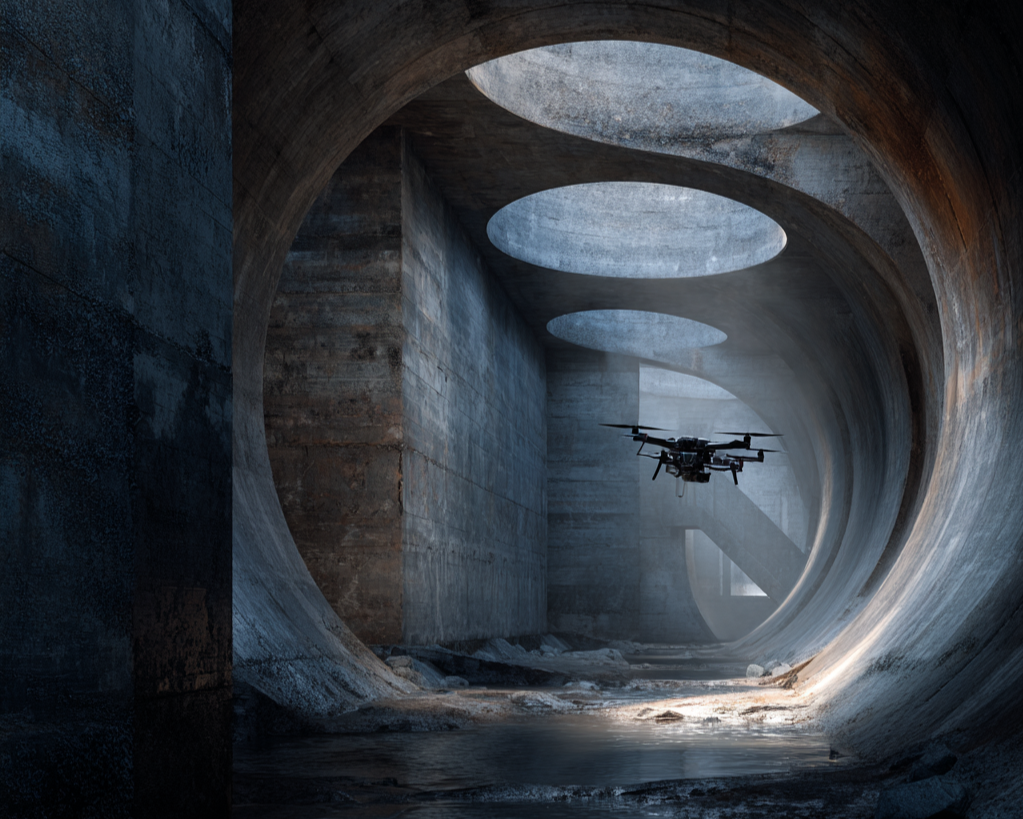
Our confined space intelligence services provide critical data for asset integrity programs across multiple sectors.
Scope Your Confined Space Inspection
A single confined-space fatality can cost $2.5M+ in fines, legal fees, and reputational costs.
Eliminate confined space entry risk entirely. Our collision-tolerant drones and robotics capture complete internal condition data while your team stays safely outside.
Frequently Asked Questions
Do you need to physically enter the confined space?
No. Our robotic and drone systems deploy from outside the confined space entirely. We eliminate the need for human entry, scaffolding, ventilation protocols, entry permits, and rescue standby teams. The operator remains outside the space at all times, controlling the platform remotely with real-time video feed and sensor telemetry.
What confined space environments can you access?
We inspect storage tanks, pressure vessels, boilers, silos, pipelines, ship hulls, cargo holds, lift shafts, underground pipes, tunnels, towers, culverts, roof spaces, and submerged infrastructure. Our equipment includes collision-tolerant drones for air-filled spaces and industrial ROVs for liquid-filled or submerged assets. Platforms adapt to various entry points and internal geometries including pipe bends, baffles, and structural members.
What size opening can your drones access?
Our smallest platforms access openings as small as 500mm (standard manhole size). The collision-tolerant cage allows the drone to navigate complex internal geometries including pipe bends, baffles, and structural members without damage to the asset or platform. For openings smaller than 500mm, we deploy crawler robotics or borescope systems to maintain full internal coverage.
How is data delivered after a confined space inspection?
All captured data is processed through our enterprise reality modelling platform and delivered via a browser-based 3D viewer accessible from any device without software installation. Deliverables include high-resolution imagery, 4K/8K video, LiDAR point clouds, thermal overlays, and full internal 3D digital twins with classified defect registers. AI-powered defect detection automatically identifies and classifies corrosion, pitting, coating degradation, cracking, and deformation by severity.
How is this safer than traditional confined space inspection methods?
Our methodology completely eliminates human entry, the single greatest risk factor in confined space operations. This removes all associated hazards: toxic atmospheres, oxygen deficiency, engulfment, entrapment, and fall risks. No entry permits, gas testing protocols, ventilation systems, or rescue standby crews are required. A single confined space fatality can cost $2.5M+ in fines, legal fees, and reputational damage. Under WHS Regulation 2017, robotic inspection provides documented evidence that the highest-order control (elimination) has been applied.
How much does confined space drone inspection cost in Australia?
Confined space drone inspection delivers a 60-80% cost reduction compared to traditional methods requiring scaffolding, rope access teams, gas monitoring, rescue standby crews, and facility shutdowns. The saving comes primarily from eliminating the need for human entry, which removes confined space permits, rescue teams, and the multi-day shutdown windows that traditional inspection demands. Multi-asset programs achieve further per-inspection reductions through standardised deployment and automated processing pipelines.
What are the WHS regulations for confined space inspection in Australia?
Under the Work Health and Safety Regulation 2017 (Harmonised), a confined space is defined as an enclosed or partially enclosed space not designed for human occupancy with restricted entry/exit and risk of a hazardous atmosphere. Regulation 66 requires a risk assessment, entry permit system, atmospheric monitoring, and trained rescue team before any person enters. By deploying collision-tolerant drones and robotics, the requirement for human entry is eliminated entirely, representing the highest-order risk control (elimination) under the hierarchy of controls.
Can drones replace human entry for tank and silo inspection?
Yes. Our collision-tolerant drone platforms inspect tanks, silos, pressure vessels, and storage containers without human entry. The drones capture 4K video, high-resolution stills, LiDAR point clouds, and thermal data in GPS-denied environments. They operate in zero-light conditions and spaces accessed through openings as small as 500mm. For most tank and silo inspections, drone-based methods deliver equivalent or superior defect detection compared to rope access teams, while eliminating the 3-5 day shutdown window typically required.
How long does a confined space drone inspection take?
A typical confined space drone inspection takes 2-5 hours from mobilisation to data capture completion, compared to 2-5 days for traditional methods. Traditional approaches require permit preparation (1 day), scaffolding/access setup (1-2 days), inspection with rescue standby (1 day), and demobilisation (half day). Our deployment requires no scaffolding, no entry permits, no rescue teams, and minimal operational disruption. Full processed reports and 3D models are delivered within 5-7 business days.
Can you measure wall thickness without entry?
Yes. Our platforms carry Ultrasonic Thickness Measurement (UTM) payloads that measure wall thickness without human entry. Readings are accurate to +/-0.1mm and mapped directly onto the 3D model, creating a colour-coded corrosion and erosion map of the entire internal surface. This provides significantly greater coverage than manual spot-checks (which typically achieve 5-15% surface coverage) and creates a permanent, measurable record for change-over-time comparison.
Can you detect gas concentrations inside the space?
Yes. Our platforms carry 14+ gas sensors detecting methane, carbon monoxide, hydrogen sulphide, oxygen levels, LEL, VOCs, and more. Gas concentration readings are mapped spatially, creating a 3D heatmap showing exactly where atmospheric hazards exist within the space. This data is integrated into the digital twin, providing a permanent record of atmospheric conditions that informs ventilation planning, hazard zoning, and future entry risk assessments.
Is a full shutdown of our facility required?
Not always. Many inspections can be performed with minimal disruption and without full facility shutdown. We work with your operations team to plan efficient inspection windows, including out-of-hours operations if required. The elimination of scaffolding, ventilation setup, and multi-day access preparation means inspection windows are measured in hours rather than days, significantly reducing production impact.
What assets can be included in a confined space monitoring program?
We inspect any enclosed or partially enclosed asset: storage tanks, pressure vessels, boilers, silos, pipelines, lift shafts, ship hulls, cargo holds, roof spaces, tunnels, culverts, and submerged infrastructure. Multi-asset monitoring programs use identical flight paths and sensor configurations each cycle, enabling automated change detection that identifies degradation as small as 2mm between inspections. Your digital twin accumulates condition intelligence over time, revealing degradation rates and predicting remaining useful life.