

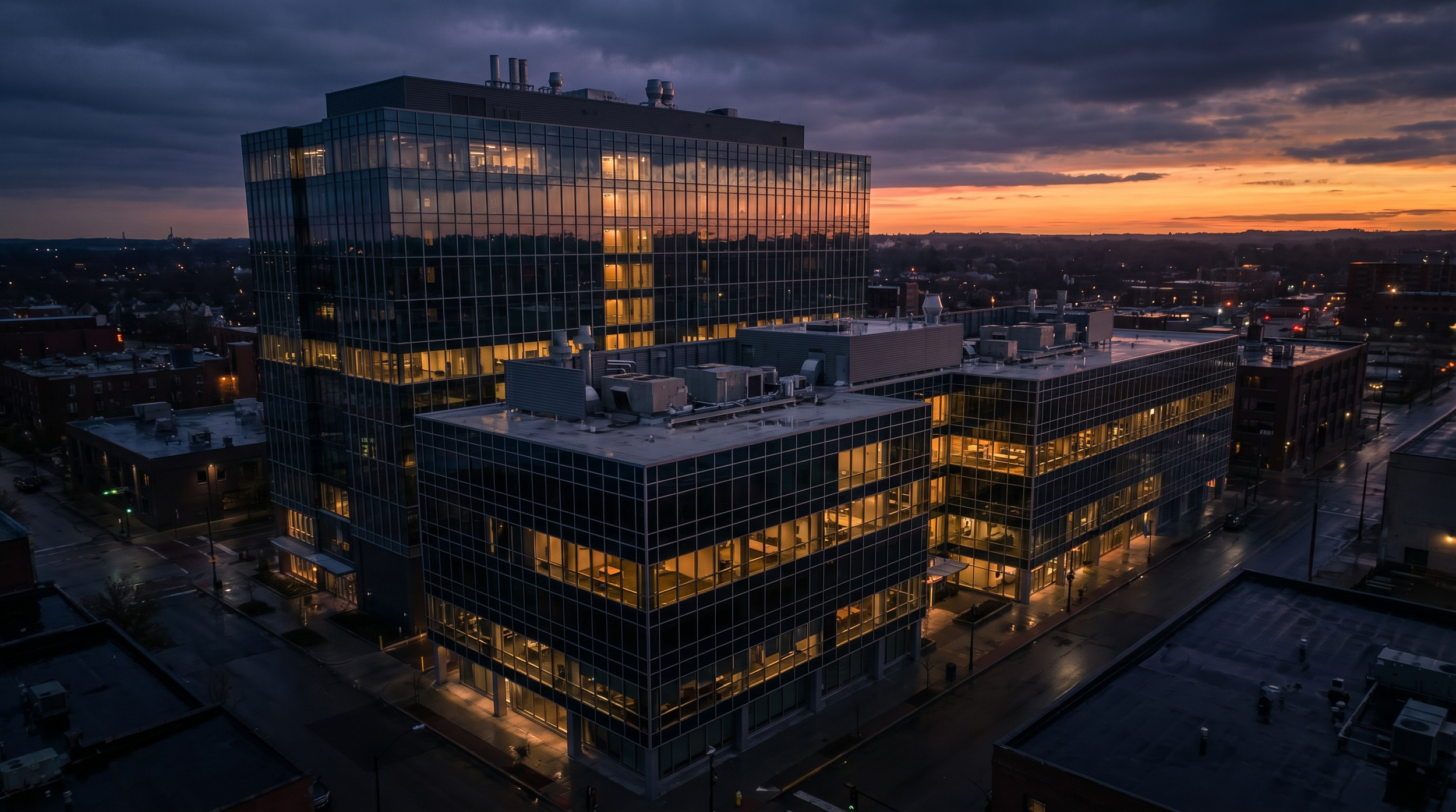
Property Portfolio & Facility Inspection Services
Intelligence For The Entire Property Lifecycle
Inspect & wash your entire building envelope 360 degrees without ropes or scaffolding, capturing consistent condition data across your portfolio.
ISO 9001
ISO 14001
ISO 45001
Aligned
|
$20m Insurance
|
Bridge Inspection Lvl 1
|
CASA ReOC Certified
|
ISO 9001 ISO 14001 ISO 45001 Aligned | $20m Insurance | Bridge Inspection Lvl 1 | CASA ReOC Certified |
The Challenge: Managing Blind
Manual inspections cost 3-5x as much as programmatic drone assessments, delaying critical data acquisition. Relying on costly scaffolding, elevated work platforms, or rope access just to identify where maintenance is actually needed.
Critical defects go undetected until they cause catastrophic failures and budget blowouts. You struggle to benchmark asset health across multiple buildings because manual inspection reports can vary wildly in quality and detail.
Fragmented data from multiple contractors makes portfolio-wide comparison, strata compliance deadlines, and strategic planning impossible.
The Impact
40-70%
Inspection Cost Reduction
30-50%
faster inspection cycles
40-60%
Improved Defect Detection
15-42%
Boost in operational efficiency
25-55%
Reduction in Maintenance Costs
95%
Less risk.
One Partner. Total Portfolio Visibility
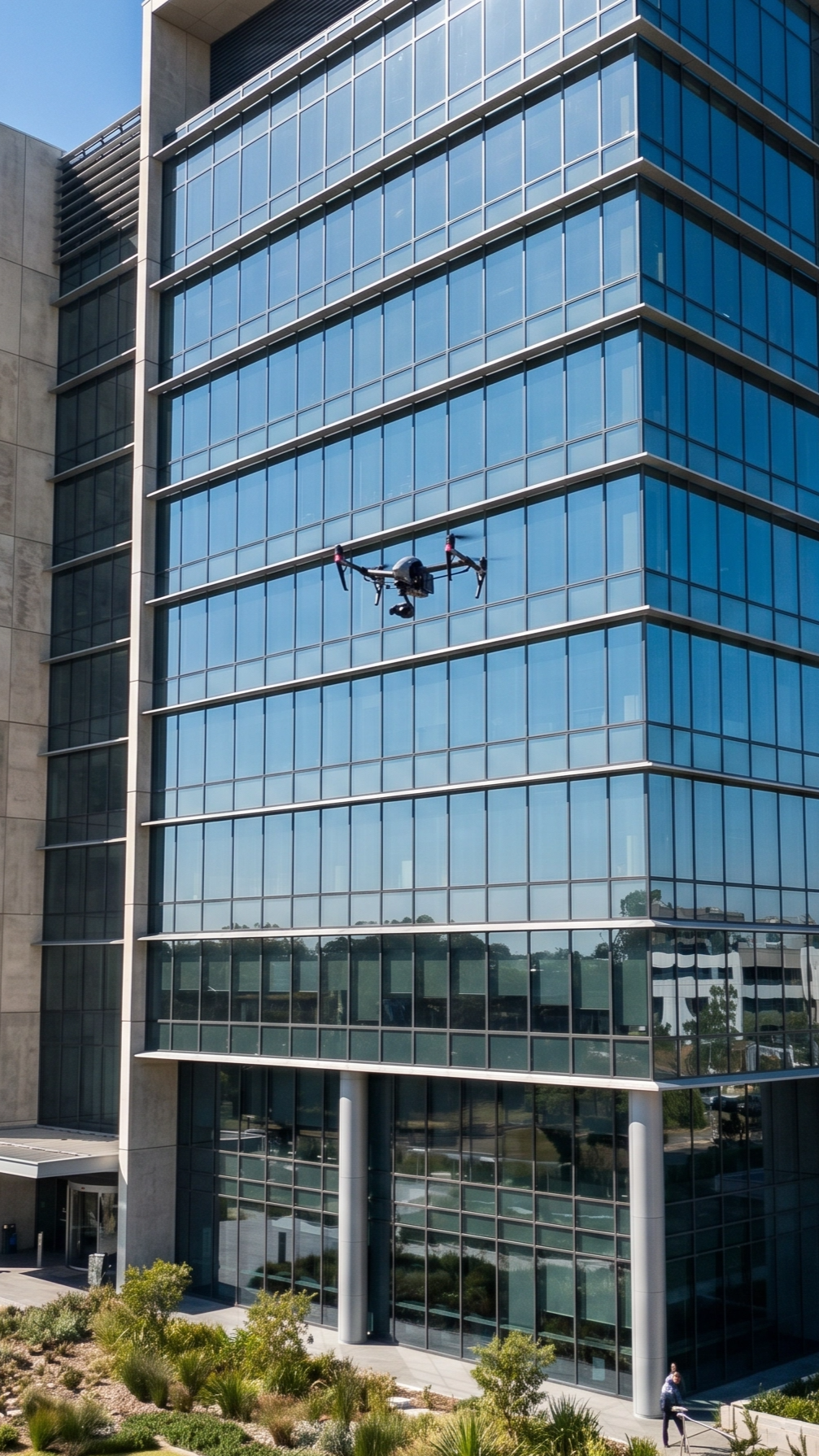
One partner. Every asset. All environment.
One procurement for every asset.
Stop managing multiple contractors. We cover facades, roofs, structures, internal spaces and plant in a single, unified program. Capturing millimetre resolution imagery of your entire building envelope, identifying spalling, cracking, and sealant failures safely from the ground. Project management, integrated trade allocation, progress monitoring, and assurance reporting.
Cut inspection costs by up to 70%.
Our remote data capture methods eliminate the need for expensive scaffolding, rope access, or EWPs, making regular assessments affordable.
Find faults invisible to the naked eye
We combine high-resolution visual, radiometric thermal, and 3D data to identify water ingress, structural decay, insulation defects, HVAC inefficiencies and energy loss before they become critical or cause further damage.
Get a single source of truth
Our engineering-grade digital twins provide a permanent, measurable record for every asset, with consistent, repeatable condition data across your entire portfolio.
Move from reactive to proactive and simplified compliance
We deliver clear, actionable reports that translate complex data into prioritised maintenance schedules and accurate budget forecasts, significantly reducing costs. We accelerate your inspection cycles, providing the comprehensive visual evidence required for engineering sign-off and compliance reporting.
Undocumented defects can cost 3-5x more when discovered late.
Applicable Services
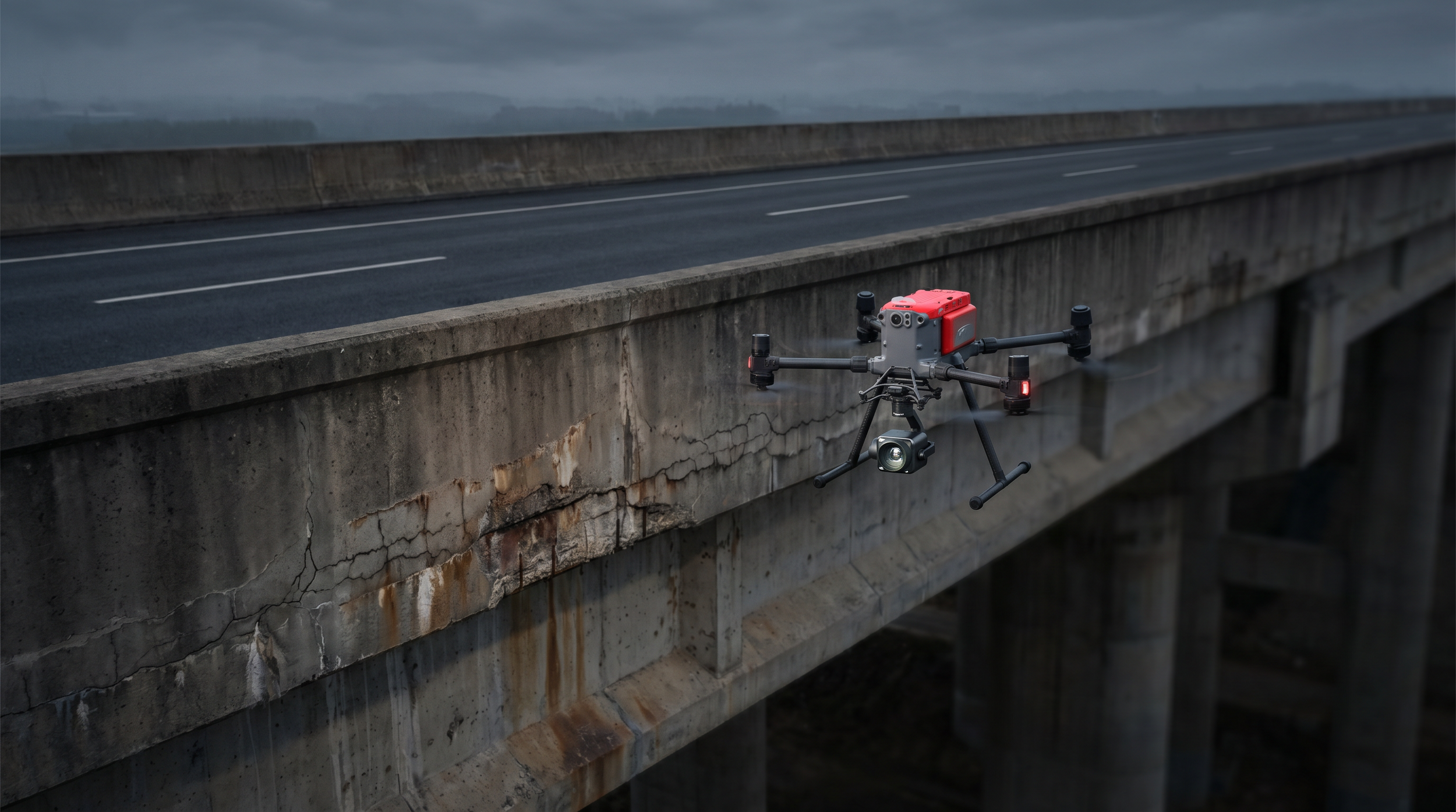
Aerial Inspection and Capture
High-resolution facade, roof, and envelope inspections.
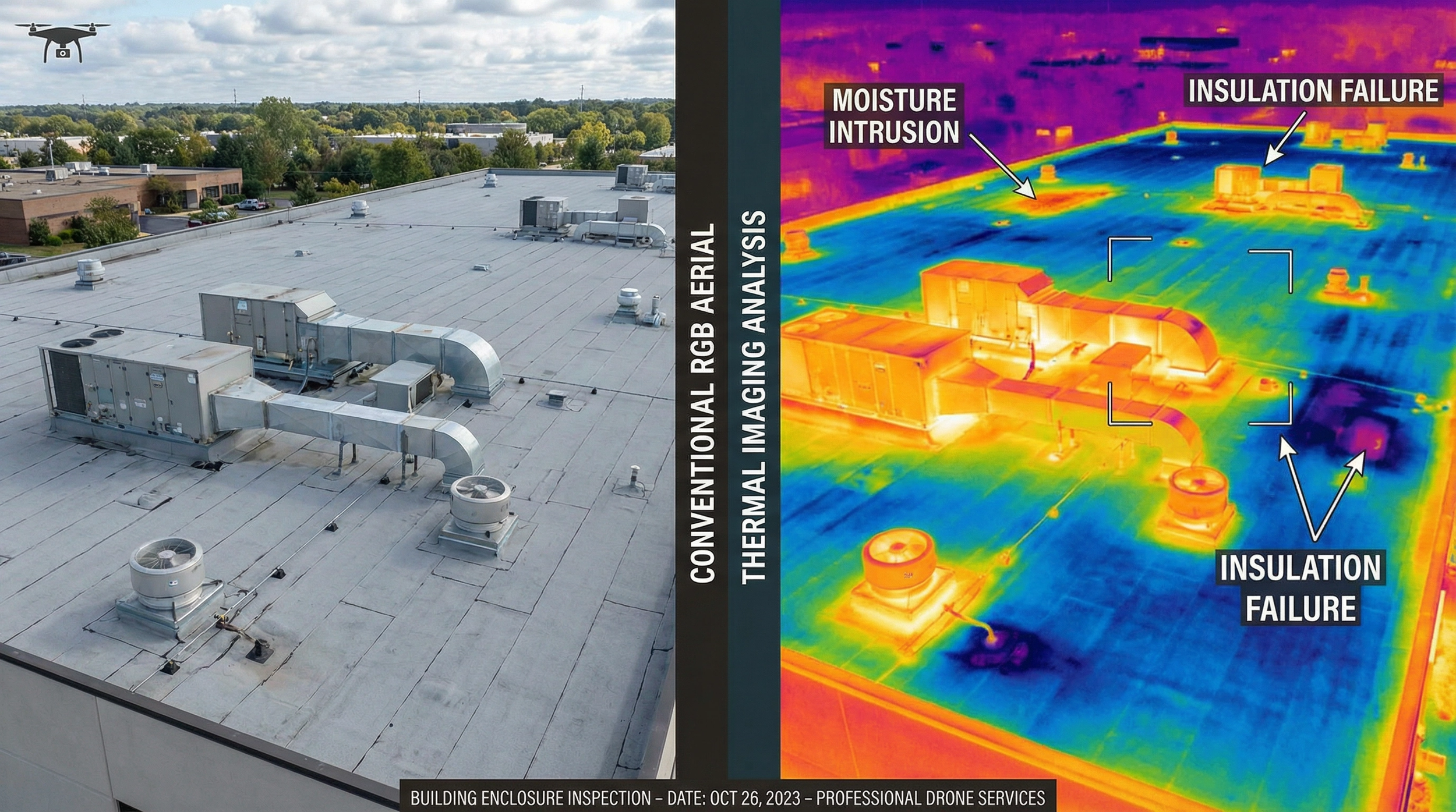
Thermal and Condition Assessment
Detecting water ingress, energy loss, and electrical faults.
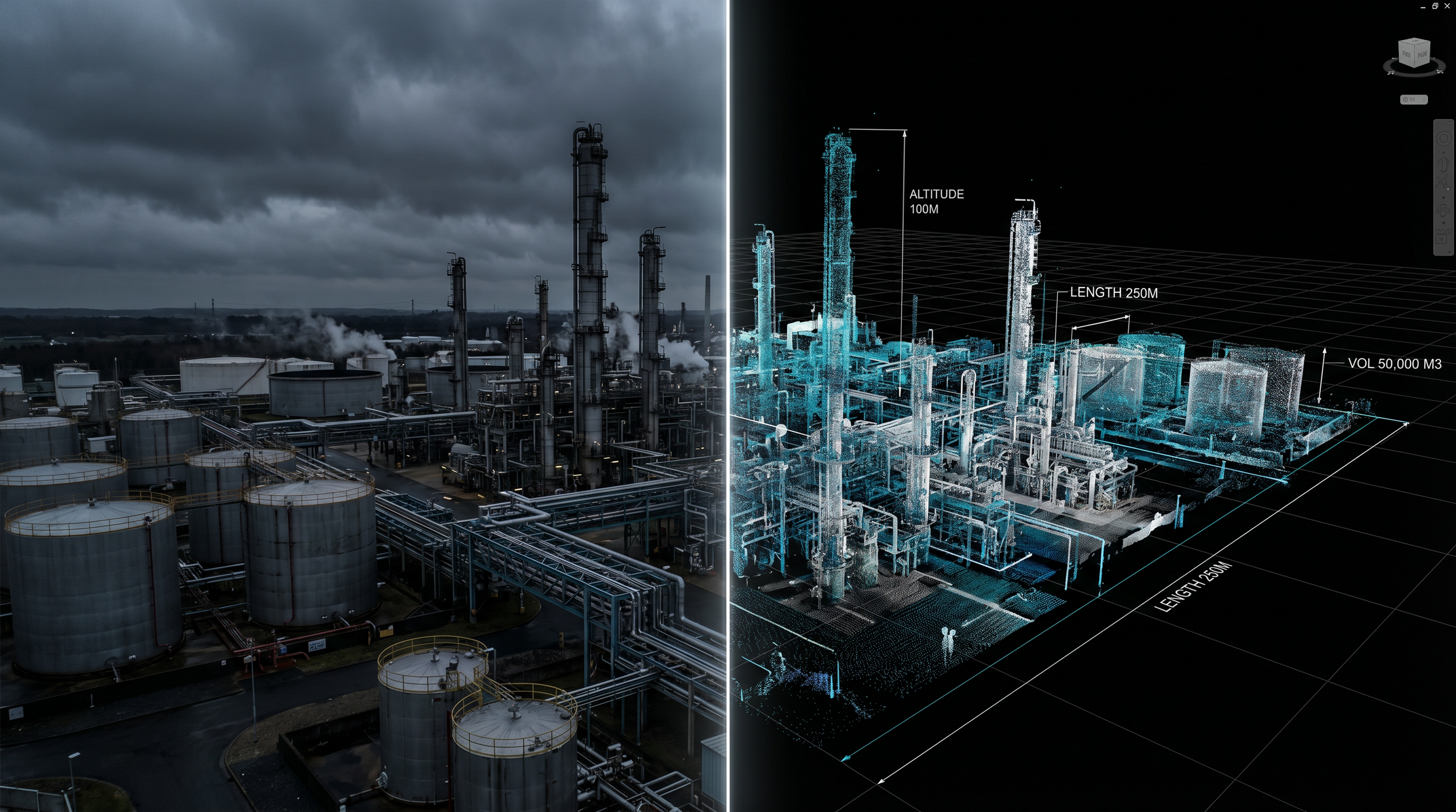
Digital Twin and 3D Modelling
Creating a single source of truth for your entire portfolio.
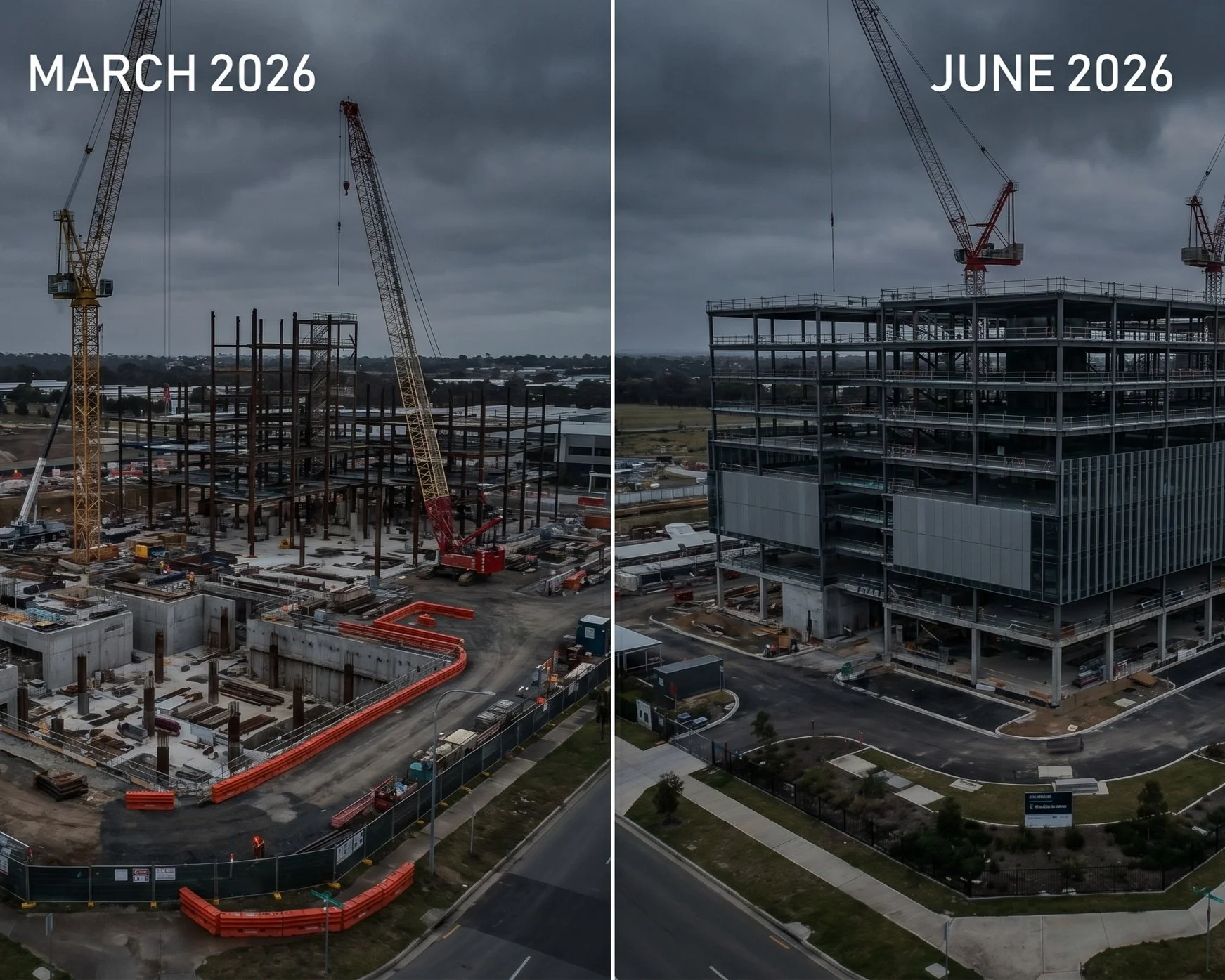
Asset Monitoring Programs
Tracking asset degradation and verifying repairs over time.
Frequently Asked Questions
How does a building digital twin differ from a standard building inspection report?
A standard inspection report is a static document that becomes outdated immediately. A digital twin is a living, interactive 3D model of your building accessible via web browser. Your team can virtually walk through the property, measure any dimension, view thermal overlays, track defect progression over time, and plan maintenance with spatial precision. It is the difference between a photograph and a navigable, measurable, updatable intelligence platform.
Can you inspect an entire property portfolio efficiently?
Yes. We structure portfolio programs with route-based scheduling that minimises mobilisation costs across multiple properties. For geographically clustered portfolios, we achieve 5-15 properties per day per crew. All data flows into a single platform where portfolio managers can compare condition across assets, prioritise capital expenditure, and demonstrate duty of care across the entire portfolio from one dashboard.
What building defects can drone and thermal inspection detect?
Our multi-sensor approach detects: roof membrane failures and ponding, facade cracking and spalling (down to 0.1mm), moisture ingress and water leaks (via thermal differential), insulation deficiencies, HVAC performance issues, electrical hotspots in switchboards, structural movement, drainage failures, and waterproofing breakdown. Combined visual and thermal inspection identifies 40-60% more defects than visual-only assessment.
How does this reduce our insurance premiums?
Documented condition monitoring programs demonstrate proactive risk management to insurers. Properties with current digital twin assessments and predictive maintenance programs typically achieve 10-25% premium reductions. The pre-loss baseline evidence also accelerates claims processing and reduces disputes, lowering your total cost of risk beyond just the premium savings.
Do tenants or occupants need to vacate during inspection?
No. External aerial and ground-level inspection requires no tenant coordination or building access. For internal common areas, we capture during low-traffic periods with zero disruption to building operations. Thermal inspection of building envelopes is conducted externally. Only internal tenancy inspections (if required) need brief tenant coordination, and these are typically completed in minutes per unit using 360-degree capture.
How often should commercial properties be inspected?
Best practice for commercial properties is annual external condition assessment (roof, facade, grounds) and biennial comprehensive assessment including thermal and internal common areas. High-value or high-risk assets (heritage buildings, properties with known defects, buildings over 20 years old) benefit from six-monthly monitoring. Our structured programs are designed around your financial year, lease cycles, and capital planning timelines.
What is the cost compared to traditional building inspection methods?
Our methods typically cost 30-50% less than traditional inspection approaches that require elevated work platforms, rope access, or scaffolding for roof and facade assessment. The cost advantage increases with building height and complexity. For portfolio programs, per-property costs reduce further through mobilisation efficiencies. Every engagement begins with a free scoping call to define requirements before quoting.