

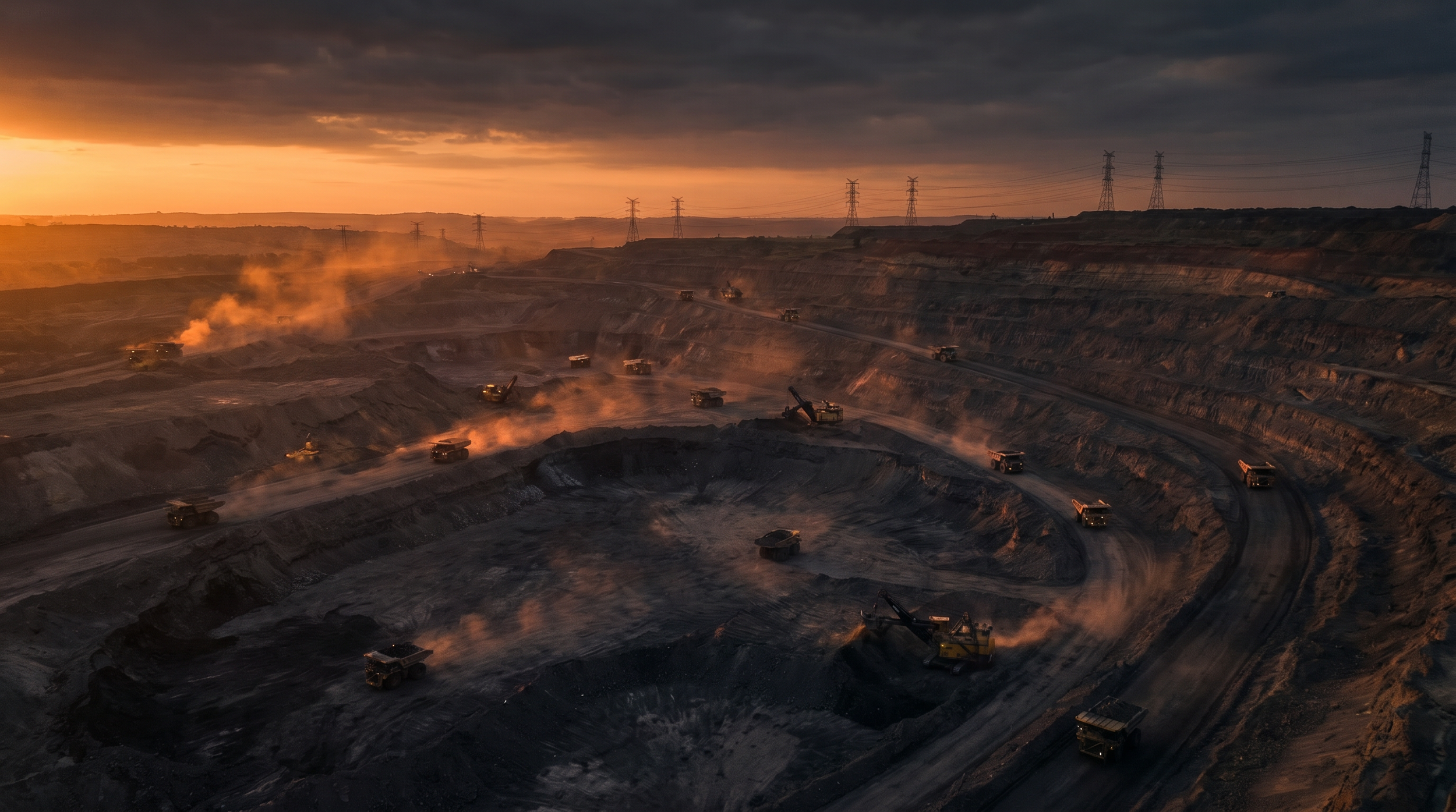
Mining Drone Inspection, LiDAR & Thermal Solutions | DeepSky IQ
ARE UNPLANNED CONVEYOR FAILURES COSTING YOUR OPERATIONS $500K-$2M PER DAY?
IDENTIFY DEVELOPING FAULTS BEFORE BREAKDOWNS OCCUR.
Production-Critical Condition Data Without Operational Disruption.
No scaffolding. No confined-space human entry.
Faster Data. Better Insights. Lower Risk
|
CASA Certified
|
ISO 14001, 9001, 45001
|
$20m Public Liability Insurance
| CASA Certified | ISO 14001, 9001, 45001 | $20m Public Liability Insurance
The Hidden Costs of Reactive Maintenance
❋ $349,000/hr:
Unplanned downtime cost for Australian industrial operations[1]
❋ $180k - $532k/hr:
Mining-specific downtime range
❋ 6-12 hours:
Confined space entry isolation time for a single confined space entry
❋ 3-5x:
The accelerated corrosion rates due to abrasive materials, chemical exposure, and extreme temperatures in mining
❋ 200–400%:
Mobilisation cost increase for remote sites
-
3-5x ROI
Typical return on drone and robotic inspection programs through avoided unplanned downtime
-
$500K - $2M/day
Cost of unplanned conveyor failure avoided through early defect detection
-
6 - 12 months
Earlier fault identification compared to scheduled shutdown inspection
-
90%
Reduction in confined space entries for internal vessel inspection
-
+/-2cm
volumetric accuracy replacing manual survey methods
-
>80%
Up to 80% less shutdowns required
Complete Mine-Site Condition Intelligence
Independent inspection and digital twins across every mine-site environment and asset.
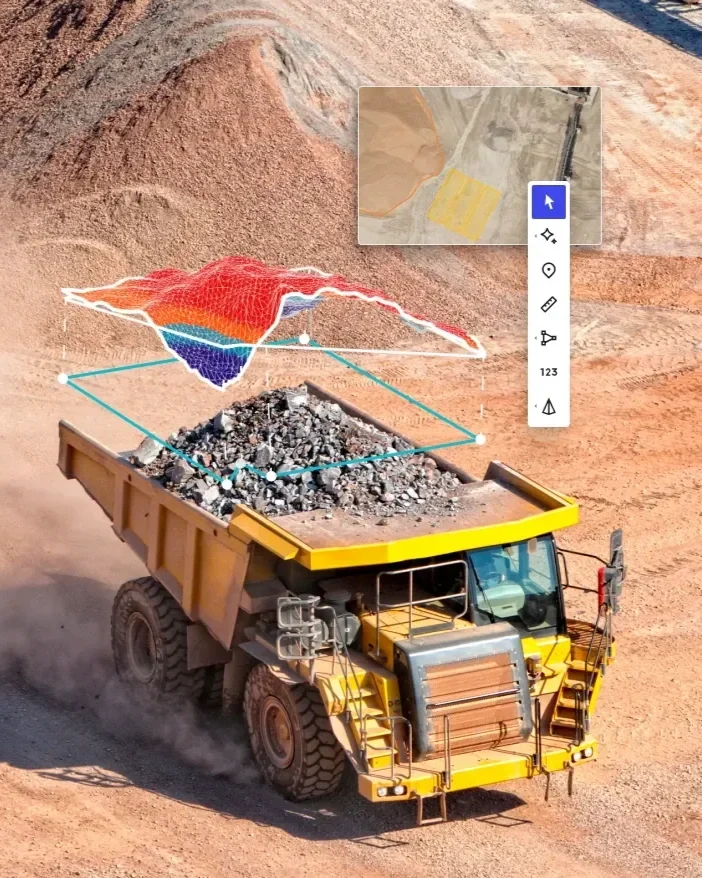
Stockpile Volumetrics & Survey
RTK-enabled LiDAR and photogrammetry deliver +/-2cm accuracy for stockpile volumes, haul road surveys, and pit progression mapping.
Enterprise aerial platform (950m range, 16 returns for canopy penetration).
iTwin Output: Survey-grade point clouds processed through Bentley iTwin Capture Engine → volumetric reports, DTMs, and contour maps delivered via Cesium 3D viewer.
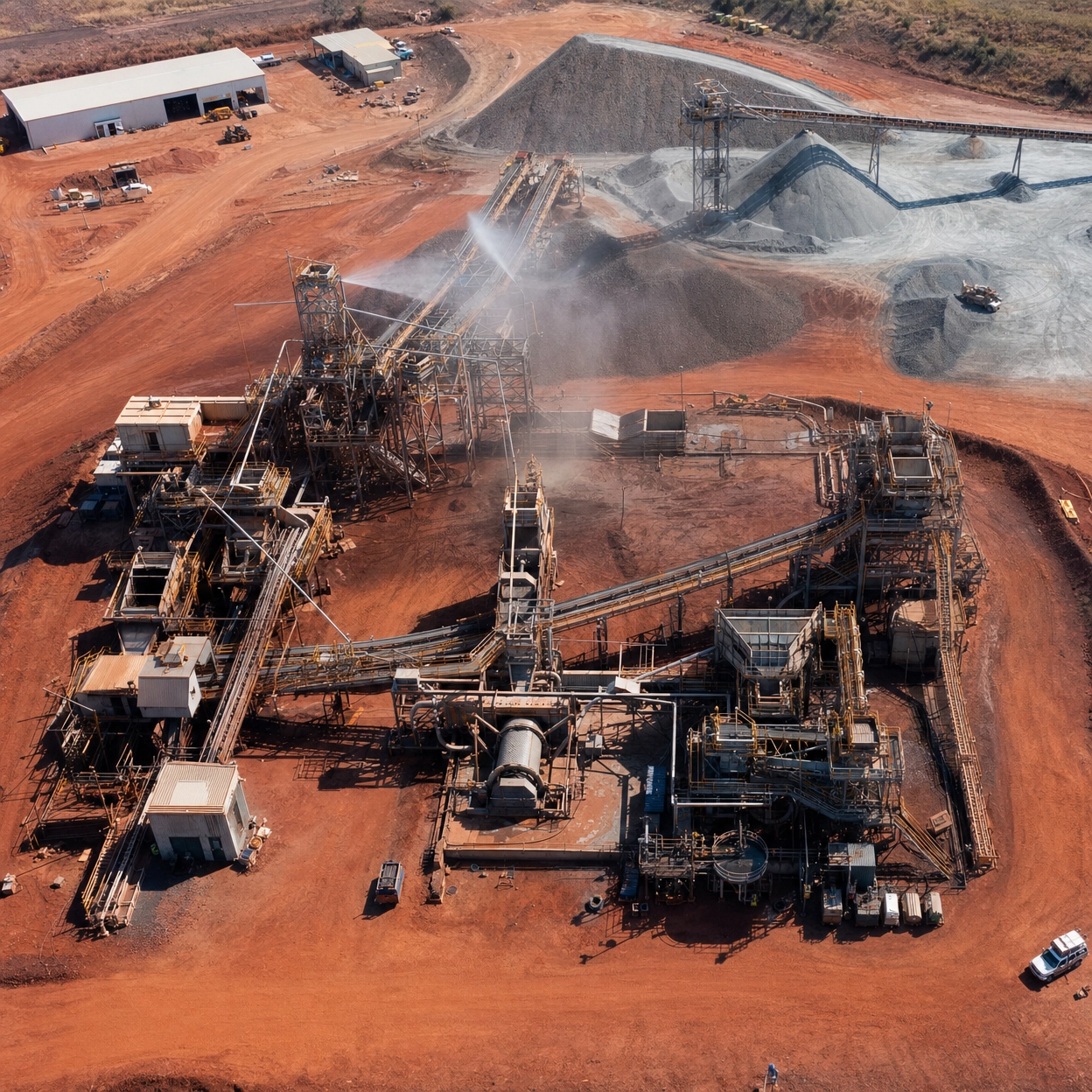
Processing Plant Inspection
Conveyors, crushers, stackers, reclaimers, screens, and cyclones inspected aerially and internally without scaffolding or confined space human entry. Thermal imaging identifies bearing failures, belt tracking issues, and electrical faults before they break down.
iTwin Output: 3D reality mesh of entire plant structure with defect annotations, accessible to maintenance planners via browser-based digital twin.
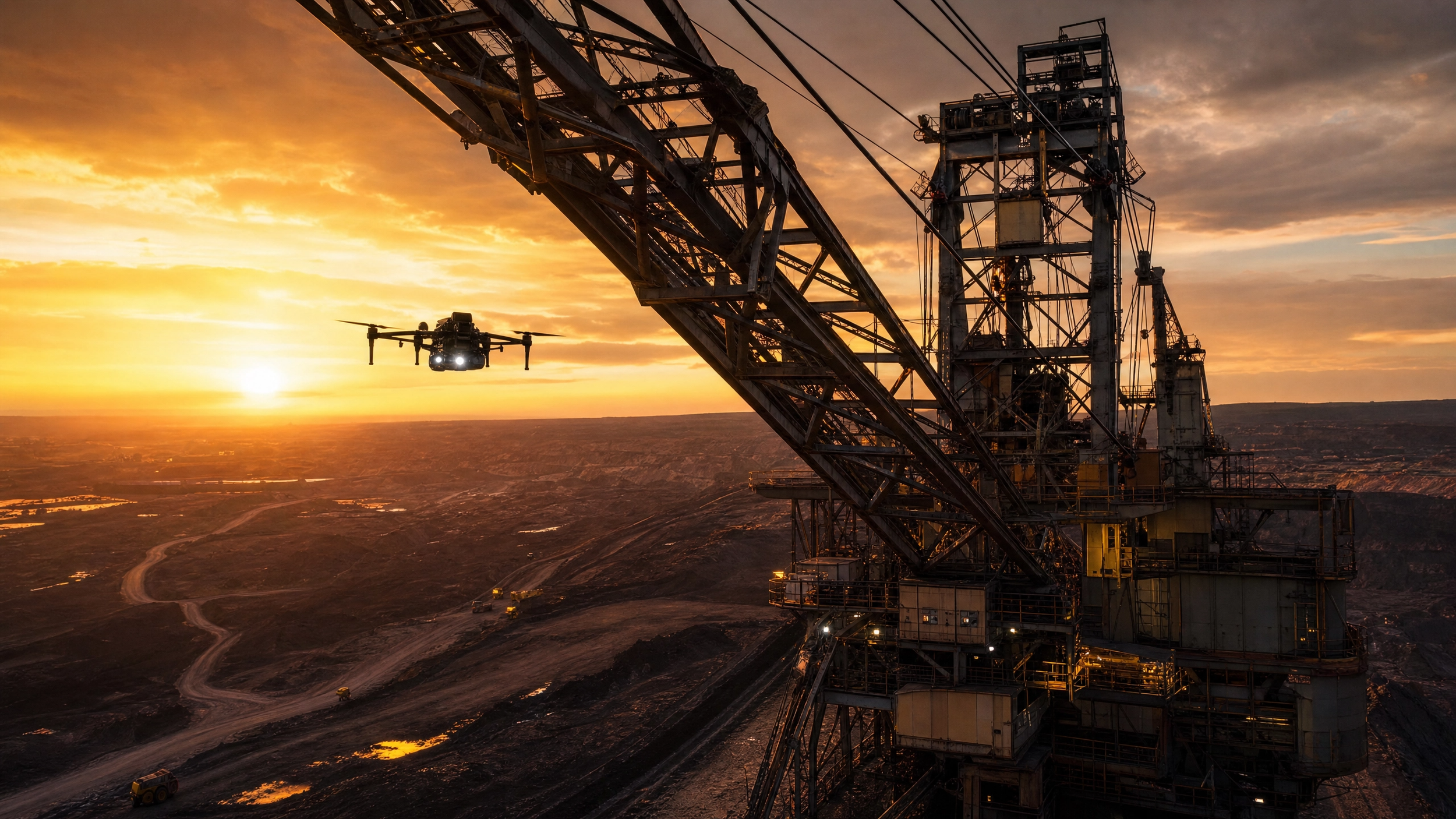
Draglines & Heavy Mobile Equipment
Boom structural condition, fatigue crack detection, roller circle wear, and mast integrity.
Multi-sensor aerial (visual + thermal + LiDAR) within existing shutdown window.
iTwin Output: Complete structural digital twin with defect severity classification, trend comparisons against previous inspections via Cesium timeline viewer.
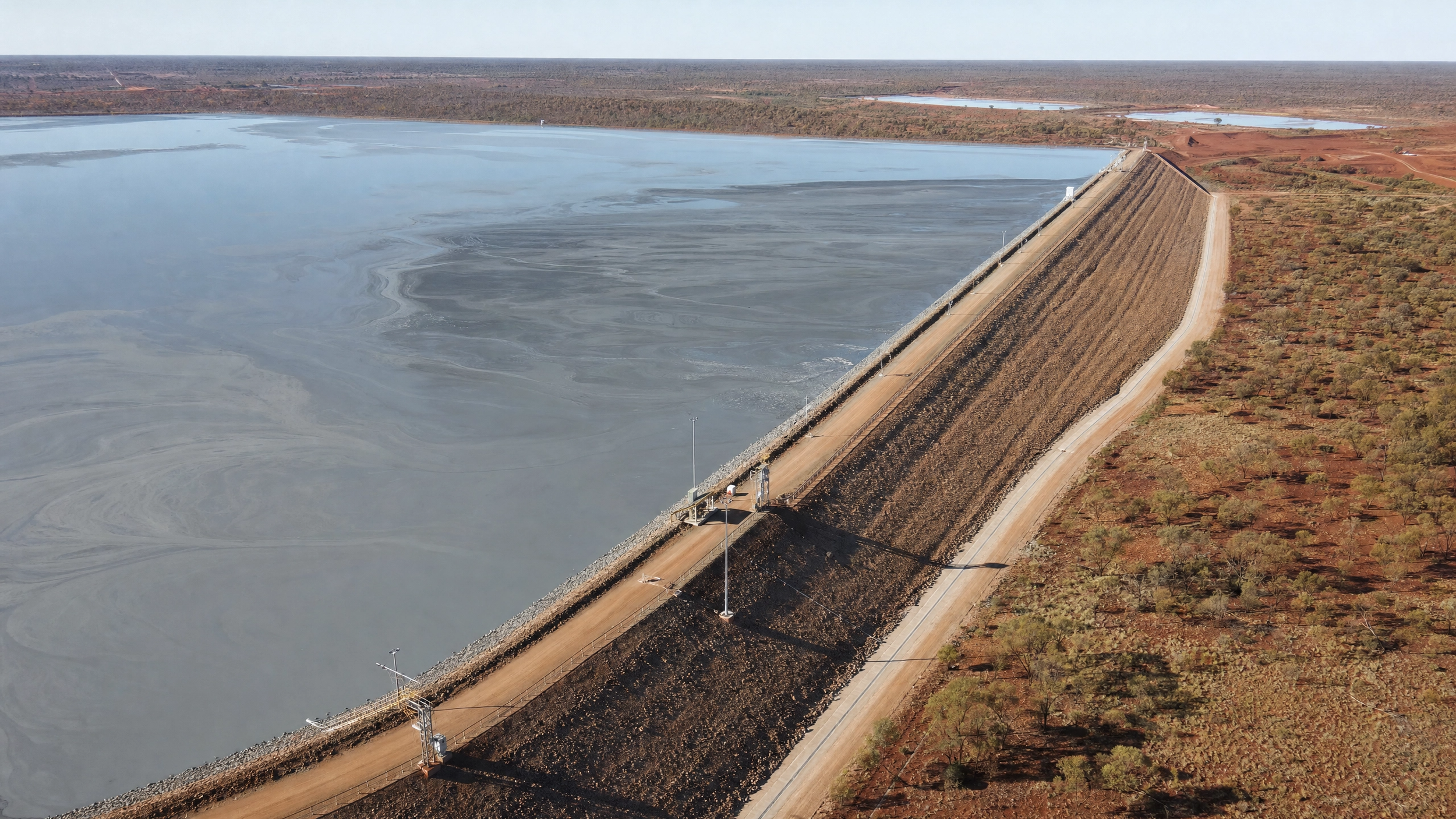
Tailings & Water Infrastructure
Dam wall monitoring, beach survey, freeboard measurement, decant structure inspection, change detection and seepage mapping.
Aerial LiDAR + Thermal + ROV (submerged structures).
iTwin Output: Change-detection overlays comparing quarterly surveys, millimetre-level movement tracking delivered as engineering-ready, unified aerial underwater models.

Confined Space (Crushers, Vessels, Voids)
Internal inspection without human entry. 14+ gas detection at 0.1% LEL. specialised confined space drones with LiDAR + thermal + visual.
iTwin Output: Internal 3D mesh with wall thickness mapping and wear indicators, classified defect register exported to CMMS (SAP PM, Pronto, MEX).
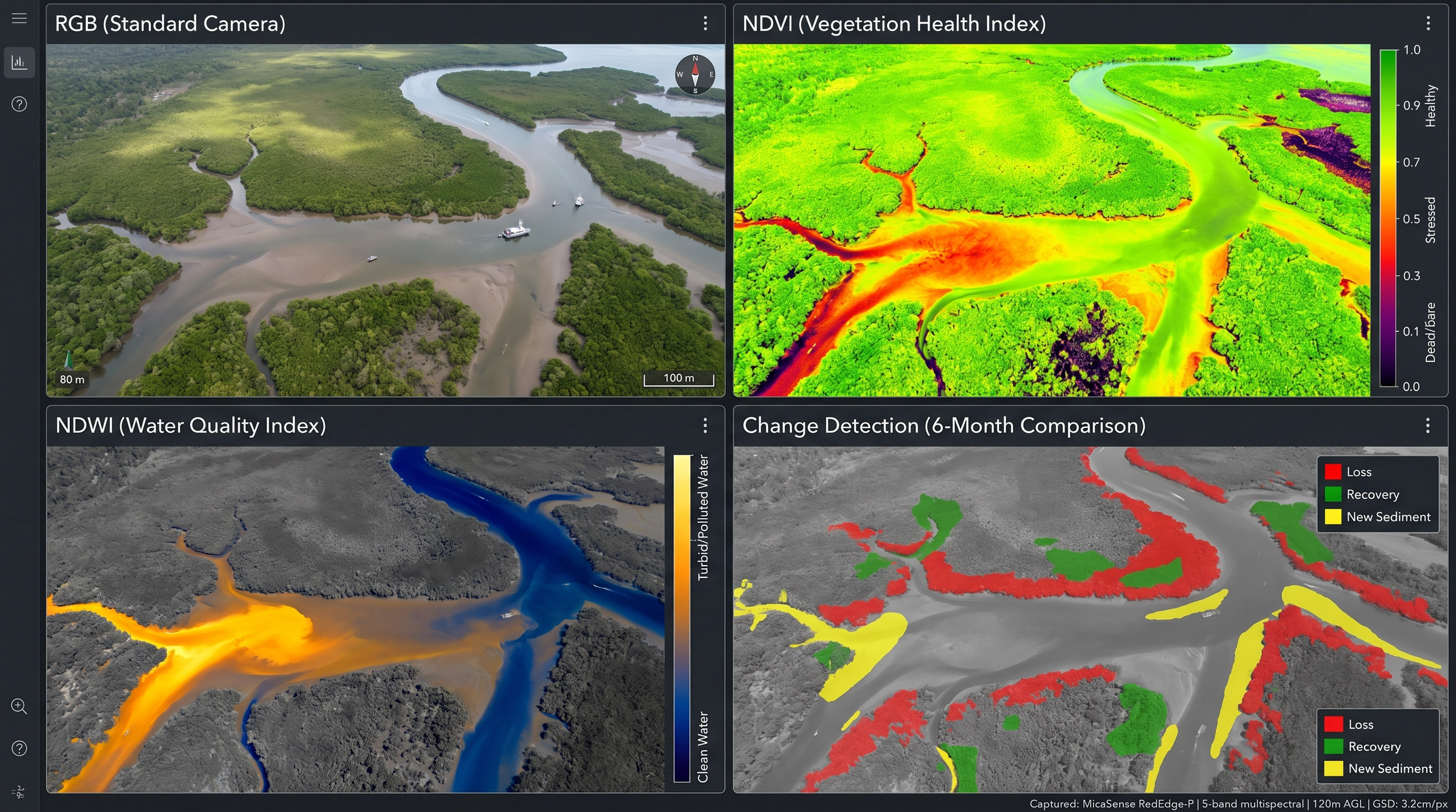
Rehabilitation & Environmental Monitoring
Multispectral imaging for quantitative mine compliance (NDVI, NDRE vegetation health indices), rehabilitation areas, tailings revegetation, biodiversity offset monitoring, and proactive management.
iTwin Output: Vegetation, water & soil health indices overlaid on terrain models, quantitative evidence for mine site reporting, compliance assurances for Environmental Authority conditions.
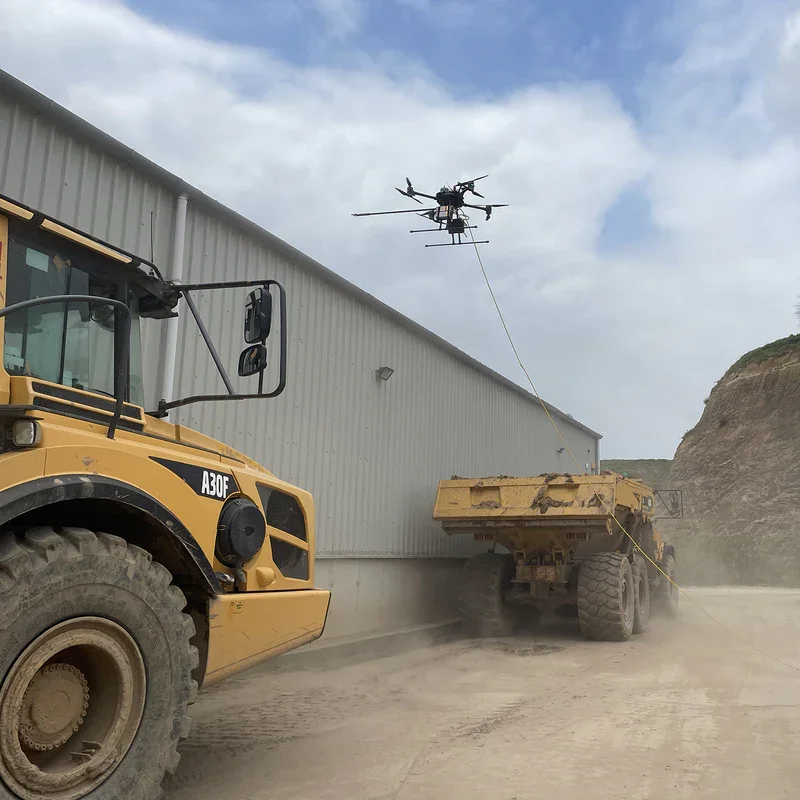
Ground & Aerial Drone Washing & Dust Management
Purpose-built aerial washing platforms deliver low & high-pressure cleaning at working heights up to 100m.
Clean dust-covered solar panels to increase output by 30%, processing plant surfaces, equipment, machinery and infrastructure without the scaffolding, ropes or shutdowns. Pre-inspection surface cleaning improves data quality for subsequent sensor deployment and extends the asset's life by up to 40%.
Intelligent Mining Assets
Draglines
Aerial visual + thermal + LiDAR
Boom structural condition, fatigue crack detection, roller circle wear, mast integrity, rigging assessment
Processing Plants
Multi-sensor aerial + confined space +/- UTM
Comprehensive condition assessment, pipe corrosion, structural integrity, thermal anomalies.
Dust-Covered Assets
Aerial wash platform
Pre-inspection cleaning, solar panel washing, asset and processing plant surface cleaning
Conveyors & Transfer Points
Aerial thermal + visual
Belt condition, idler wear, structural corrosion, and transfer chute blockage indicators.
Haul Roads & Pit Walls
Aerial & vehicle LiDAR + photogrammetry
Road condition survey, pit wall stability monitoring, and bench geometry compliance
Water Infrastructure
Aerial + ROV
Dam condition, pipeline easement, pump station inspection, and bore monitoring
Crushers & Screens
Confined space drone (internal) + thermal
Liner wear mapping, mantle condition, screen mesh integrity, bearing temperature
Electrical Infrastructure
Aerial thermal + visual
Substation hot joints, transformer condition, switchgear anomalies, cable tray corrosion
Rail Loadout & Port Facilities
Aerial, ROV, Confined Space + Ground 360
Structural condition, rail alignment, ship loader inspection, and dust suppression systems
Stockpiles
Aerial LiDAR + photogrammetry
Volumetric survey (+/-2cm), reconciliation data, stockpile management reporting
Tailings Storage Facilities
Aerial LiDAR, visual, multispectral + thermal + ROV.
Wall movement detection, beach survey, freeboard, seepage, and decant structure condition
Mine Rehabilitation Areas
Aerial LiDAR, visual, multispectral + thermal + ROV.
Vegetation & soil health indices, revegetation success rates, species establishment, pest, plants & disease monitoring & management, seeding, spraying, spreading, ensuring closure compliance.
Mining operations concentrate the highest-risk inspection environments: dragline booms at 60-100m height, crusher internals with falling material risk, underground stopes with unsupported ground, and tailings structures where access itself is hazardous. Our platforms inspect these assets without production shutdown and without human exposure.
| Asset | Traditional Method | Traditional Risk | DeepSky Method | Risk Eliminated | Cost Impact |
|---|---|---|---|---|---|
| Draglines (boom, mast, house) | Scaffold boom (60-100m), 7-14 days additional to shutdown | Falls from extreme height, $3.6M-$9.6M/day lost production | Drone full coverage in 1-2 days within existing window | Eliminates scaffold + reduces shutdown | $3.6M-$9.6M per avoided day |
| Crushers & mills (internal) | Confined space entry, falling material risk, lockout/tagout | Engulfment, falling material, atmospheric | Confined space drone internal inspection without entry | Eliminates confined space + engulfment risk | 60-80% reduction |
| Conveyors (structural) | Working at height along route, near moving parts | Falls, nip point entanglement | Drone thermal + visual while operating | Zero exposure to height or moving parts | 40-60% reduction |
| Underground stopes & drives | Personnel entry to unsupported ground | Ground fall, entrapment, atmospheric | Confined space drone enters void, no human entry | Eliminates ground fall + entrapment risk | N/A (previously uninspectable) |
| Tailings dams | Limited access, potentially unstable embankments | Embankment failure during inspection | Drone + LiDAR, no personnel on structure | Zero personnel on unstable ground | 50-70% reduction |
| Stockpiles | Survey crew on active haul roads | Vehicle-pedestrian interaction (leading cause of mine fatality) | Aerial volumetric survey, no ground presence | Eliminates VPI risk entirely | 30-50% reduction |
Dragline Inspection & Monitoring
| Factor | Traditional Inspection | DeepSky Drone Inspection |
|---|---|---|
| Inspection Duration | 7-14 days (additional to shutdown) | 1-2 days (within existing shutdown window) |
| Scaffolding Cost | $80,000-$150,000+ (boom length) | $0 |
| Rope Access Team | $15,000-$30,000 per week (4-6 technicians) | $0 |
| Crane Hire | $5,000-$15,000 per day | $0 |
| Total Inspection Cost | $200,000-$500,000 per event | $15,000-$40,000 per event |
| Lost Production (Extended Shutdown) | $3.6M-$9.6M per additional day | Nil (completed within existing window) |
| Inspection Frequency Achievable | Every 2-5 years (due to cost/disruption) | Quarterly to annually (no production impact) |
| Coverage | Limited to scaffolded areas | 100% of boom, mast, roller circle, house, tub |
| Data Output | Written report, limited photography | 4K/8K imagery, thermal, LiDAR point cloud, 3D model, defect register |
Why Mining Companies Outsource Complex Inspections
We Don't Replace Your Team. We Extend It.
Most mining operations already have drone capability for routine surveys. There is a capability ceiling that in-house programs consistently hit.
Quarterly condition programs:
Scheduled repeat inspections that build trend data your maintenance planners use for predictive scheduling
Planned shutdown windows:
We mobilise for your scheduled shutdowns to inspect assets that are only accessible when offline (crushers, vessels, draglines, conveyors)
Incident response:
Rapid deployment after weather events, equipment failures, or near-misses requiring immediate condition verification
Compliance inspections:
Independent third-party assessments required by regulators, insurers, or your own governance framework
Your engineering team reviews remotely, annotates defects, accurately measures, prioritises and tracks progression against previous inspections; no travel required.
Calculate Your Savings
Mining Inspection Program Savings Calculator
Estimate the total value of transitioning from traditional to robotic inspection across your site.
Request Your Full Scoping Report
We will prepare a detailed assessment based on your inputs above, including a tailored inspection program, timeline, and ROI analysis.
When mining companies calculate the cost of in-house drone programs, they typically account for hardware and salary. They rarely account for the full cost of ownership:
| Cost Factor | Annual In-House Cost | Annual DeepSky Program |
|---|---|---|
| Pilot salary + superannuation | $130,000-$160,000 | $0 |
| Platform purchase (amortised over 3 years) | $25,000-$50,000 | $0 |
| Training, endorsements, and currency maintenance | $15,000-$25,000 | $0 |
| Software licences (Pix4D, DJI Terra, thermal analysis) | $8,000-$15,000 | $0 |
| Insurance (hull + public liability) | $5,000-$12,000 | $0 |
| Maintenance, repairs, and battery replacement | $8,000-$15,000 | $0 |
| Backfill and productivity loss when pilot unavailable | $20,000-$40,000 | $0 |
| Total in-house (routine capability only) | $211,000-$317,000 | - |
| DeepSky program (quarterly visits, all assets, full reporting) | - | $80,000-$160,000 |
| Advanced capability (confined space, ROV, dragline, night ops) | Not available in-house | Included |
From Scope to Actionable Intelligence
Step 1: Scope & Design:
Review asset register, maintenance history, and compliance obligations. Design program aligned to shutdown schedule.
Step 2: Mobilisation & Capture
Deploy to remote sites with enterprise platforms configured for mining environments. Operate within your site SMS.
Step 4: Integration & Monitoring
Deliverables integrate into your CMMS. Establish a repeat-scheduled building trend dataset for predictive maintenance. Access live models via our 3D viewer.
Step 3: Processing & Analysis
Raw data is processed through Bentley iTwins WorkSuite into structured deliverables: Volumetric reports, defect registers, thermal anomaly reports, 3D to 8D digital twins.
Services for Mining & Resources
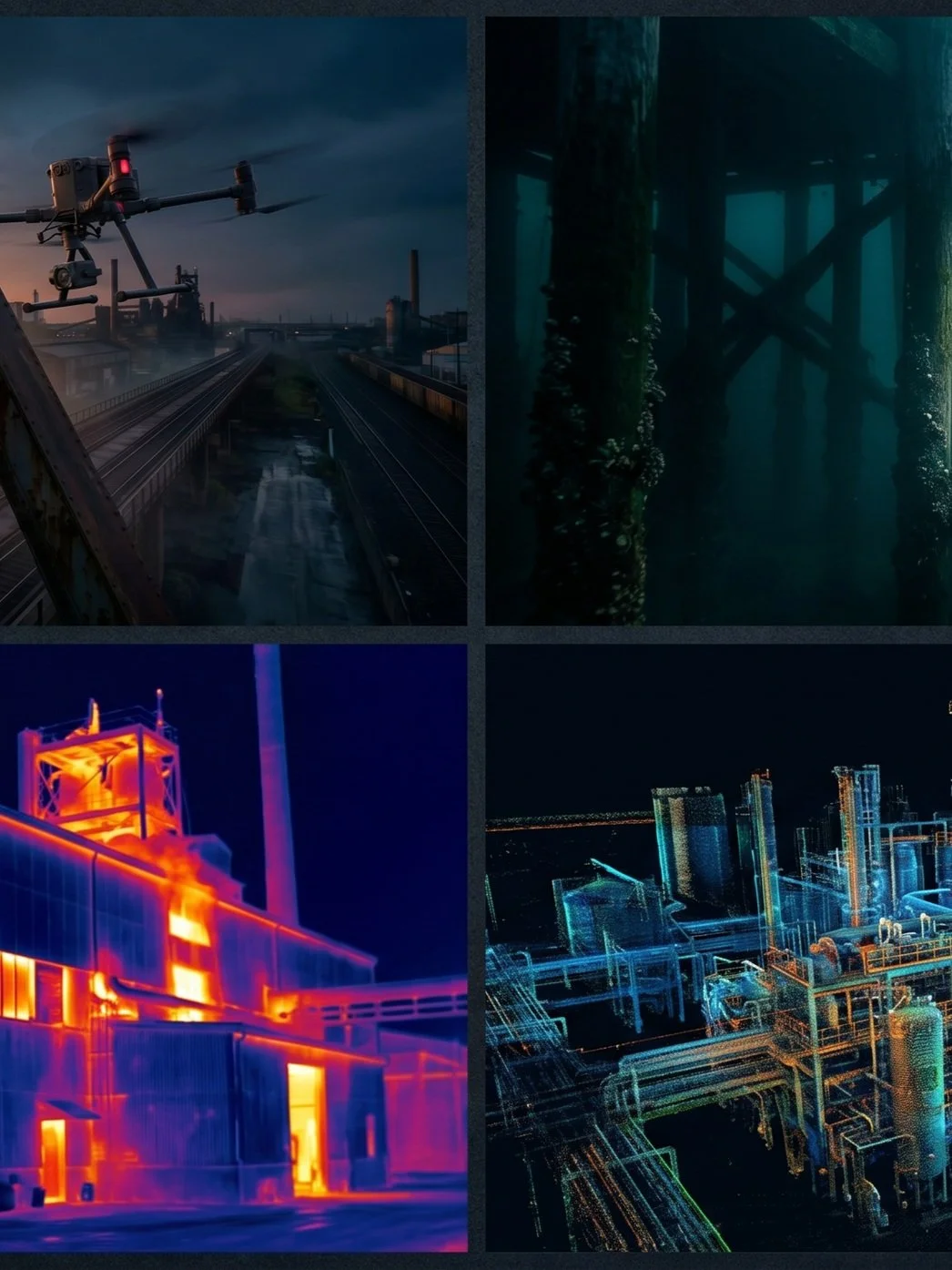
Asset Inspection & Condition Intelligence
Multi-sensor inspection across all mine-site environments
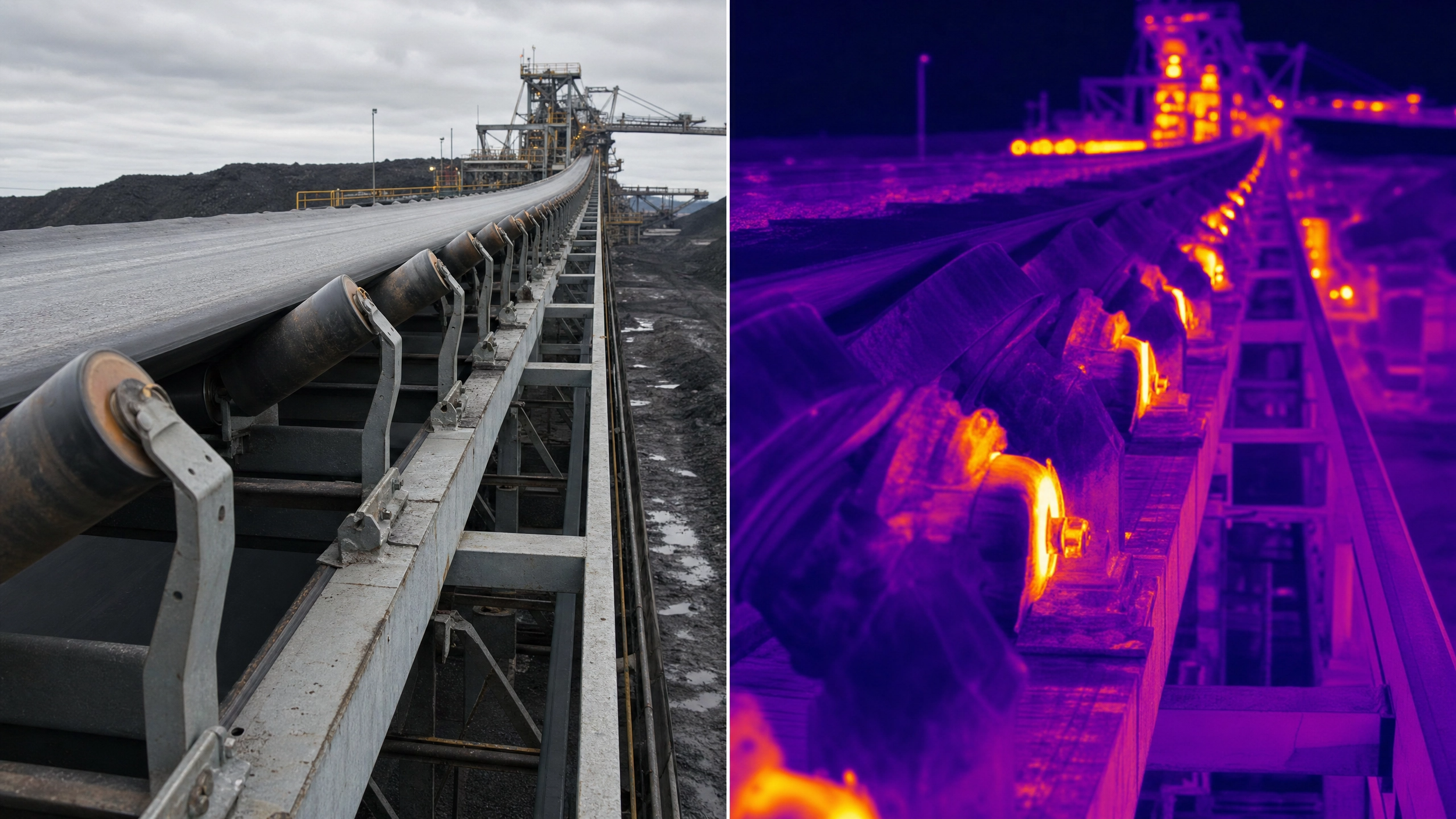
Thermal & Condition Assessment
Conveyor bearings, electrical faults, and processing equipment
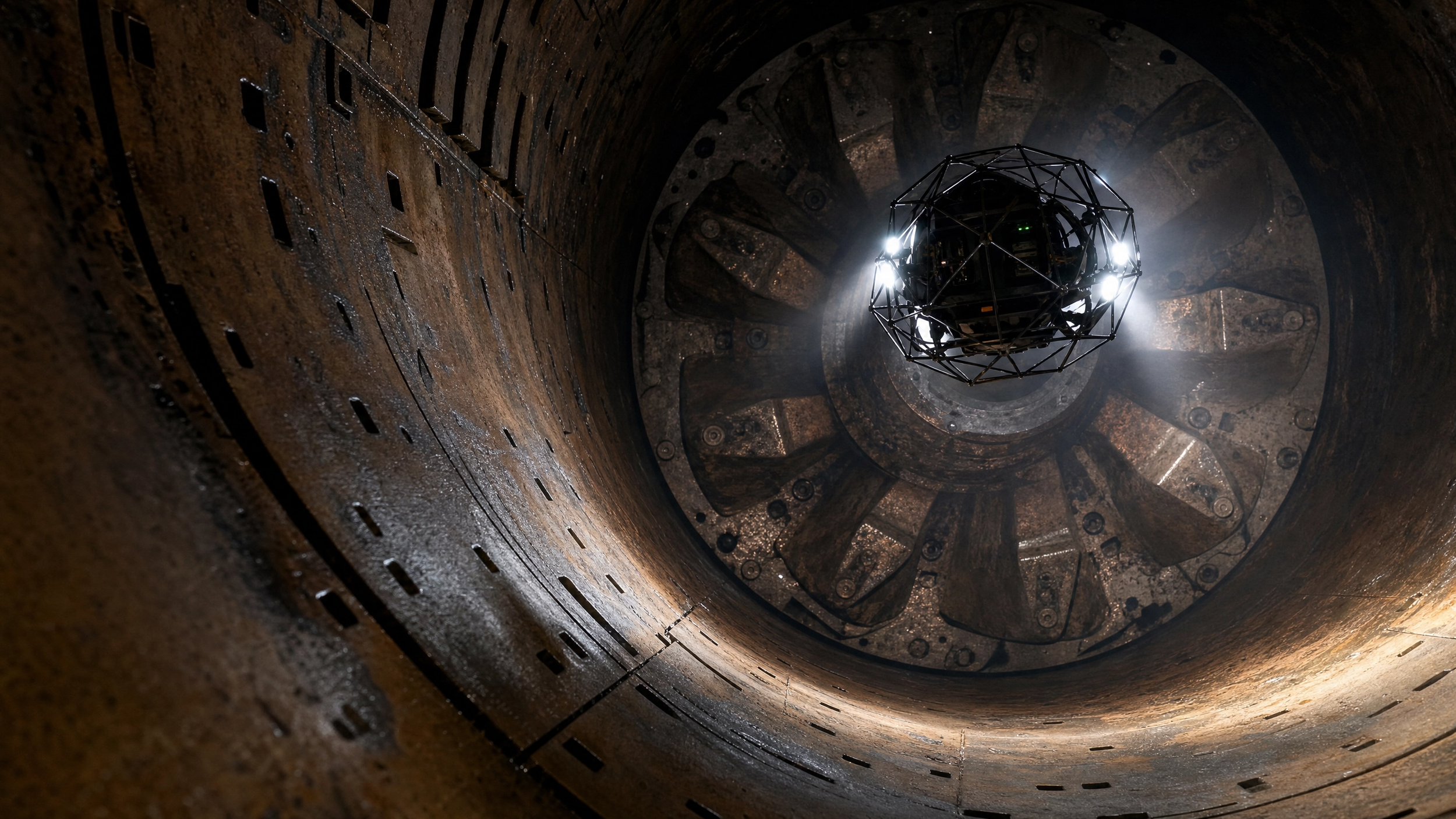
Confined Space & Complex Inspection
Crusher, vessel, and tank internals without human entry
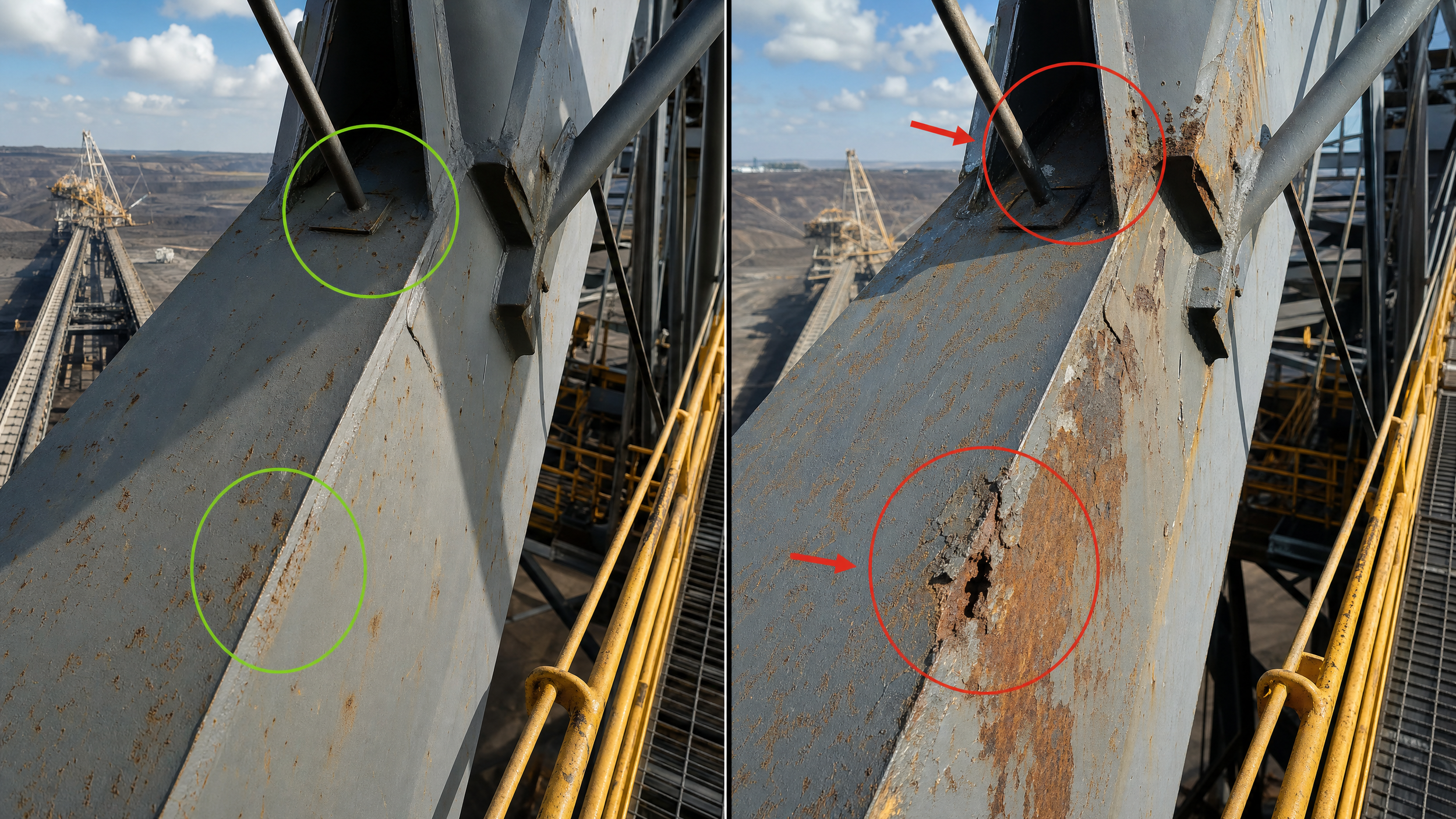
Asset Monitoring Programs
Scheduled repeat inspections with change detection and trend analysis
Digital Twin & 3D Modelling
Site-wide spatial models for planning and remote review
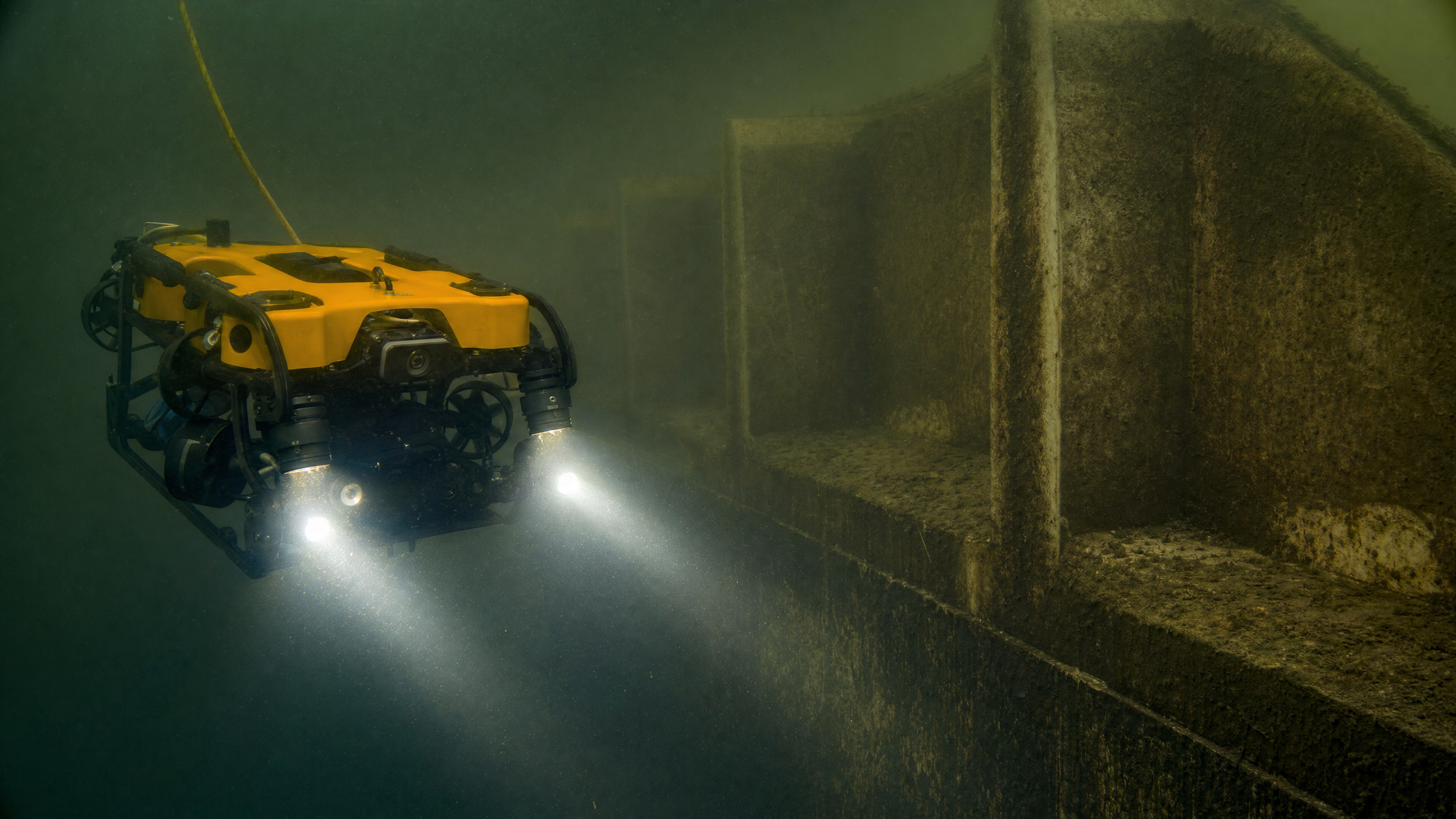
Underwater & Submerged Asset Intelligence
Tailings decant structures, water infrastructure
The question isn't whether you can afford robotic inspections. It's about whether you can justify sending people into a crusher chamber, when a drone can capture the same wall thickness data in 4 hours without anyone crossing the isolation boundary.
Frequently Asked Questions
How accurate are drone-based stockpile volumetrics compared to traditional survey?
Our RTK/PPK-enabled drone surveys achieve plus or minus 2-3cm positional accuracy, delivering volumetric measurements within 1-2% of traditional ground survey results. The key advantage is 100% surface coverage versus the interpolated estimates from ground-based point surveys. For large or irregularly shaped stockpiles, drone methods consistently outperform ground survey in accuracy because they capture millions of measurement points rather than hundreds.
Can you operate in active mining environments with heavy machinery?
Yes. We hold advanced CASA approvals and operate under strict safety management systems aligned to mining industry requirements. Our operations integrate with site traffic management, blast exclusion zones, and shift schedules. We routinely operate alongside active haul trucks, excavators, and processing plant operations with zero production disruption. All pilots hold site-specific inductions and work under your site safety protocols.
How does drone inspection reduce shutdown requirements?
Remote inspection methods eliminate the need for scaffolding, rope access, and confined space entry for routine condition assessments. Assets that previously required full shutdown for inspection (conveyors, crushers, silos, tanks, processing vessels) can now be assessed during operation or during brief planned pauses rather than extended shutdowns. Clients report 40-70% reduction in shutdown-related inspection time, translating directly to increased production hours.
What sensors do you use for mining applications?
We deploy application-specific sensor packages: high-resolution visual (48MP+) for structural condition, radiometric thermal for electrical and mechanical fault detection, LiDAR for volumetrics and terrain modelling, multispectral for rehabilitation monitoring and vegetation health, and 360-degree cameras for confined space and interior documentation. Sensor selection is determined during scoping based on your specific intelligence requirements.
Can you inspect confined spaces like silos, tanks, and processing vessels?
Yes. We deploy collision-tolerant confined space drones specifically designed for internal inspection of silos, tanks, kilns, ball mills, and processing vessels. These systems operate without GPS in complete darkness, capturing high-resolution imagery and video of internal surfaces without requiring human entry, scaffolding, or full vessel cleaning. This eliminates confined space entry risk and reduces inspection time from days to hours.
How does this support rehabilitation compliance and bond release?
Our LiDAR and multispectral surveys provide engineering-grade evidence of rehabilitation progress: precise volumetric earthworks tracking, erosion monitoring, vegetation establishment rates, and species diversity mapping. Repeat surveys at defined intervals create time-series datasets demonstrating progressive rehabilitation against your approved plan. This objective, measurable evidence supports bond release applications and satisfies regulatory reporting requirements.
What is the typical ROI for a mining inspection program?
Mining clients typically achieve 3-8x ROI within the first 12 months through reduced shutdown duration, eliminated access equipment costs, improved defect detection rates (40-60% more defects identified), and extended asset life from predictive maintenance. The largest single savings usually come from reduced production downtime: every hour of avoided shutdown on a processing plant represents $50,000-$500,000+ in recovered production value depending on commodity and throughput.
Can you provide 24/7 autonomous security for remote mine sites?
Yes. Our DeepSky Protect division deploys autonomous drone-in-a-box systems for continuous perimeter surveillance, thermal intruder detection, and rapid incident response. These systems operate autonomously 24/7 with 60-second response times, covering 10-20x the area of static guards at 40-60% lower cost. Particularly effective for remote sites where traditional security staffing is expensive and difficult to maintain.